OJK Raises Free Float Requirement to 15% as IDX Suffers Sharp Sell-Off
29 Jan 2026
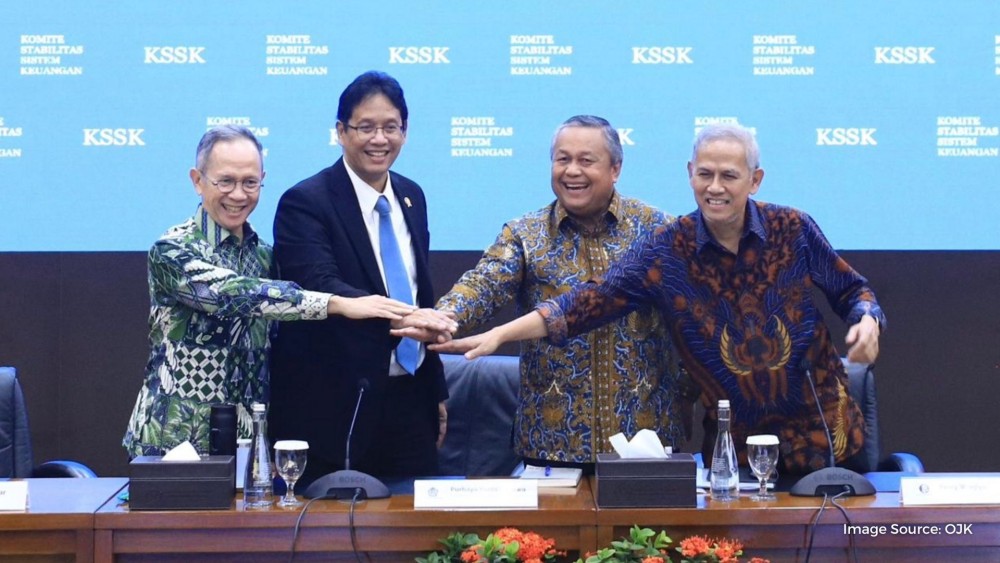
The Financial Services Authority (OJK) will raise the minimum free float requirement to 15%, effective February. The decision follows an announcement by Morgan Stanley Capital International (MSCI) to postpone the rebalancing of Indonesia’s stock indices.
The MSCI postponement affected Indonesia’s stock market, marked by a sharp decline in the Jakarta Composite Index (IHSG) over two consecutive days. The Indonesia Stock Exchange (IDX) was forced to temporarily halt trading for two straight days after the IHSG plunged as much as 8%.
Free float refers to the portion of a company’s shares held by the public, excluding shares owned by controlling shareholders, majority shareholders, commissioners, directors, and company employees. These shares are fully held by public investors, with individual ownership below 5%.
Previously, OJK had introduced new regulations governing the circulation of listed shares on the Indonesia Stock Exchange. Under those rules, the minimum free float requirement in the capital market was raised to 10%.
OJK Chairman Mahendra Siregar said the move was part of efforts to improve transparency. For listed companies that fail to meet the requirement within a specified timeframe, OJK will implement an exit policy through a structured supervisory process.
“Self-regulatory organizations will issue regulations setting a minimum free float of 15%, which will be implemented in the near future,” Mahendra said at a press conference at the IDX building in Jakarta on January 29.
Mahendra said MSCI still intends to include Indonesian listed companies in its global indices.
“We see that the institution still wants to include shares of Indonesian issuers in its global index, which shows that Indonesia’s capital market remains highly potential and investable for international investors,” he said.
MSCI and Margin Calls Trigger Market Volatility
Previously, the Indonesia Stock Exchange (IDX) said the sharp decline in the domestic capital market was also driven by investor margin calls, which added selling pressure on the Jakarta Composite Index (IHSG). IDX exchange member Irvan Susandy said market authorities continue to monitor brokerage firms that provide margin facilities, including movements in margin-based stock purchases. Under current conditions, he said the risk of further stock price declines has increased due to forced selling.
“Like it or not, there is certainly an impact from margin transactions because of forced selling and other factors,” Irvan told reporters at the IDX building in Jakarta on January 28.
Irvan added that based on IDX data, local investors in the C1 segment were still recording net buy positions. This indicates that the recent market decline has been partially absorbed by retail investors.
On the other hand, foreign investors recorded net outflows of around IDR 3 trillion. However, Irvan said this figure remains relatively small compared with the total IHSG transaction value of around IDR 30 trillion. He noted that pressure from margin calls could indeed occur amid the market downturn, but retail investors’ absorption capacity remains relatively strong.
IDX authorities continue to monitor market developments through the end of trading sessions, particularly among exchange members offering margin facilities. So far, Irvan said there have been no significant indications of systemic issues related to margin transactions.
“Like it or not, the likelihood of forced selling does exist, because some margin-listed stocks have already fallen 7%, some 10%, some 15%, so inevitably there is a strong possibility of forced selling,” he said.
Regarding potential margin adjustments, Irvan said the exchange does not want to react too aggressively to market volatility. He noted that recent pressure has also been driven by investor panic. Ahead of the MSCI rebalancing scheduled for May 2026, the IDX will continue to take steps to maintain market stability and maintain communication and coordination with MSCI through various meetings.
“But that does not mean we will stop there. We will continue to do our best to provide more information to the public, not only to MSCI, but also to investors,” Irvan said.
This article is published in partnership with Katadata
Original article here

RELATED ARTICLES