Agrarian Reform Bill Passed, ATR to Relinquish Part of Land Dispute Resolution Function
22 Sep 2026
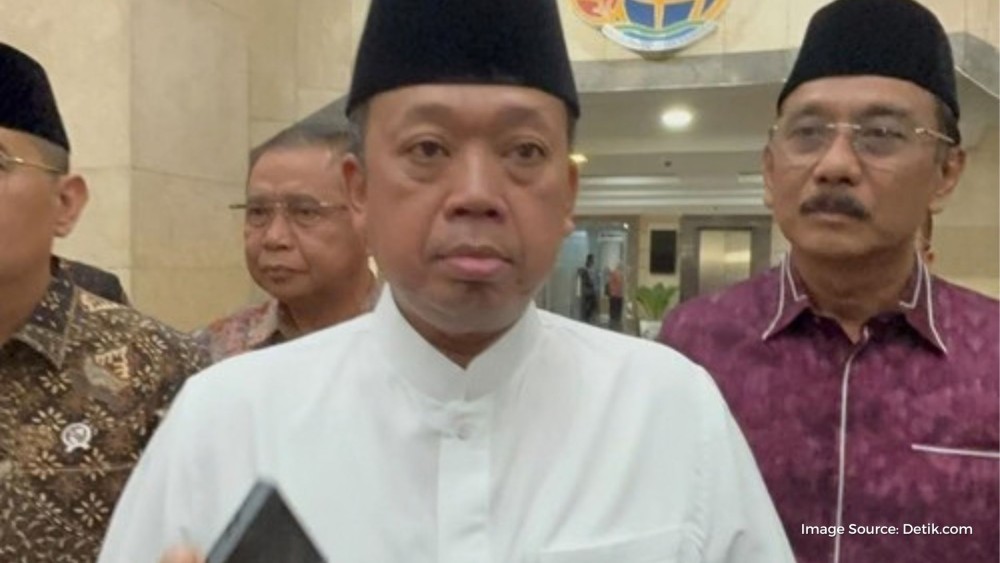
Agrarian Affairs and Spatial Planning Minister Nusron Wahid plans to separate several directorates within his ministry. The move follows the House of Representatives’ (DPR) passage of the Agrarian Reform Bill on Tuesday, 22 September 2026.
The Agrarian Reform Law requires the establishment of a special body tasked with resolving land disputes. Nusron said several directorates currently handling conflicts would therefore be merged into the Agrarian Reform Agency.
“There are several directorates that must be merged into the agency. We will simulate the structure later,” Nusron said at the DPR building in Jakarta on Tuesday (22 September).
According to the official website of the Ministry of Agrarian Affairs and Spatial Planning (ATR), the function of resolving disputes is currently handled by the Directorate General of Land Dispute and Conflict Resolution.
Nusron said the Agrarian Reform Agency would specifically handle conflicts involving government institutions, including the central government, regional governments, and state-owned enterprises.
The Directorate General of Land Dispute and Conflict Resolution currently has three technical directorates: the Directorate of Land Dispute Resolution, the Directorate of Land Cases, and the Directorate of Prevention and Handling of Land Conflicts.
However, Nusron has not yet specified which directorates will be merged into the newly established government agency. He said the ATR Ministry would continue to handle agrarian conflicts following the establishment of the Agrarian Reform Agency.
Nusron also plans to transfer the raw materials and documents related to agrarian disputes to the Agrarian Reform Agency.
“Individual agrarian conflicts will remain under the ATR Ministry because they are administrative in nature,” he said.
Previously, Nusron explained that agrarian conflicts generally fall into several categories, involving government assets, state-owned enterprise assets, or corporate assets.
He said the implementation of the Agrarian Reform Law would prevent land dispute resolution from becoming stalled. Nusron said the policy had generally been awaited by the public.
The legislation contains 14 policy points, ranging from the implementation of agrarian reform through the state’s right of control to the funding of agrarian reform functions.
The regulation will establish a new institution responsible for implementing agrarian reform. The institution will be separate from the ATR Ministry and report directly to the president, with authority ranging from planning to resolving land disputes.
“As a result, the resolution of agrarian disputes will become faster because there will be a clear resolution formula,” Nusron said at the DPR building on Monday, 21 September.
Deputy Chairman of the DPR’s Legislative Body (Baleg), Iman Sukri, said the first-level deliberations on the bill were conducted over five days, from 17 to 21 September 2026.
According to Iman, the government and lawmakers discussed 596 items on the List of Issues (DIM) during the period.
Iman said the government had added three new substantive provisions to the draft Agrarian Reform Bill. However, he did not provide further details about the provisions added by the executive branch.
Iman said the discussion of the DIM demonstrated that the government shared the same views as lawmakers. He said the resolution of land disputes was a serious concern reflected in the bill.
“There were constructive debates, which ultimately resulted in an agreement on the formulation of norms that are expected to provide solutions for the implementation of agrarian reform,” Iman said.
This article is published in partnership with Katadata
Original article here
RELATED ARTICLES