Bank Indonesia and Finance Ministry Draft Five-Pillar Synergy to Boost Economic Growth
24 Sep 2026
Bank Indonesia (BI) and the Ministry of Finance have formulated five policy synergy pillars to promote economic growth while maintaining stability. The cooperation focuses on strengthening the external sector, ensuring banking liquidity, controlling inflation, and deepening financial markets.
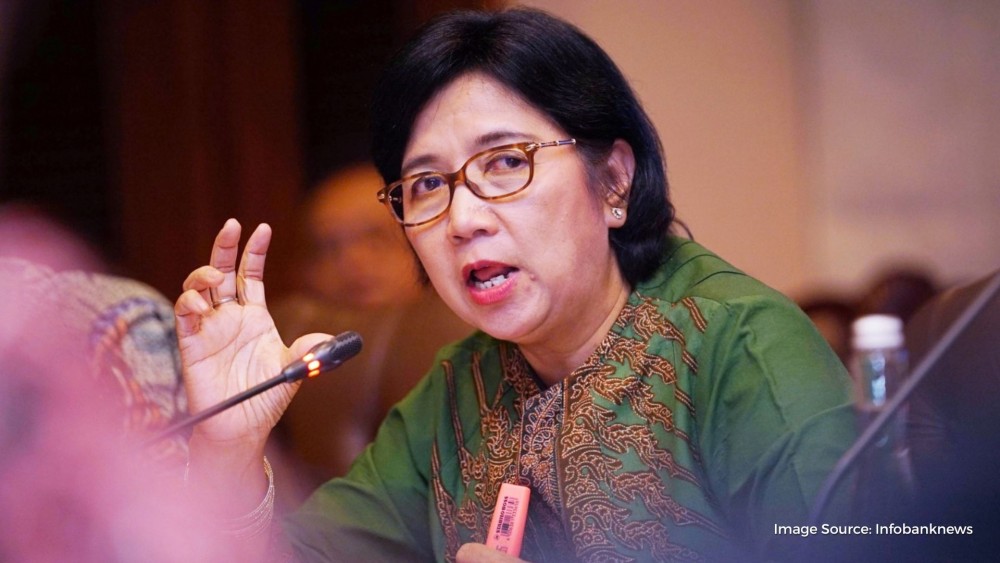
BI Governor Destry Damayanti said the five pillars would serve as a framework for fiscal and monetary policy coordination amid global economic dynamics.
“We will use a five-pillar approach in this synergy,” Destry said during a joint press conference with Finance Minister Suahasil Nazara at the BI headquarters in Jakarta on Thursday 24 September.
She explained that the first pillar is maintaining economic growth momentum by optimizing fiscal and monetary policy instruments. According to Destry, synergy is necessary to ensure that policies implemented by BI and the government reinforce one another in supporting economic activity.
The second pillar focuses on strengthening external sector resilience amid global volatility, both in terms of international trade and foreign capital flows. Destry said BI and the government would coordinate policies to encourage foreign capital inflows into the domestic market. One measure is to provide incentives for hedging costs for foreign investors.
The policy includes the use of underlying assets for investment in several domestic instruments, including government securities (SBN), Bank Indonesia Rupiah Securities (SRBI), stocks, and foreign loans.
“To encourage foreign capital inflows, we are trying to coordinate our policies, including the policy on incentives that we provide for hedging costs,” Destry said.
The third pillar targets sufficient liquidity in the money market, banking sector, and economy. Destry said the issue is also related to high deposit rates, which could increase banks’ cost of funds.
The Ministry of Finance has instructed public service agencies (BLUs) not to be too aggressive in offering deposit rates. Meanwhile, BI is using incentive and disincentive instruments to encourage banks to channel liquidity into lending.
Destry said BI would not provide reserve requirement (GWM) incentives to banks that place too much of their liquid assets in securities such as government bonds (SBN) and SRBI. Conversely, banks with relatively low holdings of securities and SRBI could receive incentives in the form of a reduction in their reserve requirements.
The fourth pillar is strengthening inflation control by optimizing the role of the Central Inflation Control Team (TPIP) and Regional Inflation Control Teams (TPID). Destry said coordination would involve optimizing the roles of the government and BI, including BI’s regional offices, to monitor price developments and reduce inflationary pressures.
The fifth pillar is deepening financial markets to improve policy transmission while expanding sources of economic financing. According to Destry, BI and the Ministry of Finance will coordinate government securities issuance with BI instruments as part of this pillar.
One measure is to align the issuance of short-term instruments such as SRBI and State Treasury Bills (SPN).
“We do not want the differences in the short-term tenors issued by BI and the government to be too wide. That is why we coordinate in this way,” Destry said.
At the same event, Finance Minister Suahasil Nazara said the five pillars would form part of efforts to strengthen fiscal and monetary coordination, both bilaterally and through the Financial System Stability Committee (KSSK).
According to Suahasil, the main objective of the synergy is to ensure that the real sector continues to grow, as it creates added value and employment.
“What is most important for our republic is how to grow the real sector, how to grow the sectors of the economy that are operating. These sectors create added value. These sectors create jobs,” Suahasil said.
Suahasil said the government would ensure that fiscal policy continues to support growth without compromising the stability and credibility of the state budget (APBN).
He also said coordination with BI is necessary in managing liquidity and determining the government’s financing strategy.
Meanwhile, Suahasil said the government has begun designing its financing strategy for 2027. The strategy for issuing government securities (SBN) and State Treasury Bills (SPN) will take into account the government’s cash requirements, market conditions, costs, risks, and fiscal sustainability.
“We are discussing the issuance strategy for government securities and State Treasury Bills with Bank Indonesia,” Suahasil said.
This article is published in partnership with Katadata
Original article here

RELATED ARTICLES