Google Says AI Could Add IDR 910 Trillion to Indonesia's Economy
23 Jul 2026
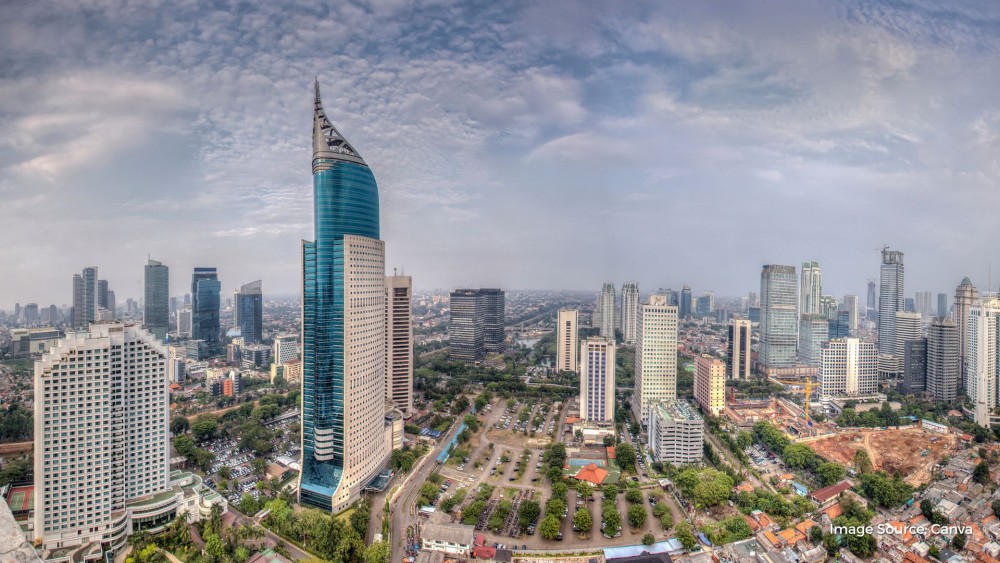
Google says Indonesia has significant potential to leverage artificial intelligence (AI) to drive economic growth. However, the company believes this potential has yet to be fully realized, particularly among micro, small, and medium-sized enterprises (MSMEs), which remain one of the country's key economic drivers.
"Currently, only 14.5% of MSMEs are using AI. That means there is a tremendous opportunity ahead of us," said Markham Erickson, Vice President of Government Affairs and Public Policy Centers of Excellence at Google, during the Google AI & YouTube for the Creative Economy event in Jakarta on Thursday, July 23.
According to Erickson, widespread AI adoption among MSMEs could generate up to IDR 910 trillion in additional economic value, equivalent to nearly 4% of Indonesia's gross domestic product (GDP). The technology is also expected to create more than 510,000 new jobs.
Erickson said that improving productivity through AI could have a significant economic impact. Beyond increasing operational efficiency, AI has the potential to enable the development of new products, services, and entirely new types of jobs.
"AI is not only enhancing existing jobs but also creating entirely new industries and employment opportunities," he said.
Indonesia Leads ASEAN in Generative AI Usage
Despite the relatively low level of AI adoption among MSMEs, Google sees strong public enthusiasm for generative AI in Indonesia.
Google Indonesia Country Director Veronica Utami said Indonesian creators now generate nearly 9 million AI-powered images every day, the highest figure in Southeast Asia.
According to Veronica, the widespread use of generative AI demonstrates that Indonesia is not merely a consumer of technology but is increasingly using it to produce creative works.
"This is truly remarkable—not only productive but also highly creative," she said.
Google also reported that Indonesia's creator economy continues to expand rapidly. According to the YouTube Impact Report, the YouTube ecosystem contributed more than IDR 8.4 trillion to Indonesia's GDP in 2023.
In addition, activities generated by creators on the platform supported more than 190,000 jobs. Around 81% of Indonesian creators also earn income from audiences outside the country, highlighting the growing global reach of local content.
Google Announces Grant Funding
To accelerate digital technology adoption, Google.org announced a USD 1.5 million grant (approximately IDR 26.9 billion, based on an exchange rate of IDR 17,909 per USD) for the Indonesia Open Network (ION).
The program is being developed in collaboration with the Ministry of MSMEs and the Ministry of Communication and Digital Affairs, with infrastructure support from Google Cloud.
ION is designed as a digital public infrastructure that enables micro-enterprises, particularly those in rural areas, to launch online businesses without significant upfront costs.
"In its initial phase, ION will empower up to 100,000 micro-enterprises and rural entrepreneurs to start selling online immediately, even without burdensome upfront costs," Veronica said.
Deputy Minister of Creative Economy Irene Umar said advances in AI and digital platforms should not be used solely to increase subscriber numbers or audience reach. Instead, she encouraged Indonesian creators to begin building businesses based on intellectual property (IP).
She pointed to several local creators who have successfully transformed digital characters into commercial products through licensing, merchandise, and collaborations across various industries.
"I want to see more Indonesian creators do the same. A brand that begins in the digital world can evolve into a real business through licensing, merchandise, partnerships, and many other business models," Irene said.
According to Irene, AI can serve as a tool to improve creators' productivity, enabling them to build larger businesses without significantly expanding their workforce.
"Several years ago, we saw telecommunications companies expand into entirely new sectors. The same can happen with creative works. Diversify your business model—that is what I mean by combining project management and AI," she said.
This article is published in partnership with Katadata
Original article here
RELATED ARTICLES