House of Representatives Passes Indonesia International Financial Center Bill, Paving the Way for a Financial Hub with Its Own Judicial System
21 Jul 2026
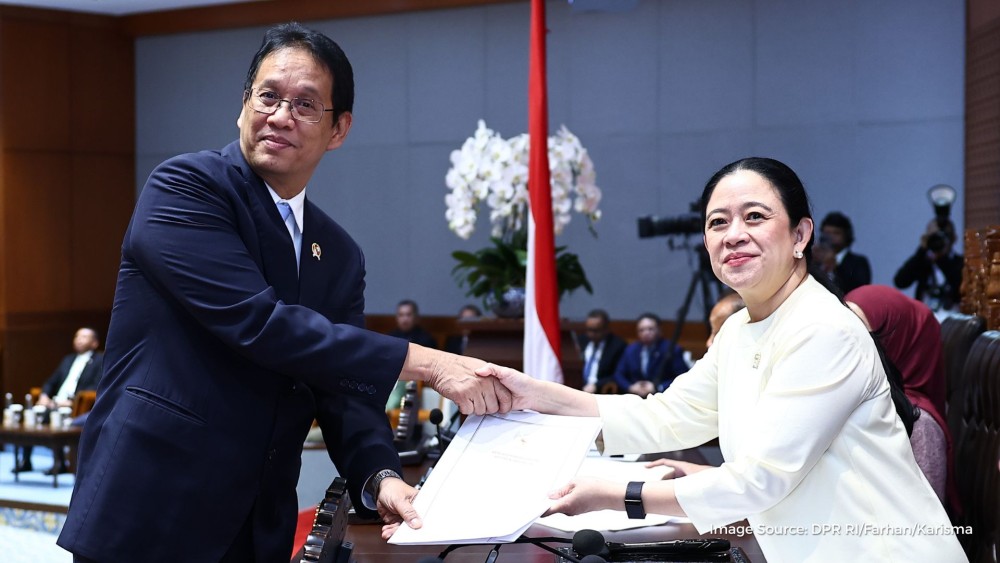
Indonesia's House of Representatives (DPR) has officially passed the Bill on the Indonesia International Financial Center (PFII) into law. Through this legislation, Indonesia will establish an international financial hub with its own dedicated judicial system.
The bill was approved during the second-level deliberation at the 26th DPR Plenary Session of the Fifth Sitting Period for the 2025–2026 legislative year, held at the Parliament Complex in Senayan, Jakarta, on Tuesday, July 21.
During the session, Mohamad Hekal, Chairman of the Working Committee (Panja) for the PFII Bill, presented the results of the first-level deliberations.
Hekal explained that the bill originally consisted of seven chapters and 53 articles. He noted that Commission XI began deliberating the PFII Bill on July 2, 2026, and established the working committee on the same day.
According to Hekal, the deliberation process incorporated meaningful public participation through a series of public hearings (RDPU) held on July 6, 8, and 9, 2026.
"During these public hearings, the Working Committee received highly constructive input on various regulatory aspects of the PFII Bill from a wide range of stakeholders, including academics from various universities, relevant ministries and government agencies, financial sector authorities, banking associations, and professional associations within the financial industry," he said.
Hekal added that the Working Committee held deliberation meetings on July 8, 9, 13, 14, 15, and 16, 2026. Meanwhile, the drafting and harmonization teams carried out their assignments from July 17 to 19, 2026, and presented their work to the committee on July 19.
The committee subsequently refined the draft based on the results of the drafting and harmonization process during meetings on July 19 and continued the revisions on July 20.
"The government's draft PFII Bill, consisting of seven chapters and 53 articles, was reviewed by the Working Committee through the compilation of the Problem Inventory List (DIM) submitted by parliamentary factions, totaling 503 entries, comprising 367 entries for the main body and 136 for the explanatory section," Hekal said.
He explained that 157 DIM entries in the main body and 93 entries in the explanatory section were approved without changes. Editorial revisions covered 53 DIM entries in the main body and 12 in the explanatory section.
"Substantive revisions consisted of 93 DIM entries in the main body and six in the explanatory section. Meanwhile, additions of substantive provisions totaled 59 DIM entries in the main body and 23 in the explanatory section, while five entries in the main body and two in the explanatory section were removed," Hekal said.
Based on the work of the Working Committee, the drafting team, and the harmonization team, the final bill was expanded to 10 chapters and 73 articles.
PFII to Have a Separate Judicial System
Finance Minister Purbaya Yudhi Sadewa said the new law is built upon three main pillars.
"The first pillar is access to capital and investment," Purbaya said.
He explained that PFII is designed to attract sustainable inflows of foreign capital and high-quality portfolio investment as a source of long-term financing to expand Indonesia's economy, enabling it to grow faster toward the government's target of 8% economic growth under President Prabowo Subianto.
"If the national economy can expand and grow at a faster pace, it will generate substantial long-term benefits for national development across all regions of Indonesia," he said.
Purbaya added that the initiative would also create a broader tax base and generate new employment opportunities through the multiplier effect of increased access to long-term international financing to support more balanced national development.
"The second pillar is innovation and governance. PFII will build a comprehensive financial services ecosystem supported by the latest technology, world-class cybersecurity, and reinforced by strong governance principles and international best practices in financial management," Purbaya said.
He noted that one of PFII's key distinctions is its strengthened legal framework, including the establishment of a dedicated PFII Court and PFII Arbitration Institution that are designed to operate efficiently, consistently, and independently while ensuring legal certainty and fairness for businesses under Indonesia's sovereign legal system.
"The third pillar is strengthening national competitiveness and human capital. PFII will encourage the creation of employment opportunities for Indonesia's top talent while facilitating technology transfer and knowledge sharing, particularly in the financial sector," Purbaya said.
He added that, in the long term, the initiative is expected to improve capital cost efficiency and enhance the competitiveness of Indonesia's economy.
Purbaya said the key provisions of the PFII Law include general provisions; the establishment, status, and objectives of the Indonesia International Financial Center; business activities; institutional arrangements; the PFII Arbitration Institution; the PFII Court; support from both the central and regional governments; tax incentives and other special facilities; special regulatory provisions for PFII; and closing provisions.
After hearing the government's final statement, House Speaker Puan Maharani, who chaired the plenary session, asked lawmakers whether they agreed to pass the PFII Bill into law.
"I ask all parliamentary factions: do you approve the Bill on the Indonesia International Financial Center to be enacted into law?" Puan asked.
The proposal was approved by the plenary session participants.

RELATED ARTICLES