Government Accelerates Downstreaming, Targets IDR 3,800 Trillion Investment and 3 Million Jobs
06 Oct 2026
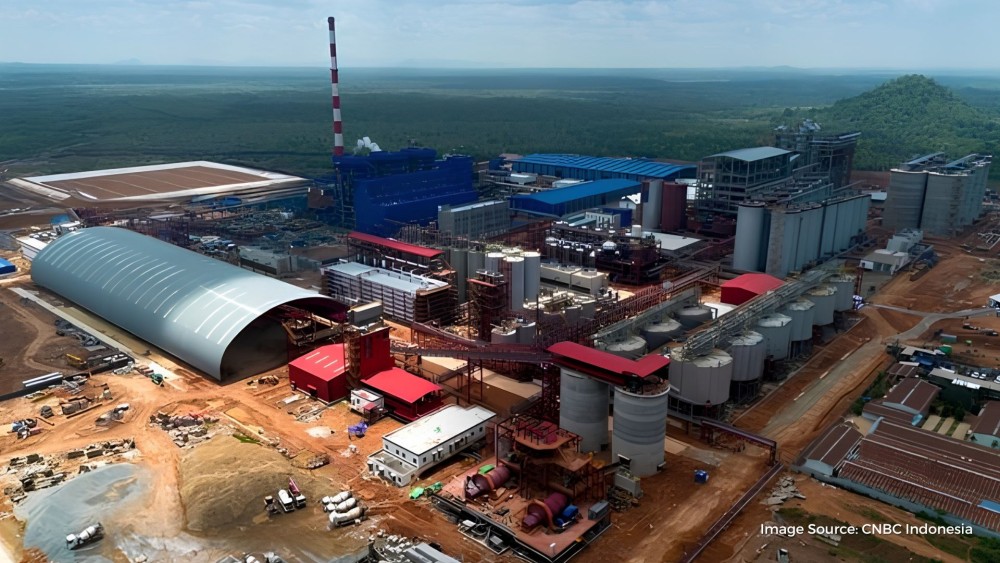
The government is targeting up to IDR 3,800 trillion in investment in Indonesia over the next four years through its natural resources downstreaming program. Coordinating Minister for Economic Affairs Airlangga Hartarto said the investment is expected to create 3 million new jobs.
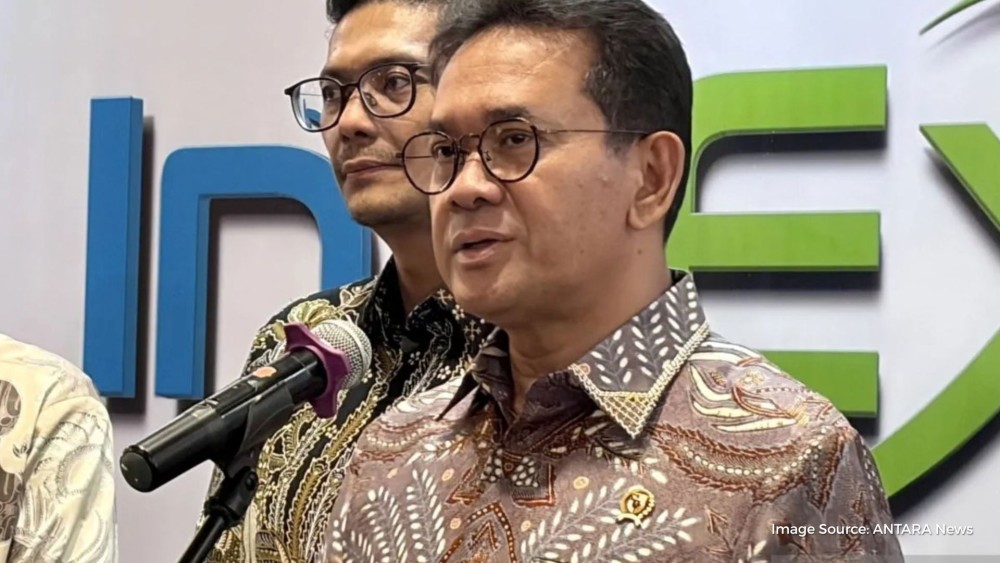
“In terms of employment, downstreaming is expected to employ 3 million workers, while investment is targeted to reach IDR 3,800 trillion over the next four years,” Airlangga said at the BIG Downstream Insights: 2026 Downstreaming Policy Outlook event at Financial Hall, Grha CIMB Niaga Sudirman, Jakarta, on Tuesday, 6 October.
Airlangga said realized downstreaming investment in the first half of 2026 reached around IDR 300 trillion, an increase of approximately 6.9%-7% compared with the same period last year. He said the development of downstreaming would not only target mineral and coal commodities, but also renewable natural resources, including plantations, forestry, agriculture, fisheries, and marine resources.
Airlangga cited the development of downstream palm oil industries, which have now produced more than 200 types of products. Downstreaming has also been carried out in the rubber sector, producing products such as tires. “So downstreaming is not only about minerals, but also renewable resource commodities,” he said.
Airlangga said the government had prepared a downstreaming roadmap covering 28 commodities across eight sectors. The total investment required to implement the roadmap is estimated at USD 618 billion. The investment is expected to increase Indonesia’s exports to USD 857 billion and generate USD 235.9 billion in added value.
“As an additional point, our exports are approaching USD 500 billion, so essentially, with downstreaming, our exports could double from that figure,” Airlangga said.
He said the development of downstreaming had also had an impact on several commodities, including nickel, whose export value rose from around USD 1.3 billion in 2016 to USD 34 billion last year. The government is also continuing to promote downstreaming of renewable commodities. Palm oil derivatives currently number around 208 types, while coconut product exports reached approximately USD 2.39 billion in 2025, growing by nearly 50%.
Airlangga said downstreaming was also encouraging investment to spread beyond Java. He noted that around 75.7% of investment was located outside Java, as most mineral resources and raw materials are found in those regions.
According to Airlangga, this has contributed to economic growth in regions such as Sulawesi, Maluku, and Papua. “So the division is that in Java, it is manufacturing, while outside Java, it is mineral resources or basic natural resources. That is what is driving economic growth in regions such as Sulawesi, as well as Maluku and Papua, to double-digit levels,” he said.
He cited nickel-based investment in Central Sulawesi, which has reached IDR 56.1 trillion, and investment in Maluku, which has reached IDR 53.9 trillion. In North Maluku, the development of an industrial estate has absorbed more than 25,000 workers in one of the areas.
However, Airlangga cautioned that downstreaming should not stop at the processing of raw materials. The government needs to encourage national industries to move up the value chain toward high-tech manufacturing, digitalization, artificial intelligence (AI), and semiconductors.
“Downstreaming is not the same as industrialization. Downstreaming is one part of industrialization,” Airlangga said.
He said these steps were important for Indonesia to raise economic growth from the current level of around 5% toward its 8% growth target.
To support the transformation, the government is also preparing human resource development programs, including internships and vocational training, as well as partnerships with technology companies such as Arm to promote the development of semiconductor and chip design.
The government is targeting the development of 15,000 talents with AI and semiconductor literacy over the next three years.
This article is published in partnership with Katadata
Original article here
RELATED ARTICLES