Indonesia Positions as Global Food Exporter and Industrial Partner at BRICS Summit
14 Sep 2026
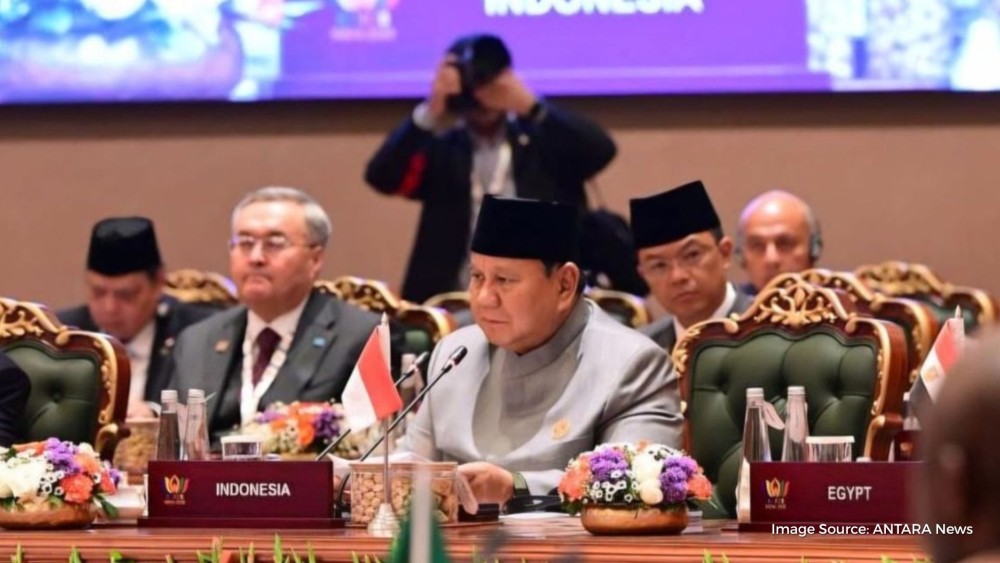
Indonesian President Prabowo Subianto presented a vision for national economic transformation and global cooperation during the 18th BRICS Summit in New Delhi, India. Addressing global leaders at Bharat Mandapam, President Prabowo highlighted Indonesia’s transition into an agricultural exporter and proposed joint industrial initiatives to fortify international supply chains.
Transition to Food Security Supporter
Highlighting progress in boosting domestic agricultural production, President Prabowo affirmed Indonesia's readiness to play an expanded role in addressing international food security needs.
"For years, Indonesia was a major importer of grains, rice, and corn. Now, we have become an exporter and will be able to increase our support for the rest of the world," President Prabowo stated, as reported by Antara News.
He framed this shift as evidence of how national development strategies can overcome structural limitations, noting that developing nations possess similar potential when their respective capabilities are integrated and optimized.
Call for Joint Industrialization
Beyond agricultural milestones, President Prabowo urged BRICS nations to establish a unified framework for downstream manufacturing and value addition.
"Allow me to propose something concrete. Let us jointly pursue industrialization and optimize our resources and capacities," President Prabowo said, as published on prabowosubianto.com.
He emphasized that member states already hold complementary strengths, including rich natural resource deposits, manufacturing infrastructure, technological capabilities, and major consumer markets.
"BRICS essentially already has a supply chain in place. Our task is to connect and optimize to utilize our strengths for greater value," President Prabowo added, as cited by Antara News.
Turning Climate Vulnerabilities into Economic Opportunities
Addressing environmental and economic pressures, President Prabowo linked climate resilience directly to national economic planning. He noted Indonesia’s exposure to natural hazards along the Pacific Ring of Fire—including rising sea levels, extreme weather, and volcanic activity—while pointing to the nation's vast renewable energy resources, critical mineral reserves, rare earth elements, and rainforests.
"We must acknowledge the link between climate resilience and national development," President Prabowo reminded delegates, as published on prabowosubianto.com. He added that member nations hold the necessary inputs to drive a global clean energy transition.
"Together, we can turn these interconnected challenges into opportunities for greater investment, for stronger industries, and for more jobs and better opportunities for our people," President Prabowo remarked, as reported by Antara News.
Economic Resilience and Inclusive Growth
The 18th BRICS Summit centered on four key pillars: resilience, innovation, cooperation, and sustainability. As reported by Antara News, discussions focused on mitigating supply chain disruptions, fostering sustainable industrial development, and supporting economic stability across the Global South. President Prabowo concluded that inclusive growth driven by innovation remains essential for ensuring that economic expansion delivers measurable benefits to millions of citizens across developing economies.
RELATED ARTICLES