Indonesia’s Automotive Industry Eyes Gradual Rebound as Competition Intensifies
06 May 2026

The Indonesian automotive industry is moving into a more competitive phase where recovery does not benefit all players. Sales may be stabilizing after a weaker year, but underlying shifts in technology, pricing, and consumer expectations are already redrawing the market landscape.
After declining in 2025, the market is targeting a gradual rebound. The Association of Indonesian Automotive Manufacturers (GAIKINDO) recorded whole sales of 803,687 units last year, down 7.2 percent year-on-year, while retail sales fell 6.3 percent to 833,692 units. The industry association has set a 2026 sales target of 850,000 units, signaling expectations of recovery, though not a full return to previous peaks.
Early 2026 data reflects this cautious trajectory. January sales rose 7.0 percent year-on-year to 66,500 units, but March sales declined 13.8 percent to 61,271 units. Total first-quarter sales reached 209,021 units, up just 1.7 percent compared to the same period in 2025, indicating that demand remains uneven.
Indonesia’s Automotive Sales – Q1, 2026, Wholesale
|
Year / Month |
2026 |
2025 |
2024 |
|---|---|---|---|
|
January |
66,500 |
62,084 |
69,758 |
|
February |
81,250 |
72,356 |
70,772 |
|
March |
61,271 |
71,099 |
74,720 |
Source: Gaikindo
Toyota retained its leadership position with 60,584 units sold in the first quarter and a 29.0 percent market share, followed by Daihatsu with 34,881 units and 16.7 percent. However, both brands saw their shares decline compared to a year earlier. At the same time, newer entrants showed rapid growth. BYD recorded 12,473 units in the first quarter, more than doubling its performance from the previous year, while Jaecoo reached 8,065 units in its first full quarter in the market.
This shift reflects broader structural changes in competition. As noted in an industry outlook by Mahaendra Gofar, founder of EVSafe and professor at the National Battery Institute, Indonesia is no longer a peripheral market but “a frontline competitive arena,” with Japanese, Korean, European, and Chinese manufacturers competing directly across multiple segments. He adds that the industry has entered “a more demanding phase,” where growth alone no longer guarantees stability.
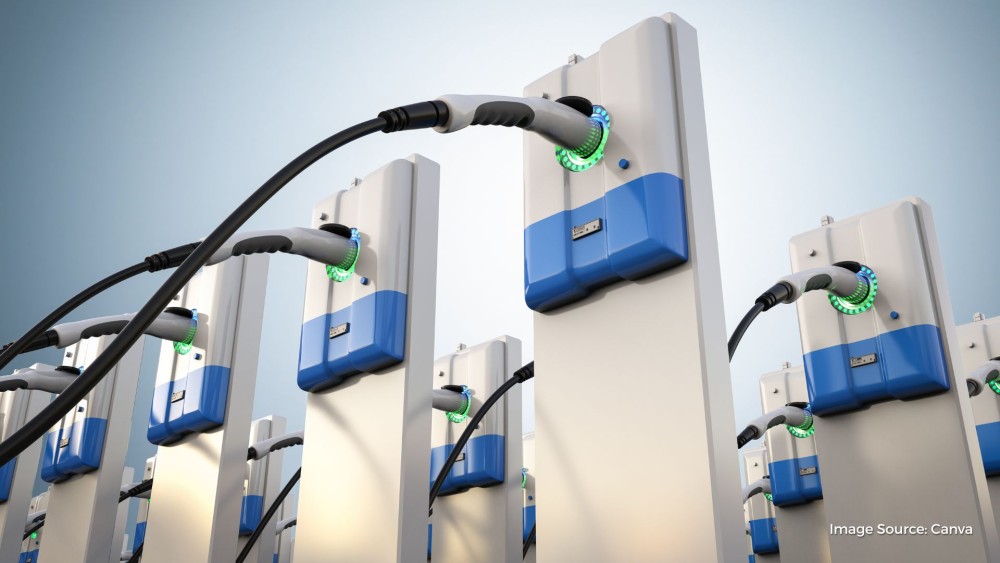
Electrification is at the center of this transition. Chinese EV manufacturers are gaining traction, particularly in the electrified segment, supported by competitive pricing and technology positioning. However, their long-term success will depend on operational factors such as dealer networks, after-sales service, and local production capabilities. In the same outlook, Gofar further notes that Chinese brands have moved beyond disruption and are now “serious structural competitors”.
Total BEV Sales – Q1, 2026
|
Month |
January |
February |
March |
|
Total Sales |
10,264 |
12,314 |
10,572 |
Source: Gaikindo
Top 5 EV Brands in Indonesia – Q1, 2026
|
Monthly Sales Performance |
January |
February |
March |
|
BYD |
4,879 |
4,653 |
2,941 |
|
Jaecoo |
1,942 |
2,926 |
2,959 |
|
Geely |
569 |
1,111 |
1,133 |
|
Wuling |
868 |
1,124 |
607 |
|
Aion |
624 |
921 |
603 |
Established manufacturers are responding by accelerating hybrid offerings. According to Gofar, hybrids serve both as a “defensive mechanism” and a way for legacy brands to remain relevant as consumer expectations evolve. Full battery electric vehicles, meanwhile, increasingly define brand positioning and technological credibility.
Government policy continues to shape this transition. The latest adjustment to EV taxation does not eliminate incentives but shifts authority to regional governments. Under the revised framework, electric vehicles are again subject to Motor Vehicle Tax (Pajak Kendaraan Bermotor/PKB) and Transfer Fee for Motor Vehicle Ownership (Bea Balik Nama Kendaraan Bermotor/BBNKB), but local governments can reduce or waive these taxes, potentially down to zero. The Ministry of Home Affairs has encouraged regions to maintain incentives, suggesting continuity rather than withdrawal. The City of Jakarta has confirmed it will continue waiving both taxes.
At the same time, the Ministry of Industry is proposing a more targeted and selective incentive framework. Minister Agus Gumiwang Kartasasmita stated that the new scheme is designed “for the protection of workers and also for strengthening the automotive manufacturing sector,” with stricter price limits and a focus on environmentally friendly technologies.
Beyond policy, macroeconomic conditions remain a critical constraint. GAIKINDO highlighted weakening purchasing power as a key challenge, noting that vehicle prices are rising faster than income growth. “Car prices are rising by 7.5 percent, while potential buyers’ purchasing power is increasing by only around three percent,” said Kukuh Kumara.
External factors are also influencing the outlook, particularly for internal combustion engine vehicles. Global oil supply disruptions, including tensions affecting shipments through the Strait of Hormuz, have introduced volatility into fuel markets. Higher fuel costs could reinforce demand for more efficient vehicles, including hybrids and EVs, though ICE vehicles remain dominant in Indonesia due to cost and infrastructure considerations.
Despite these challenges, Indonesia retains strong long-term fundamentals. It remains the largest automotive market in Southeast Asia, with relatively low car ownership—around 14 percent of households—and significant room for expansion. The country is also strengthening its position as a regional manufacturing hub, supported by rising investment and export capacity.
As 2026 progresses, the industry’s trajectory will depend less on overall demand growth and more on how companies adapt to structural changes. Electrification is no longer a future prospect but an immediate competitive factor. Policy support remains present but more selective. Consumer behavior is becoming more price-sensitive and technology-driven.
The result is a market that continues to expand, but with clearer distinctions between those gaining momentum and those losing ground. Indonesia’s automotive industry is still growing, but it is no longer rising uniformly. Instead, it is beginning to define its long-term winners.

RELATED ARTICLES