Oil Prices Tumble After Trump Claims Iran Negotiation Breakthrough
24 Mar 2026
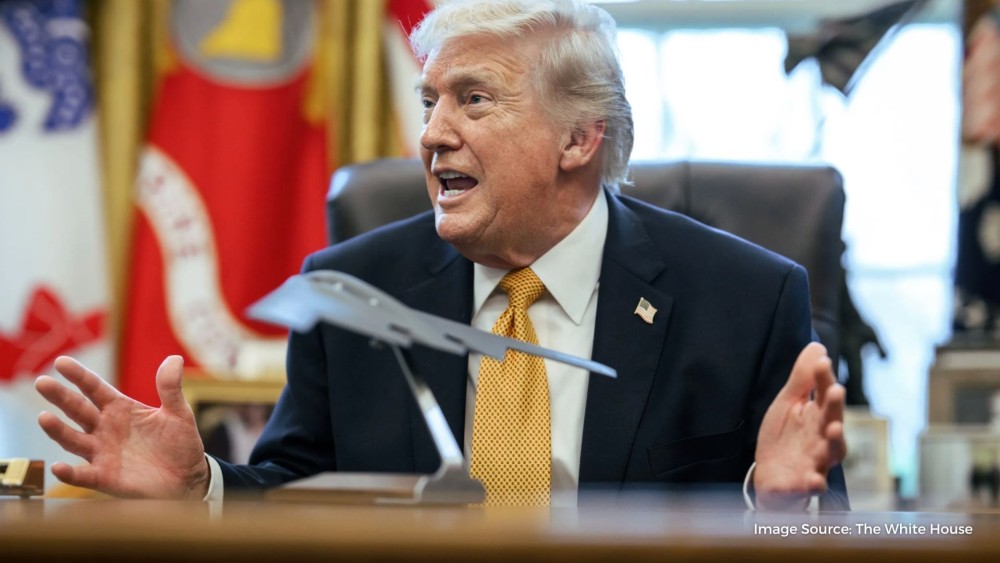
Global oil prices dropped sharply after United States President Donald Trump claimed that discussions had taken place to end the conflict with Iran, although the statement was swiftly denied by Tehran.
Brent crude prices plunged by as much as 14% to around USD 96 (IDR 1,536,000) per barrel shortly after Trump’s statement on the Truth Social platform. Prices later recovered slightly after Iran rejected the claim, while European natural gas benchmark prices also experienced a sharp decline.
Global energy markets have been in turmoil since the conflict erupted in late February, particularly after Iran nearly fully blocked the Strait of Hormuz. The closure has significantly disrupted approximately one-fifth of global oil flows, along with a portion of liquefied natural gas supplies.
The International Energy Agency has described the crisis as the largest oil supply disruption in history. In recent weeks, the US government has taken measures to ease energy prices.
Trump’s statement on Monday, March 23, forms part of these efforts, alongside the release of strategic petroleum reserves and the partial easing of sanctions on Iranian and Russian oil to offset supply shortages caused by the Hormuz blockade.
The sharp price swings on Monday reflect a broader trend of extreme volatility since the conflict began. Four of the six largest price movements in the history of Brent futures contracts have occurred during this period. Analysts from PVM Oil Associates Ltd. described the market as being “in total chaos.”
Trump stated that productive discussions regarding de-escalation in the Middle East had taken place and suggested that talks would continue throughout the week, although he did not specify the parties involved. However, Iran’s state media and the country’s Foreign Ministry firmly denied that any dialogue with Washington had occurred.
Previously, Trump also indicated that he was considering scaling back US military operations, while giving Iran a 48-hour deadline to reopen the Strait of Hormuz and warning of potential strikes on the country’s power infrastructure.
According to Bjarne Schieldrop, an analyst at SEB AB, Trump’s remarks appear to be aimed at pressuring oil prices downward. However, he emphasized that reopening the Strait of Hormuz ultimately depends on Iran.
A de-escalation of the conflict could help restore part of the disrupted supply, although a full recovery would depend on the willingness of shipping operators to resume transit through the still high-risk المنطقة.
Easing tensions could also reduce global inflationary pressures, although a normalization of energy supply is unlikely to occur immediately.
Meanwhile, global investment banks have continued to revise their oil price forecasts upward. Goldman Sachs, for instance, now projects average oil prices to reach USD 85 (IDR 1,360,000) per barrel this year, up from its previous forecast of USD 77 (IDR 1,232,000).
This article is published in partnership with Katadata
Original article here

RELATED ARTICLES