This Week's Headlines (19-25 September)
25 Sep 2026
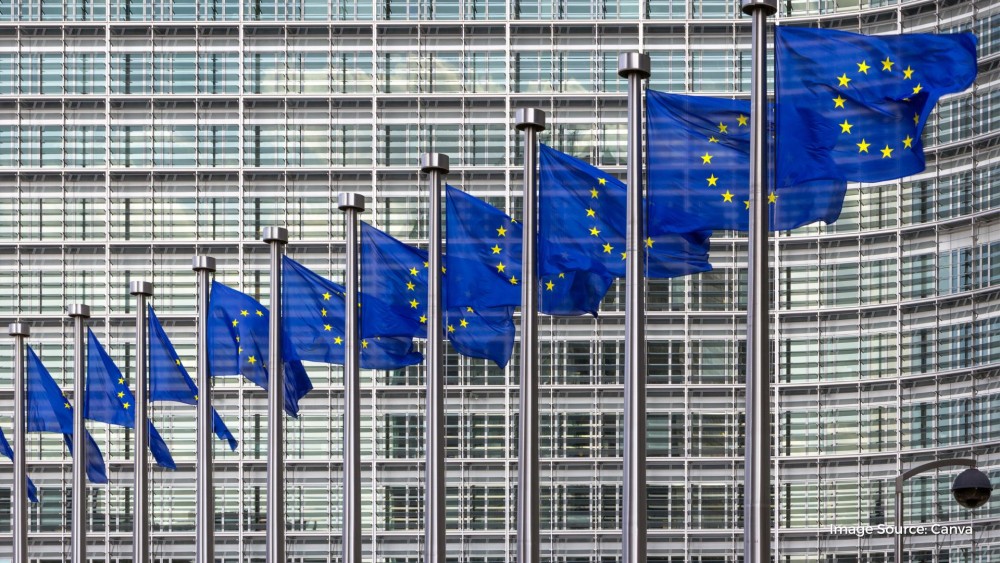
EU Leaders Set to Visit Indonesia for Final IEU-CEPA Talks
European Commission President Ursula von der Leyen and EU Trade Commissioner Maroš Šefovi are set to visit Indonesia in late October or early November as both sides push to finalize the long-negotiated Indonesia-European Union Comprehensive Economic Partnership Agreement (IEU-CEPA).
Indonesia's Coordinating Minister for Economic Affairs Airlangga Hartarto confirmed the upcoming high-level visits, noting that President Prabowo Subianto has explicitly instructed his cabinet to expedite the pact's completion.
"Regarding the IEU-CEPA itself, there are plans for Commissioner Maroš to visit Indonesia, as well as plans for the EU President to visit in late October or early November," Airlangga told reporters at the Presidential Palace complex on Tuesday, September 22, 2026.
The landmark trade deal has entered its final administrative stretch, with legal teams currently finalizing official document language in English before submitting the text to the European Parliament.
Following EU legislative review, the agreement will head to Indonesia's House of Representatives (DPR) for domestic ratification, according to Airlangga.
Indonesia targets the formal ratification process to take place in the second half of 2026, aiming for full implementation by early 2027.
Once enacted, the IEU-CEPA is expected to expand market access, boost bilateral investment, and strengthen broader economic relations.
Airlangga has characterized the long-awaited economic pact as a "game-changer" for Indonesia’s global trade positioning, noting that the agreement will grant immediate zero-tariff access to 90 percent of Indonesian goods entering the EU, with remaining tariffs phased out gradually.
In total, the EU is expected to eliminate import duties on 98.5 percent of tariff lines while streamlining customs procedures for Indonesian exports.
Indonesian President Prabowo Subianto has repeatedly underscored the strategic necessity of concluding negotiations, noting that the agreement will deliver substantial benefits to business communities in both regions while driving Indonesia’s global competitiveness.
Source: Tempo
Indonesia Maintains 18-21 Day Fuel Supply Amidst Middle East Conflict
The Indonesian government has reassured the public that national fuel reserves remain secure at a minimum standard of 18 to 21 days of supply, despite rising geopolitical conflict in the Middle East threatening global energy supplies.
Energy and Mineral Resources (ESDM) Minister Bahlil Lahadalia stated that President Prabowo Subianto has instructed the government to guarantee fuel availability and maintain current subsidized fuel prices through the end of the year.
"The most important thing right now is that the government ensures our fuel reserves are at the minimum standard of 18–21 days," Bahlil said during the Electricity Connect 2026 event in Tangerang, Banten, on Tuesday.
While subsidized fuel rates will stay fixed, Bahlil explained that non-subsidized fuel prices will continue to adjust based on international market rates and the Indonesian Crude Price (ICP).
"Non-subsidized fuel prices will follow market rates. If the ICP rises, the fuel price will automatically go up. Conversely, if the ICP drops, the price will certainly undergo a downward correction," he noted.
The government's supply assurance comes amid sharp geopolitical turmoil following recent US military strikes against targets in Iran, after negotiations stalled over shipping disputes in the crucial Strait of Hormuz—a bottleneck through which a significant portion of global petroleum passes.
In response, Iran launched retaliatory strikes on US military assets across several Arab nations, including Saudi Arabia, resulting in civilian casualties and infrastructure damage. The ongoing hostilities between the US, Israel and Iran since late February have sparked widespread concern over long-term global oil supply disruptions.
Source: ANTARA News
Indonesia's Central Bank Holds Rates Steady, Adds Hedging Incentives
Indonesia's central bank held interest rates steady on Wednesday at its first meeting since Destry Damayanti was appointed governor earlier this month, in line with market expectations, as she highlighted the need to maintain economic growth momentum.
Bank Indonesia kept the benchmark 7-day reverse repurchase rate steady at 5.75%, as predicted by 29 of 32 economists polled by Reuters. Its overnight deposit facility rate and lending facility rate were also left unchanged.
"We want to support economic growth because the momentum is there," Destry said in BI's first in-person press conference in a year and a half following its monthly policy review.
"While stability remains our focus now, we must also open room for the economy to move faster."
BI raised rates by 100 basis points in three moves in May and June to defend the rupiah as it fell to record lows against the dollar. These rate hikes were "sufficient" to respond to global uncertainty, she said.
BI kept its economic growth forecast for 2026 at a range of 4.9% to 5.7%. It recently slightly raised its 2027 growth outlook range to 5.2% to 6%.
RUPIAH UNDER PRESSURE
Destry also announced bigger discounts on hedging costs for foreign investors who buy rupiah-denominated assets, in what she called "innovative" policy, in a bid to attract capital inflows and defend the rupiah.
The policy mix remained consistent with BI's efforts to stabilise the rupiah , maintain inflation within target and support growth, the governor said.
Parliament approved Destry as governor in September, making her the first woman to lead BI. She was interim chief at the last policy meeting in August, when rates were held steady, after the surprise resignation of Governor Perry Warjiyo in late July.
Warjiyo's departure had added to investors' growing concerns about political interference at BI after President Prabowo Subianto appointed his nephew to a senior role at the central bank and parliament expanded its mandate to support economic growth, though Destry's appointment was welcomed.
Worries about fiscal spending and transparency issues with the stock exchange have triggered capital outflows, while Indonesian assets have also been hit by risk aversion among investors related to the war in the Middle East and rising interest rates in major economies.
The rupiah has recovered some ground since June, but has weakened again in recent weeks on investor worries about the fiscal outlook as oil prices rise. The currency on Wednesday was trading around 0.34% stronger than the previous day's close.
"In my view, the decision to maintain the BI rate is appropriate. Not all rupiah pressure should be paid for with more expensive interest rates for the entire economy," said Fakhrul Fulvian, an economist with Trimegah Securities.
Expecting more rate hikes in the United States, Faisal Rachman, a Bank Permata economist, predicted BI would hike by another 25 bps in the fourth quarter.
Barclays economist Brian Tan maintained his outlook for BI rates to remain unchanged through 2026 and 2027, as long as pressures on rupiah do not pick up.
The annual inflation rate picked up to 3.19% in August but stayed within BI's 1.5% to 3.5% target range, which BI said reflected some of the pressure on the rupiah. Government fuel subsidies have helped to steady prices, analysts said.
Source: Reuters

RELATED ARTICLES