This Week's Headlines (July 4-10, 2026)
10 Jul 2026
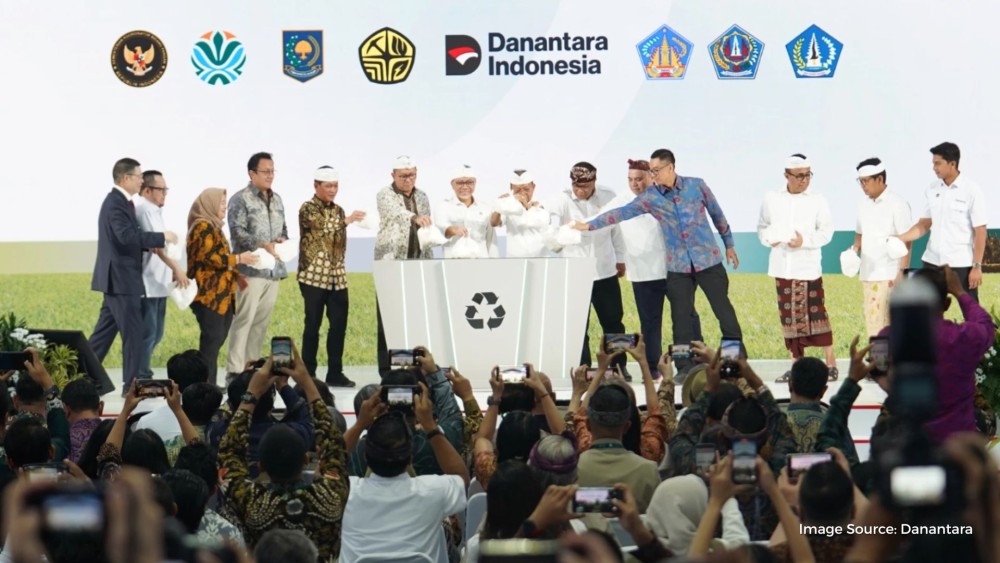
Indonesia Wealth Fund Danantara Starts Construction of First Waste-to-Energy Project
Sovereign wealth fund Danantara Indonesia said on Wednesday it had launched construction of its first waste-to-energy plant on the resort island of Bali.
The power plant will have a processing capacity of 1,500 metric tons of waste per day with total investment expected at IDR 3 trillion (USD 166.62 million).
The plant is expected to start operating in the first semester of 2028.
Danantara, which was launched in February last year, said the project is aimed at tackling waste problems in Bali and in other parts of Indonesia. Waste-to-energy plants are among the immediate projects in its investment pipeline.
The sovereign wealth fund had previously said it targeted the launch of similar projects in 33 cities across Indonesia.
Source: Reuters
Prabowo Rolls Out B50 Biodiesel Program to Boost Energy Sovereignty
President Prabowo Subianto officially launched the mandatory 50 percent biodiesel (B50) program in West Java on Thursday, marking a historic milestone toward national energy sovereignty and curbing dependence on imported fuel.
Indonesia stands as the first country in the world to implement a mandatory 50% biodiesel mixture, Prabowo announced.
The Head of State noted that this milestone demonstrates the nation's capability to leverage its rich natural endowment for the direct benefit of its people.
"This is proof that Indonesia is capable of utilizing its own natural resources to benefit its own people. This is an important milestone for the nation's independence," President Prabowo emphasized.
He explained that while the government previously rolled out B40, escalating the ratio to B50 was necessary to stop diesel imports entirely.
Although he initially advocated for B100, cabinet ministers assured him that a 50 percent blend would fully satisfy domestic independence goals without foreign diesel purchases.
Beyond biofuel, the President pointed out that Indonesia possesses significant energy potential across coal and natural gas reserves, including vast gas fields recently discovered in Andaman, Masela, Natuna, and Kalimantan.
Leveraging these resources for compressed natural gas (CNG) is expected to eliminate the need for imported liquefied petroleum gas (LPG) as well.
To build on this momentum, the President called upon researchers and technical experts to continue innovating to push biodiesel concentration beyond 50% in the near future.
By mandating that all domestic diesel fuel consist of a 50 percent palm-oil-based biodiesel blend, the government expects immediate structural benefits across the state budget, labor market, and environment.
Prior to the nationwide rollout, the government thoroughly tested the blend across six operational sectors: automotive, agricultural machinery, heavy mining equipment, maritime transport, power generation, and railways.
From a macroeconomic perspective, implementing B50 is projected to increase foreign exchange savings from IDR 133.3 trillion (approximately USD 7.41 billion) under the B40 program to roughly Rp170 trillion (USD 9.44 billion) by the end of 2026.
Additionally, the program is expected to drive the added value of crude palm oil (CPO) from IDR 20.92 trillion (USD 1.16 billion) up to IDR 23.49 trillion (USD 1.31 billion), sustain and create around 2.1 million jobs, and reduce greenhouse gas emissions by 44.46 million tons of CO2 equivalent by 2026.
Source: ANTARA News
India Inks Critical Mineral Deals with Indonesia
Steel-making India has secured access to Indonesian critical minerals as both countries forged some major deals during its prime minister Narendra Modi’s Jakarta visit on Tuesday.
New Delhi has been seeking to diversify its mineral supply chains in an attempt to tone down its reliance on Chinese supplies. And three out of the dozen memoranda of understanding (MoUs) from Modi’s talks with President Prabowo Subianto were related to minerals.
One document zeroed in on working together on “minerals and technologies for the steel supply chain”. Steel Authority of India and Krakatau Steel — both state-owned entities — also agreed to set up a joint venture of an undisclosed value. There was an MoU between Non-Ferrous Materials Technology Development Centre (NFTDC), Midwest, and the nascent Perusahaan Mineral Nasional.
“In today’s world, the supply chain resilience of technology is of great importance,” Modi told the joint news conference, speaking via an interpreter.
"We are now seeing a new beginning in partnerships between our companies regarding stainless steel and rare-earth magnets."
Prabowo made no direct mention of the steel deal, but viewed “economic ties as a key pillar in bilateral ties”. To this end, Indonesia hopes to speed up the negotiations on a “preferential trade agreement” (PTA) with India, according to Prabowo. A PTA typically enables lower tariffs for certain goods. However, it is unclear whether any PTA struck between the two BRICS economies would cover processed minerals or even stainless steel.
Indonesia-India trade rose 3.80% year-on-year to USD 9.6 billion in the first five months of 2026. Annual trade neared USD 23.2 billion in 2025, government data showed. Investment inflows from India into Indonesia came in at USD 237.6 million last year, although the statistics did not state to which sector the money had flowed.
Indonesia commands the world’s largest reserves of nickel, the silvery-white metal key in steel production, reaching a whopping 62 million metric tons. Jakarta, however, has stopped exporting raw nickel ores and is limiting shipments to processed goods for a greater economic boost. Jakarta, however, is open to foreign partners that wish to set up factories. India is the world’s second-leading steel producer after China. Its annual steel output is reportedly around 163 million tons.
Sourse: Jakarta Globe