Airlangga Denies US Allegations Calling Indonesia Involved in Transshipment Scandal
20 Aug 2026
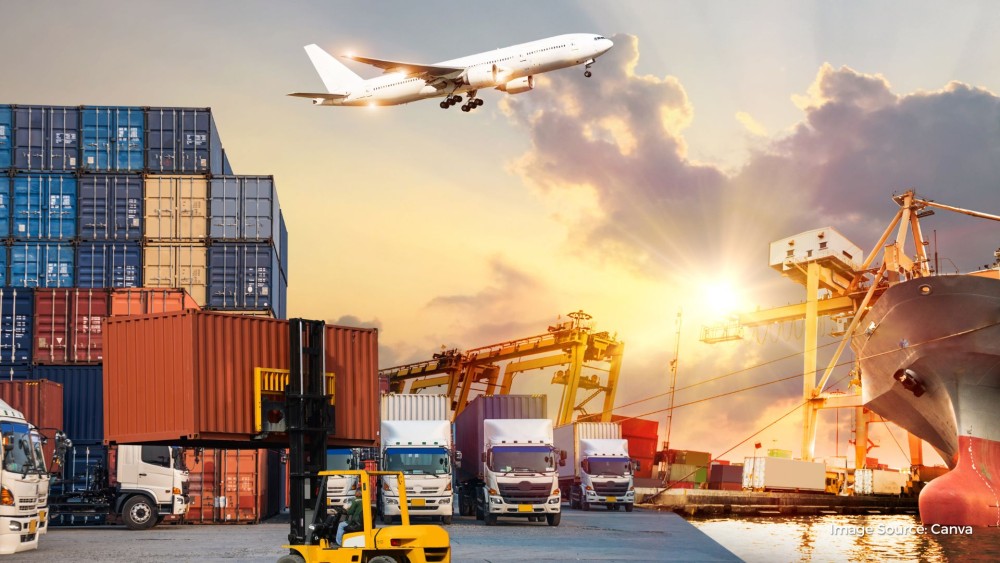
Coordinating Minister for Economic Affairs Airlangga Hartarto denied allegations that Indonesia is involved in a global transshipment network used to reroute goods from China to the United States (US). The US alleges this scheme is used to circumvent trade tariffs. Airlangga's statement was aimed at responding to the report The Great Transshipment Scam published by the White House Office of Trade and Manufacturing Policy. In the report, Indonesia is named alongside a number of other countries, such as Brazil, Malaysia, Thailand, Turkey, and Vietnam, in the global transshipment network.
"Indonesia has never been involved nor informed regarding the existence of this study," Airlangga said at the Coordinating Ministry for Economic Affairs office in Central Jakarta on Thursday, 20 August. Airlangga stated that the allegations placing Indonesia in the transshipment network are untrue. He explained that Indonesia is indeed placed in the tier 2 category as a country with manufacturing integrated with China and possessing exports to the US, specifically for plastic products and their derivatives.
However, he denied that the industrial estates in Batam and Bekasi mentioned in the report are part of the network. "We can state that the industrial estates in Batam and Bekasi have been around since the 90s. And the industries there are mostly manufacturing industries," he said.
US Highlights Plastic-Based Industry
Airlangga also stated that the plastic-based industry in Indonesia does not rely on raw materials from other countries to be subsequently processed and exported to the US. According to him, Indonesia already has domestic plastic raw material production, including those produced by PT Chandra Asri Pacific Tbk and Lotte Chemical Indonesia. "So it is untrue that this uses transshipment from other countries to process," Airlangga said.
He also said that plastic packaging products produced by domestic industries are mostly used for domestic needs or exported to countries surrounding Indonesia, and are not intended for the US market. "The plastic packaging is mostly used domestically or exported to neighboring areas, but not to the United States," Airlangga said.
On the other hand, Airlangga assessed that Indonesia does not need to worry about the report. He mentioned that the study forming the basis of the allegations is still based on assumptions that, according to the government, do not reflect actual conditions. "We also emphasize that this study is a study based on presumptions or assumptions. So what actually happens is not like what they assume," Airlangga said.
Meanwhile, the report stated that exporters from countries subjected to high tariffs, primarily China, channel their goods through more than 40 countries referred to as the 'Shadow Transshipment Network' before entering the US market. This is done to evade US tariffs. The modus operandi includes relabeling, repackaging, issuing new invoices, minor processing, up to false claims of origin. As a result, the shipped goods appear to originate from countries with lower tariffs.
This article is published in partnership with Katadata
Original article here
RELATED ARTICLES