This Week's Headlines (1-4 September)
04 Sep 2026
Prabowo pitches Eurasia-Southeast Asia economic bridge
President Prabowo Subianto has pitched a shared economic future between Jakarta and Moscow, expressing hopes to host his Russian counterpart Vladimir Putin in Indonesia while touting his administration’s “realist, pragmatist” approach to international cooperation.
Speaking at the 11th Eastern Economic Forum in Vladivostok on Thursday, Prabowo said stronger ties between Eurasian and Southeast Asian nations would be key to overcoming an increasingly fragmented world, casting Russia and Indonesia as gateways to their respective regions and natural partners in bridging the two. “Supply chains are withdrawn by suspicion.
Finance is divided by geography. Precisely because the world is fragmenting, every bridge built here – in food, energy, science, logistics and trade – is a practical answer,” Prabowo told the Russia-led forum, where he was invited as principal guest of honor.
“Indonesia does not want to join any military alliance, but we seek to join economic alliances. […] Not an alliance against anyone, but a partnership for the prosperity of everyone,” he said.
Russia’s pivot toward Asia took center stage this week in its easternmost major city of Vladivostok, where representatives from dozens of countries gathered to pitch and launch economic initiatives aimed at strengthening resilience and regional networks amid a fracturing global order and Moscow’s deepening isolation from the West.
The forum has largely focused on the Northern Sea Route, a maritime corridor from the Barents Sea to the North Pacific, as Moscow seeks to position it as a new global shipping route amid the war in the Middle East that rattles global supply chains.
Representing Southeast Asia’s largest economy, Prabowo, whose participation at the forum marked his fourth visit to Russia, underlined the need for countries from both regions to move decisively to build a “South-South trade architecture”. He pointed to Indonesia’s free trade agreement with the Eurasian Economic Union (EAEU) as a platform for bringing the two regions together.
The EAEU, comprising five post-Soviet countries of Armenia, Belarus, Kazakhstan, Kyrgyzstan and Russia, is a regional economic bloc widely seen as Moscow’s vehicle for countering Western influence and maintaining trade flows amid sweeping international sanctions over its 2022 invasion of Ukraine.
Last year, Jakarta became the latest country in Southeast Asia, after Vietnam and Singapore, to sign an FTA with the bloc. The agreement is expected to enter into force in early 2027, opening five EAEU markets to Indonesian producers while giving Eurasian businesses access to around 290 million Indonesian consumers.
Prabowo on Thursday said Indonesian business delegations were already laying the groundwork for future shipments, identifying buyers, securing logistics and establishing compliant payment arrangements ahead of the FTA’s entry into force.
Since Prabowo’s inauguration in late 2024, analysts have pointed to a growing closeness between Jakarta and Moscow, and that Russia’s current economic ambitions are primarily viewed through the lens of its tensions with the West.
Prabowo said, however, Indonesia’s engagement with Russia was not driven by a desire to take sides, but by a practical focus of building long-term prosperity.
“Indonesia’s economic philosophy [is about] realism, pragmatism and the pursuit of the greatest good for the greatest many. We believe in enterprise, initiative, creativity and innovation,” the President said.
“Russia has wheat, fertilizer, energy, science and advanced engineering. Indonesia has palm oil, fisheries, coffee, rubber, textiles, furniture, consumer goods, a young work force and a gateway for the 680 million people of ASEAN. […] This is the foundation of fair and durable trade,” he added.
Earlier on Thursday, Prabowo and a delegation of senior officials held a bilateral lunch meeting with Putin, where the two sides discussed potential cooperation in energy, renewables, food security, space and economy.
Highlighting Indonesia and Russia’s shared position as Pacific countries, Prabowo emphasized the need for deeper bilateral engagement while expressing his gratitude for Putin’s invitation and later extending his own offer to reciprocate the hospitality by hosting Putin in Indonesia.
Putin, meanwhile, said his personal relationship with Prabowo “reflects the strategic nature of the bilateral ties between Russia and Indonesia”.
“Indonesia is one of Russia’s key partners in the Asia-Pacific region. We have maintained friendly relations for many years, and trade between our two countries continues to grow,” he added.
Source: The Jakarta Post
Destry Faces Growth, Stability Challenge as First Woman to Lead Bank Indonesia
Destry Damayanti starts her five-year term as Bank Indonesia’s first female governor facing the challenge of keeping the economy stable while supporting stronger growth.
Destry acknowledged that Indonesia's growth remains below its potential but said inflation and the fiscal deficit remain under control.
"From the economic growth side, we are behind Vietnam. But our characteristics are different from Vietnam, and our complexity is also different," Destry said at the 100 Indonesian Economists Forum in Jakarta on Thursday.
Indonesia's economy grew 5.45% in the first half of 2026, compared with more than 8% growth in Vietnam. Destry said Indonesia was still growing below its optimum level and called for closer cooperation among the government, Bank Indonesia, businesses and economists to lift growth.
"We are still moving below our optimum level," she said, adding that the government, Bank Indonesia, businesses and economists must work together to push growth higher.
Destry, who was sworn in on Wednesday, is the first woman to definitively lead Bank Indonesia. She previously served as the central bank's senior deputy governor and became acting governor after Perry Warjiyo resigned in July.
Balancing Stability and Growth
Economists expect policy continuity under Destry but said markets will closely watch how she balances monetary stability with Bank Indonesia's wider mandate to support growth and job creation.
Eko Listiyanto, vice director of the Institute for Development of Economics and Finance (Indef), said maintaining Bank Indonesia's independence and credibility should be a priority, particularly as the rupiah faces pressure.
The Indonesian rupiah has been among the worst-performing currencies in the region and globally in 2026, losing around 6% against the US dollar so far this year.
"The biggest challenge is to ensure that coordination is optimal while each institution maintains its independence according to its respective duties," Eko said.
He said Bank Indonesia and the Finance Ministry should coordinate closely while remaining within their roles as monetary and fiscal authorities.
The issue has become more important under the 2026 Financial Sector Development and Strengthening Law (P2SK Law), which expands Bank Indonesia's role in supporting economic growth and employment.
Eko said the broader mandate should not weaken the central bank's focus on monetary stability.
"Stability is the key to everything -- economic growth, job creation and ensuring Indonesia can become a developed country," he said.
Yusuf Manilet, an economist at the Center of Reform on Economics (CORE), also expects continuity but said clearer communication will be important.
"The challenge is not to change the direction drastically, but to ensure that Bank Indonesia's reaction function becomes clearer to the market," he said.
Markets will watch how Bank Indonesia responds to pressure on the rupiah, inflation and global financial conditions. Yusuf said the central bank should use a mix of tools.
Interest rates should remain the main instrument, while foreign exchange intervention, hedging and macroprudential policies can address specific pressures.
This would reduce the need to rely too heavily on interest rates to support the rupiah, which could weaken bank lending and economic activity, he said.
However, monetary policy alone cannot resolve all pressures on the rupiah.
External conditions, Indonesia's export structure, the current account and the depth of the foreign exchange market will also affect the currency.
Fiscal policy and structural reforms will therefore be needed to support the central bank's efforts, Yusuf said.
Expanding Local Currency Transactions
Another challenge for Destry will be expanding Local Currency Transactions (LCT), which allow cross-border trade and investment to be settled in local currencies instead of relying heavily on the US dollar.
Eko said LCT had made progress but remained too small to significantly reduce dollar dependence.
He urged Bank Indonesia to expand LCT cooperation with more countries, including partners in ASEAN, BRICS and the Organization for Economic Cooperation and Development (OECD).
But expanding the network alone will not be enough. Bank Indonesia also needs to encourage more businesses, exporters, importers and tourists to use the system, he said.
Source: Jakarta Globe
Indonesia starts coal-to-methanol project in East Kalimantan
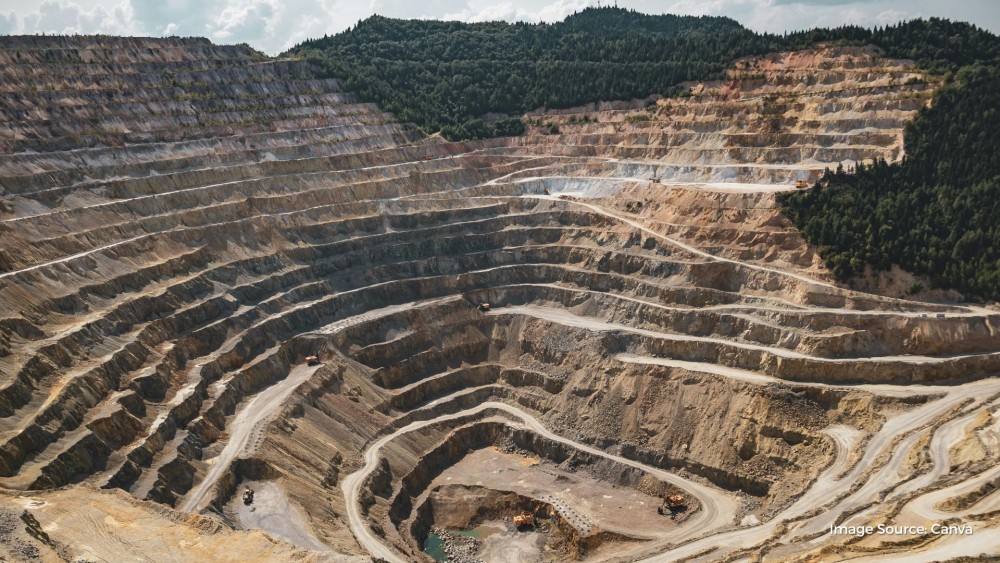
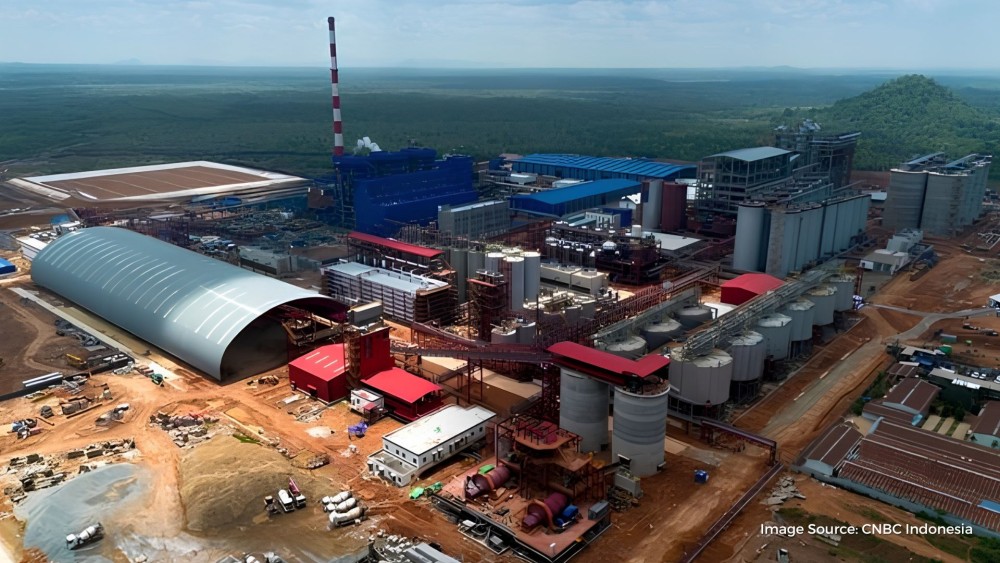
Indonesia has begun construction of a coal-to-methanol project in East Kalimantan that is expected to produce 1.3 million metric tons of methanol annually, strengthening domestic industry and reducing import dependence, the Energy Ministry said Monday.
Energy and Mineral Resources Ministry Deputy Minister Yuliot said the National Strategic Project would convert low-calorie coal into methanol for domestic industries, increasing the value of coal resources while supporting energy security and independence.
“This project is part of our efforts to increase the value of natural resources, strengthen domestic industry, reduce dependence on imports, and support national energy security and independence,” Yuliot said in a statement in Jakarta.
The project is being developed by PT Bumi Etam Chemical (BEC), a joint venture between PT Arutmin Indonesia and PT Kaltim Prima Coal (KPC), on about 943 hectares in the Batuta Chemical Industrial Park (BCIP) in East Kutai District, East Kalimantan.
Yuliot officiated at the groundbreaking ceremony for the coal gasification project in Belangon, East Kutai District, marking the start of construction of the methanol facility.
The project will process about 7.70 million to 7.78 million metric tons of coal with a calorific value of 3,300-3,400 kilocalories per kilogram each year into methanol meeting International Methanol Producers and Consumers Association (IMPCA) Grade standards.
The project is expected to produce 1.3 million metric tons of methanol annually to meet part of domestic demand and reduce imports, while potentially saving up to Rp7.1 trillion in foreign exchange each year.
“This groundbreaking marks the start of concrete steps to build a methanol industry based on coal downstreaming,” Yuliot said.
He said the government hoped the BEC project would serve as a model for other coal companies, given the large potential of low-calorie coal in Kalimantan and Sumatra.
“We will continue to promote this downstreaming, which President Prabowo Subianto has designated as a development priority under his Asta Cita program,” Yuliot said.
The facility will include gasification units, synthesis reactors, a power plant, water treatment facilities and a port terminal. Its technology is also designed to control emissions and will be integrated with carbon capture and storage (CCS).
The methanol produced will supply industries, particularly petrochemicals and formaldehyde, while supporting the development of fatty acid methyl ester (FAME) and the B50 biodiesel program.
BEC President Director Rio Supin said the company had entered the engineering stage through the preparation of a Front-End Engineering Design (FEED) and an Engineering, Procurement, Construction and Commissioning (EPCC) Framework Agreement with PT Istana Karang Laut (IKL) and China National Chemical Engineering Co. Ltd. (CNCEC) on July 29, 2026.
“Indonesia’s first coal gasification project is ready to enter implementation, with commissioning targeted for 2029 following the minister’s direction. BEC is ready to support national energy independence and security,” Rio said.
Yuliot said the project was expected to create jobs, spur supporting industries and increase economic activity through broader multiplier effects for stakeholders.
The coal-to-methanol project is part of Indonesia’s efforts to process low-calorie coal into higher-value industrial products, reduce imports and strengthen domestic industry.
Source: ANTARA News
RELATED ARTICLES