Bahlil: B50 Trial Near Completion, Full Implementation to Begin in July 2026
07 Apr 2026
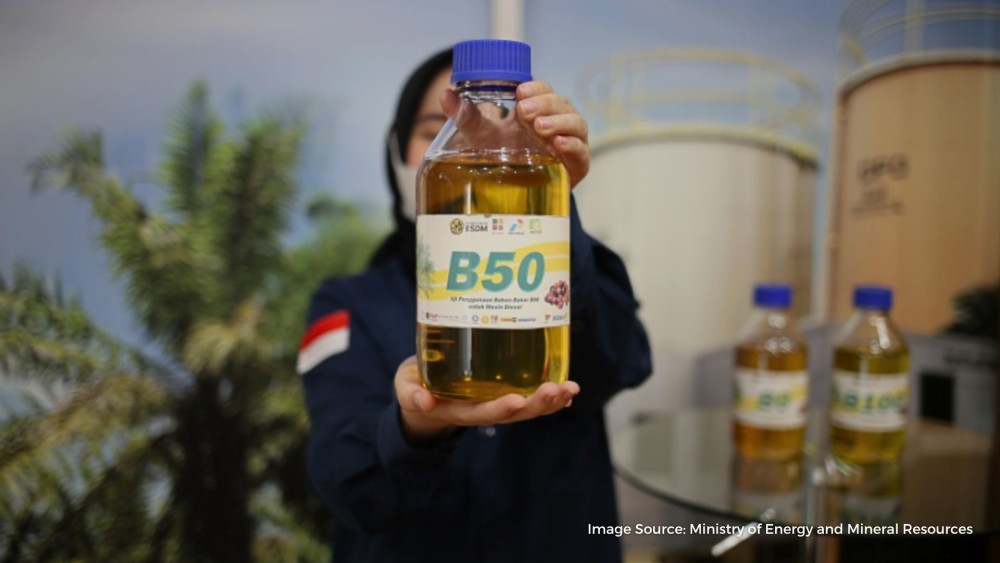
Minister of Energy and Mineral Resources (ESDM) Bahlil Lahadalia said the trial phase for implementing the B50 biodiesel program is nearing completion, with the government set to fully enforce the policy starting July 1, 2026.
“The fuel has been tested in various equipment such as ships, trains, trucks, and heavy machinery. The process is still ongoing but will soon be finalized, and so far the results have been quite good,” Bahlil said at his office on Monday, April 6.
Biodiesel is an alternative fuel made from vegetable or animal oils that can be used to replace diesel in diesel engines. Indonesia currently implements a 40% biodiesel blend, known as B40.
Bahlil said the implementation of B50 is important as part of efforts to diversify energy sources. “Imagine if we do not diversify our energy sources, who would we rely on in situations like this,” he said.
Coordinating Minister for Economic Affairs Airlangga Hartarto previously stated that the planned implementation of B50 could reduce the use of fossil-based fuels by up to 4 million kiloliters per year.
“Within six months, there could be subsidy savings from biodiesel estimated to reach IDR 48 trillion,” Airlangga said during a press conference in Seoul, South Korea, as monitored online on Tuesday, March 31.
Airlangga added that state-owned energy company PT Pertamina is ready to implement the plan. Indonesia began its biodiesel program in 2016 with B10 and has gradually increased the blend to reach B40 by 2025.
Potential Impact on Exports
The Indonesian Palm Oil Association (GAPKI) stated that the implementation of the B50 biodiesel program could reduce Indonesia’s crude palm oil (CPO) exports. GAPKI Chairman Eddy Martono said that while palm oil feedstock is sufficient to support the B50 program, it would come at the expense of export volumes.
According to Eddy, Indonesia’s CPO production has remained relatively stagnant, meaning that increased domestic consumption would directly impact exports.
“If the blend is increased to B50, the most likely adjustment will be a reduction in exports. To ensure both exports and domestic consumption run well, production should be increased first,” Eddy said, as quoted by Katadata.co.id on Tuesday, March 31.
He estimated that the implementation of B50 could reduce CPO exports by around 3 million tons per year if production does not increase.
According to GAPKI data, Indonesia’s CPO production over the past five years has remained relatively stable at around 48 million to 51 million tons per year. Meanwhile, domestic consumption has continued to rise, particularly following the implementation of biodiesel mandates.
This article is published in partnership with Katadata
Original article here
RELATED ARTICLES

COMPANIES IN THIS SECTOR