This Week's Headlines (May 2-8, 2026)
08 May 2026
ASEAN Convenes Under Shadow of Global Oil Shock
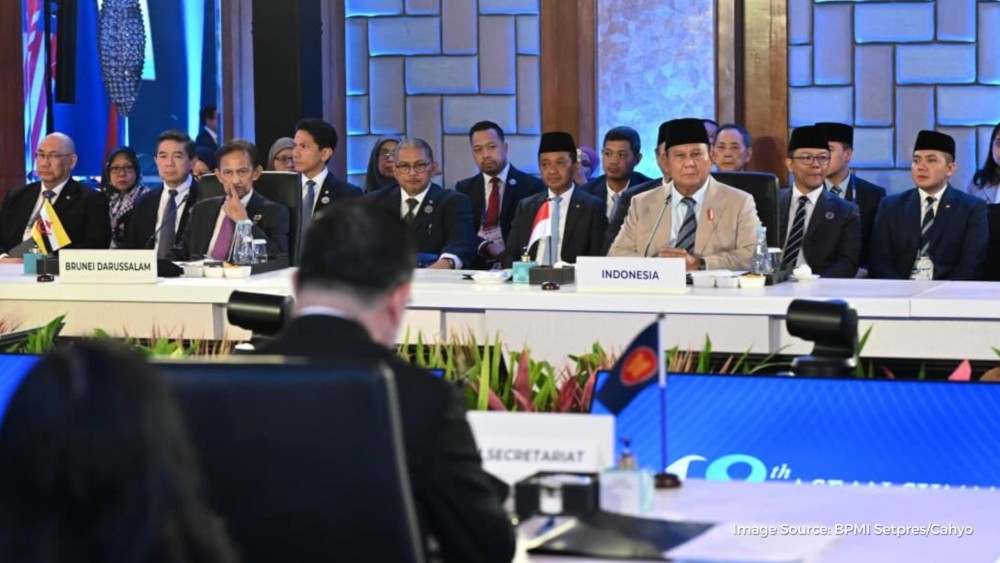
Top officials from across Southeast Asia packed a hectic schedule of back-to-back meetings in Cebu, the Philippines, on Thursday, laying the groundwork for the leaders’ summit while zeroing in on a unified ASEAN response to the Middle East crisis, as fears of a deepening energy crunch hang over the 11-nation bloc.
Across a total of five ministerial-level meetings, representatives from the group throughout the day identified and mulled over the regional implications of the Middle East war, formulating response measures on strengthening energy security and ensuring food security, as well as coordinating humanitarian responses.
The Philippines, this year’s ASEAN chair, opened the packed day by flagging its concerns over disruptions to energy supply chains as a result of the conflict, saying the fallout had “necessitated a recalibration of [its] ASEAN hosting commitments”.
“For ASEAN, which imports about 66 percent of its crude oil, this crisis meant significant increase in fuel and energy cost, which eventually led to another to higher prices for agricultural inputs, food and basic commodities,” said Philippine Foreign Minister Maria Theresa Lazaro when opening the Foreign Ministers’ Meeting (AMM) on Thursday morning.
“We approach this meeting with the understanding that navigating uncertainty requires both agility in responding to immediate and pressing challenges, and steadfast commitment in pursuing our long-term goals,” she added.
Global anxiety over the unrelenting Middle East crisis has continued to mount, as disruptions to key supply chains following the closure of the vital Strait of Hormuz near the 70-day mark with no clear sign of easing anytime soon.
On high alert, Southeast Asian nations have for months scrambled to ease the strain, with an April report from the ASEAN Centre for Energy (ACE) showing the region’s oil and gas import bill rising up to US$3.36 billion per month – up 3.4 percent from earlier projections – as crude prices surged from the $60-70 range to well above $100 per barrel.
As the Philippines declared a nationwide energy emergency, others like Vietnam have seen their industrial sector squeezed by rising input and transport costs, while Indonesia and Malaysia grapple with swelling subsidy burdens and mounting domestic price pressures.
Crisis crunch
A slew of proposals emerged from Thursday’s meetings of the foreign ministers, the ASEAN Economic Community Council (AECC), the ASEAN Political-Security Community Council, the ASEAN Coordinating Council and a rare joint Foreign and Economic Ministers’ Meeting – aimed at mitigating the crisis.
According to statements from the Philippines, these proposals included the diversifying of energy sources, suppliers and routes; enhancing food monitoring; strengthening intra-ASEAN trade, investment and supply chains; information sharing and other preparedness measures.
Indonesia, represented by Foreign Minister Sugiono at the AMM, stressed the need for tighter coordination among member states, calling for “a more coordinated ASEAN’ and stepped-up efforts to build bridges with external partners, arguing that more diversified ties would bolster the bloc’s resilience and relevance.
“The resilience of ASEAN is once again being tested by the ripple effects of the conflict in the Middle East. [...] We must now [pursue] a more coordinated ASEAN in advancing with stronger internal cohesion, and more meaningful external engagement,” Sugiono said during his intervention, as quoted from a press release from his office.
The same sentiment was echoed by Coordinating Economy Minister Airlangga Hartarto at the AECC meeting, where he emphasized the need to leverage trade forums with external partners, including free trade agreements between the bloc and its partners and the Regional Comprehensive Economic Partnership (RCEP).
Airlangga also pushed for accelerating existing regional energy frameworks, such as the ASEAN Power Grid (APG) and the ASEAN Petroleum Security Agreement (APSA) which have never been tested out at scale. The APG aims to interconnect the region’s electricity networks to enable cross-border power trade, while the APSA provides a framework for emergency fuel sharing among member states during supply disruptions.
Leaders up next
The Philippines said that Thursday’s meetings have endorsed a unified response through the adoption of the ASEAN leaders’ statement on its response to the Middle East crisis, adding that Friday’s summit will deliver a “clear, coherent and results-driven agenda” for leaders.
President Prabowo Subianto arrived in Cebu on Thursday noon, joining several other leaders for the Brunei Darussalam-Indonesia-Malaysia-Philippines East ASEAN Growth Area (BIMP-EAGA) Summit slated to strengthen connectivity and intensify cooperation in the sub-region.
At a side event in Cebu organized by the Foreign Policy Community of Indonesia (FPCI), analysts said that any steps taken by ASEAN leaders must take into account grassroots’ needs and smaller economies’ capacity to resist ongoing shocks, and that ASEAN must rethink its dependence on limited oil and gas suppliers.
“When you’ve got a shock like this, you need to go beyond the group to include others that haven’t been affected. [We need to] establish link-ups with other countries and revive multilateralism that has not been working for quite some time,” said Jayant Menon, a senior fellow of the ISEAS Yushof Ishak Institute.
Source: The Jakarta Post
South Korea’s Simone Invests USD 24.7 Million in Batang SEZ Factory
South Korean manufacturer Simone is investing Rp 429 billion ($24.68 million) in a new export-oriented leather goods manufacturing facility at the Batang Industropolis Special Economic Zone (SEZ).
The investment commitment was formalized on Wednesday through the signing of an Industrial Land Utilization Agreement between Batang Industropolis SEZ Marketing and Development Director Indri Septa Respati and Simone Batang Indonesia President Director Kim Jung Shik.
Simone Batang Indonesia plans to build its production facility on 8.28 hectares of industrial land within the SEZ. The project is expected to create around 6,000 jobs, further strengthening Batang’s position as one of Indonesia’s export-oriented labor-intensive industrial hubs.
The investment comes as Indonesia intensifies efforts to boost the competitiveness of its manufacturing sector and attract the relocation and expansion of global companies seeking alternative production bases in Southeast Asia.
Indri said Simone’s entry into Batang reflects rising confidence among global investors in Indonesia’s industrial ecosystem.
“This investment shows that Indonesia, through the Batang Industropolis SEZ, is increasingly being seen as an important part of the global supply chain. We are seeing a stronger trend of international companies using this area as a production base for export markets,” Indri said in a statement.
Founded in 1987, Simone is a global manufacturer specializing in leather-based products with operations across several countries, including Vietnam and Cambodia.
Globally, the company controls around 10% of the global market and approximately 30% of the US market, with retail sales valued at more than $7 billion.
Kim Jung Shik described Indonesia as a strategic location for the company’s long-term expansion plans.
Source: Jakarta Globe
Indonesia to Keep Subsidies in LPG-to-CNG Transition
Indonesia will maintain subsidies for compressed natural gas planned to replace subsidized 3-kilogram LPG cylinders, Energy Minister Bahlil Lahadalia said on Wednesday.
"I can guarantee gas subsidies will remain for the people," he said, adding the policy aligns with President Prabowo Subianto's directive to prioritize public interests.
Bahlil estimated the shift from LPG to CNG could reduce subsidy spending by up to 30 percent.
He said CNG would help reduce foreign exchange spending because Indonesia still imports LPG feedstock.
The government is also preparing 3-kilogram CNG cylinders and studying pricing schemes.
"We hope the price will be lower than or at least equal to 3-kilogram LPG," he said.
Bahlil said CNG has long been used in sectors such as hotels, restaurants, and the Free Nutritious Meals program.
However, existing CNG cylinders are larger, prompting the government to develop smaller units for households.
He noted that cylinder designs must be adjusted due to CNG’s significantly higher pressure compared to LPG.
Safety tests for the smaller cylinders are expected to take up to three months before gradual implementation.
The government plans to begin introducing household CNG in major cities on Java this year to reduce energy imports.
Source: ANTARA
RELATED ARTICLES