Bank Indonesia Holds Benchmark Rate at 5.75% While Expanding Measures to Support Rupiah Stability and Economic Growth
22 Jul 2026
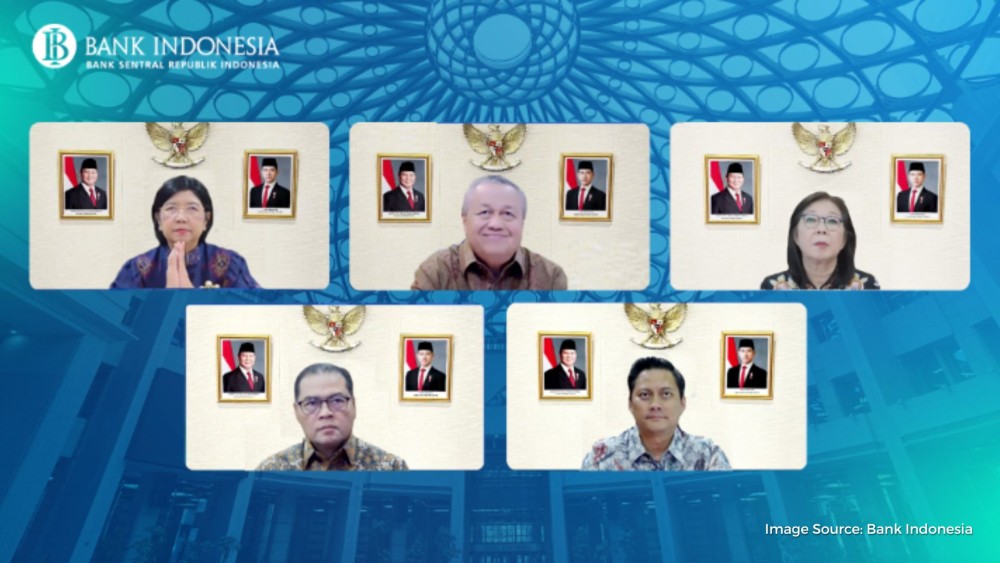
Bank Indonesia (BI) has maintained its benchmark BI-Rate at 5.75%, along with the Deposit Facility rate at 4.75% and the Lending Facility rate at 6.50%, while introducing new incentives to attract foreign portfolio inflows and strengthen rupiah stability amid persistent global uncertainty.
The decision, announced following the Bank Indonesia Board of Governors Meeting (RDG) on July 21–22, 2026, reflects the central bank's integrated policy mix aimed at maintaining rupiah stability, keeping inflation within the government's target range of 2.5% ± 1% in 2026 and 2027, and supporting sustainable economic growth.
"The BI-Rate decision and these accompanying policy measures form an integrated policy mix aimed at further strengthening rupiah stability amid persistent global uncertainty, while keeping inflation within the target range in 2026 and 2027," Governor Perry Warjiyo said, as quoted by Jakarta Globe.
Instead of raising interest rates again, BI introduced broader incentive schemes, including lower foreign exchange hedging costs and expanded incentives for foreign portfolio investors. According to Perry, the central bank considered another rate hike but opted for incentives to avoid increasing domestic borrowing costs.
"These incentives are more effective to attract foreign investment and control the exchange rate without impacting domestic interest rates. This is what we chose," he said, as quoted by Reuters.
The move follows a cumulative 100-basis-point increase in the benchmark rate since May. The decision came as global uncertainty remained elevated due to renewed tensions in the Middle East, rising oil prices, and expectations of tighter U.S. monetary policy, all of which have increased pressure on emerging market currencies.
Bank Indonesia reported that the rupiah has stabilized at around IDR 17,885 per USD 1 after reaching a record low of IDR 18,190 per USD 1 in June. Indonesia's foreign exchange reserves also increased to USD 145.6 billion at the end of June, while foreign ownership of BI's Rupiah Securities (SRBI) continued to rise.
Despite external risks, BI maintained its outlook for Indonesia's economic growth at 4.9%–5.7% in 2026 and expects inflation to remain under control. Headline inflation stood at 3.34% year-on-year in June, while bank lending grew 12.67% year-on-year, reflecting continued resilience in domestic economic activity.
Economists broadly supported the decision to keep rates unchanged. Permata Bank Chief Economist Josua Pardede said BI should preserve policy flexibility while coordinating closely with the government, noting that fiscal support and policy certainty remain essential so that exchange rate stabilization does not rely solely on monetary policy, as quoted by Jakarta Globe. Meanwhile, University of Indonesia economist Teuku Riefky said BI should continue assessing the impact of previous rate hikes before considering further tightening, as quoted by Jakarta Globe.

RELATED ARTICLES