BI Delivers Surprise 25-bps Rate Hike Amid Rupiah Slump
09 Jun 2026
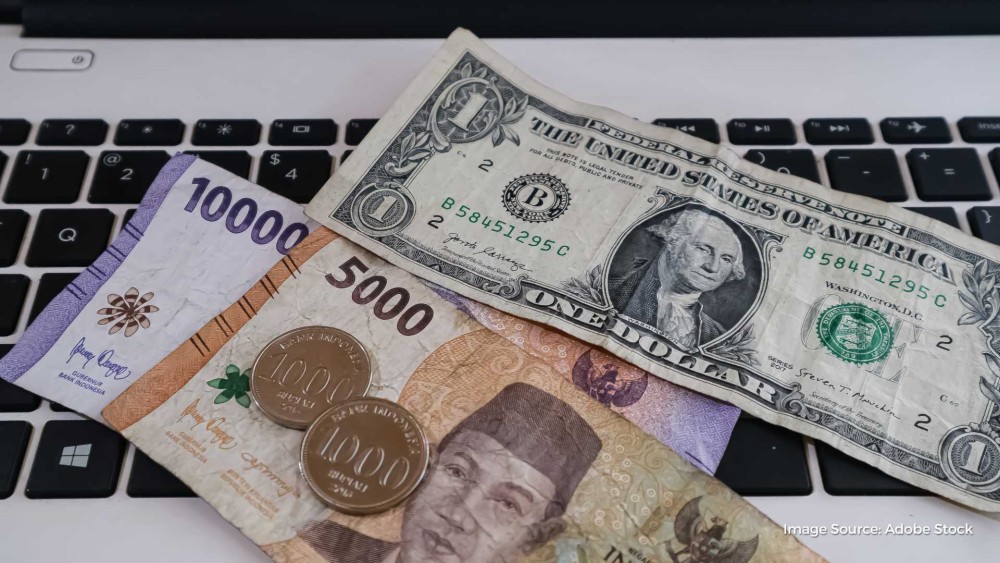
Bank Indonesia (BI) has again raised its benchmark interest rate, or BI-Rate, by 25 basis points (bps) to 5.50% during an emergency Board of Governors Meeting held on Tuesday, June 9.
The deposit facility rate was also raised by 25 bps to 4.50%, while the lending facility rate increased by 25 bps to 6.25%.
BI Governor Perry Warjiyo said the decision was a follow-up measure to strengthen rupiah exchange rate stabilization amid heightened global volatility caused by the war in the Middle East.
“This increase is a further step to strengthen the stabilization of the rupiah exchange rate against the impact of heightened global volatility caused by the war in the Middle East,” Perry said in an official statement on Thursday, June 9.
He explained that the decision was also a pre-emptive move to keep inflation in 2026 and 2027 within the government’s target range of 2.5±1%.
Bank Indonesia had previously raised its benchmark rate in May 2026 by 50 bps to 5.25%. The latest increase marks the second adjustment after BI had kept the rate at 4.75% since September 2025.
According to Perry, the policy is also aimed at increasing yields on domestic financial instruments in order to attract foreign portfolio investment flows back into Indonesia.
He said BI holds a Weekly Board of Governors Meeting every Tuesday to evaluate the implementation of the policy mix decided at the Monthly Board of Governors Meeting. This is in line with the law and established practice.
In its evaluation since the Monthly Board of Governors Meeting on May 19-20, 2026, BI noted that the rupiah had moved weaker than previously expected. The depreciation was driven by continued global volatility, strong domestic demand for foreign exchange, and foreign portfolio outflows from the domestic financial market.
“Bank Indonesia considers it necessary to take further measures to strengthen rupiah exchange rate stabilization by again increasing yields and providing a number of other incentives to encourage foreign investment inflows,” Perry said.
BI emphasized that the rupiah stabilization measures were also taken to maintain the external resilience of Indonesia’s economy and ensure that the inflation targets for 2026 and 2027 remain achievable.
This article is published in partnership with Katadata
Original article here

RELATED ARTICLES