Textile Industry Investment Rises by Double Digits in First Half, Reaches IDR 11.4 Trillion
06 Aug 2026
Investment in the textile and textile products (TPT) industry reached IDR 11.40 trillion (approximately USD 636.34 Million) in the first half of 2026, up 11.85% compared with the same period last year at IDR 10.19 trillion, the Indonesian Textile Association (API) reported recently.
API Deputy Chairman Ian Syarif said the investment did not only flow into the downstream garment industry, but also into the upstream sector that supplies raw materials for the garment industry.
Based on API data, investment in the textile industry rose from IDR 6.05 trillion in the first half of 2025 to IDR 6.78 trillion in the first half of 2026. Meanwhile, investment in the apparel industry increased from IDR 4.14 trillion to IDR 4.62 trillion.
“Investment growth of 11.85 percent is an important indicator because it shows business players’ confidence in Indonesia’s market prospects and production base,” Ian said in an API statement issued on Wednesday, 05 August 2026.
As quoted from the statement, the investment was needed to increase production capacity, modernize machinery, improve energy efficiency, and meet sustainability standards that are increasingly demanded by the global market.
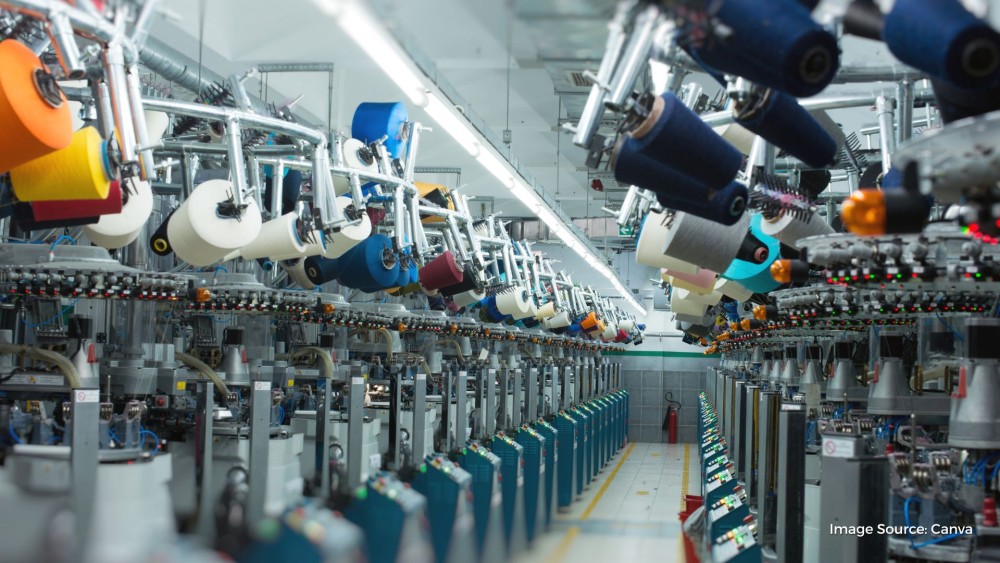
In addition, a multiplier effect is also being felt because the production process involves the entire supply chain, from the fiber industry, spinning, weaving, knitting, dyeing, fabric finishing, to the production of ready-made garments.
In addition to rising investment, the performance of the TPT industry also showed improvement. In the second quarter of 2026, the textile and apparel sector grew 6.36% year-on-year, higher than national economic growth of 5.29% and the non-oil and gas processing industry, which grew 5.32%.
“Growth of 6.36 percent shows that the textile and apparel industry still has resilience and room for expansion. After facing heavy pressure in recent years, this industry is again growing faster than the national economy and the non-oil and gas processing industry,” Ian said.
In the trade sector, exports of the TPT industry in the January to May 2026 period reached USD 4.85 billion, up 1.57% compared with the same period last year at USD 4.77 billion. Meanwhile, imports increased from USD 3.41 billion to USD 3.58 billion.
Although the trade surplus narrowed from USD 1.37 billion to around USD 1.27 billion, Ian said the TPT industry remains an important contributor to Indonesia’s foreign exchange earnings.
“However, we must not ignore the fact that imports are growing faster and the surplus is narrowing. Therefore, export growth must be accompanied by strengthening the domestic market as well as supervision of illegal imports and unfair trade practices,” he said.
API also noted that the TPT industry is one of Indonesia’s largest labor-intensive manufacturing sectors, employing around 3.86 million workers.
Ian said the sustainability of the TPT industry is not only important for businesses, but also for millions of workers whose livelihoods depend on the sector.
Going forward, API is encouraging the government to continue strengthening the industry’s competitiveness through the provision of raw materials, competitive energy prices, machinery modernization, improved labor productivity, industrial financing, utilization of international trade agreements, and enforcement against illegal imports.
“The challenge now is to turn growth into higher utilization, orders, exports, investment, and worker welfare in a sustainable manner,” Ian said.
This article is published in partnership with Katadata
Original article here

RELATED ARTICLES