Fitch Revises Indonesia’s Outlook to Negative, Airlangga Calls Free Nutritious Meals a Long-Term Investment
05 Mar 2026
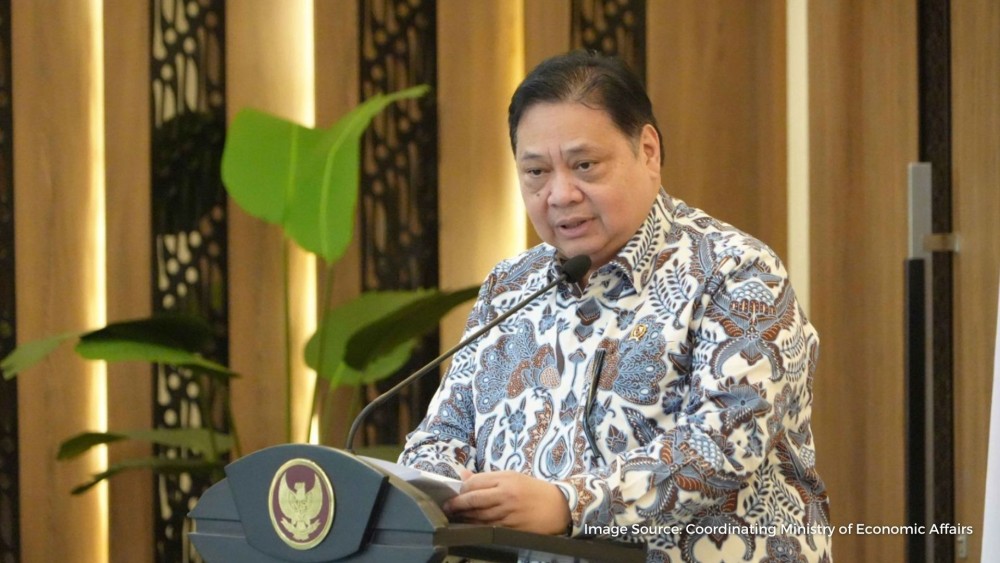
Global rating agency Fitch Ratings highlighted Indonesia’s Free Nutritious Meals (MBG) program in its decision to revise the country’s debt outlook from stable to negative. Coordinating Minister for Economic Affairs Airlangga Hartarto stated that the MBG program should not be viewed solely as a fiscal burden, but rather as a social investment with long-term economic impact.
Airlangga said studies by the World Bank and the Rockefeller Foundation show that every USD 1 invested in the MBG program could generate USD 7 in returns.
“With large-scale and well-executed implementation of MBG, one dollar of investment could generate seven dollars. So this is an investment,” Airlangga said in Jakarta on Thursday, March 5.
He added that many countries have implemented similar programs because they are considered capable of improving health quality and the long-term productivity of younger generations.
Based on this view, the government considers that long-term policies such as MBG should not be sacrificed for short-term fiscal considerations.
“This is a long-term and medium-term challenge that cannot be removed just for short-term considerations,” he said.
MBG to Continue Expanding Gradually
Airlangga also emphasized that the MBG program is still in the early stage of implementation and will continue to be expanded gradually.
“The MBG program has just started, so as it progresses we will continue to roll it out,” he said.
In its report, Fitch projects Indonesia’s fiscal deficit in 2026 will be higher than the government’s target of 2.7% of GDP. Fitch estimates the fiscal deficit could reach around 2.9% of GDP in 2026.
According to Fitch, one of the factors influencing the projection is more conservative state revenue expectations alongside increased social spending, including the MBG program.
This article is published in partnership with Katadata
Original article here
RELATED ARTICLES