BI Raises Interest Rate by 50 bps to 5.25% Amid Rupiah Downtrend
21 May 2026
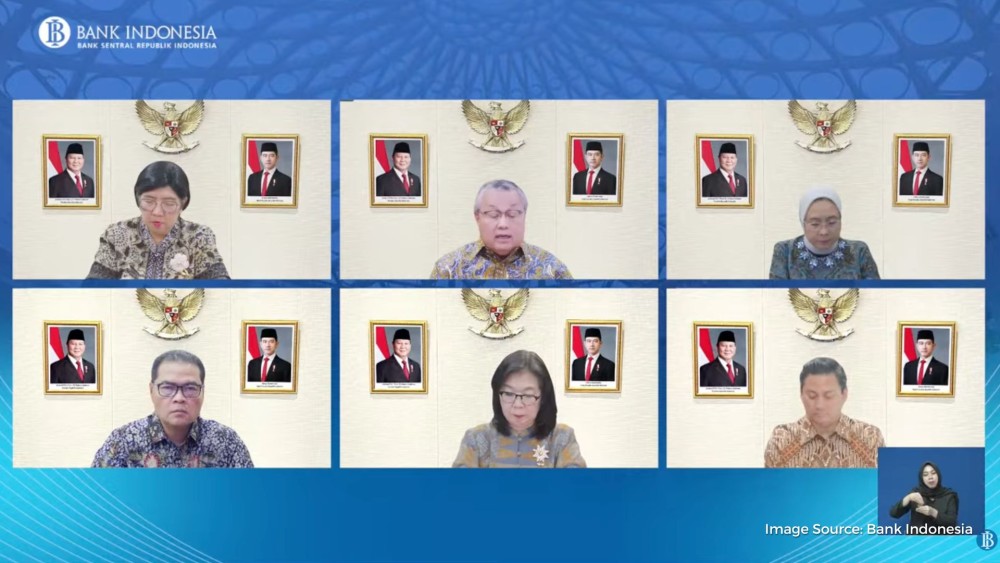
Bank Indonesia raised its benchmark interest rate by 50 bps to 5.25% during its Board of Governors Meeting on 19–20 May 2026. The decision was made as the rupiah continued to weaken, breaching the level of IDR 17,700 per USD.
The deposit facility rate was kept unchanged at 4.25%, while the lending facility rate remained at 6%.
“This increase is a further step to strengthen the stabilization of the rupiah exchange rate amid the impact of high global volatility caused by the war in the Middle East, as well as a preemptive measure to keep inflation in 2026 and 2027 within target,” Bank Indonesia Governor Perry Warjiyo said during a press conference on Wednesday, May 20.
BI recorded that the rupiah exchange rate on May 19 stood at IDR 17,700 per USD, weakening by 2.2% compared with the end of April 2026. However, the central bank believes the rupiah will remain stable and tend to strengthen, supported by BI’s commitment, attractive yields, and Indonesia’s favorable economic outlook.
Perry explained that there is potential for inflation to rise in line with the weakening rupiah, or imported inflation. In addition, unsubsidized energy prices may also increase following the rise in global oil prices.
Nevertheless, BI assured that it will maintain inflation this year and next year at the level of 2.5%.
BI’s decision to raise interest rates is also in line with the policy direction of other central banks. Perry estimates that global inflation this year will rise to 4.3%, while global economic growth is projected to be lower at 3%.
“The global monetary policy response has become tighter, with several central banks even starting to raise their policy rates,” he said.
BI also expects that the US Federal Reserve’s interest rate will not decline until the end of 2026. “It could even potentially rise in 2027, in line with high inflation in the country,” he said.
This article is published in partnership with Katadata
Original article here

RELATED ARTICLES