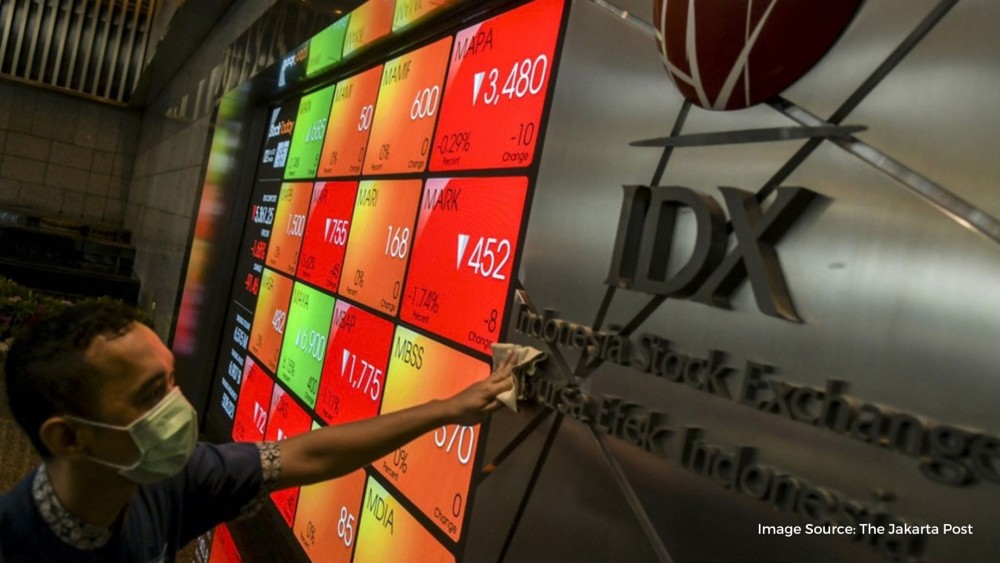
MSCI Extends Indonesia Review to November, Keeps Emerging Market Status for Now
24 Jun 2026

Global index provider MSCI has extended its review of Indonesia’s emerging market status to November 2026, while warning that a downgrade to frontier market status remains possible if market reforms do not show sufficient progress.
MSCI said it would continue assessing reforms introduced by the Financial Services Authority (OJK), the Indonesia Stock Exchange (IDX) and the Indonesian Central Securities Depository (KSEI). The reforms include disclosure requirements for shareholders owning more than 1% of a listed company, a more detailed investor classification, a high shareholding concentration framework and a road map to raise the minimum free float to 15% for IDX-listed stocks.
The index provider cited concerns from international institutional investors over opacity in shareholding structures and suspected coordinated trading activity. These issues relate to the Information Flow and Market Infrastructure pillars of MSCI’s Market Accessibility framework, with market participants raising “profound investability concern,” as quoted by Reuters.
“While these announcements represent a step in the right direction, what matters for international institutional investors is the consistent implementation and sustained effect of these measures across the market,” MSCI stated, as quoted by The Jakarta Post.
MSCI said that, “should sufficient progress not be evident by the time of the November 2026 MSCI index review,” it may consider options including a consultation on reclassifying Indonesia from emerging markets to frontier markets, as quoted by The Jakarta Post.
Indonesian assets have been under pressure since January, when MSCI froze Indonesian stocks in its indexes and raised the possibility of a downgrade, citing opaque ownership, weak free-float visibility and unreliable trading data. Reuters reported that the Jakarta Composite Index is down 30% so far this year, while foreign investors have net sold around USD 3.9 billion worth of shares.
The latest MSCI decision was followed by renewed pressure on Indonesian markets. The Jakarta Composite Index fell 1.6% after the announcement, according to Reuters. In Tuesday trading, the index closed down 15 points, or 0.25%, at 6,101, with turnover of IDR 32.9 trillion, or USD 1.84 billion, according to Jakarta Globe.
During Tuesday’s session, investors also monitored the rupiah, developments in United States-Iran negotiations and concerns over Indonesia’s manufacturing competitiveness. The rupiah closed at IDR 17,859 per USD, near the IDR 18,000 per USD level, according to the Jakarta Globe. Jakarta Globe also reported that investors were monitoring reports that several Japanese automotive component manufacturers in East Java were considering relocating production facilities to Vietnam.
Gary Tan, portfolio manager at Allspring Global Investments, said MSCI’s decision was in line with market expectations. “What stood out is the clear shift toward implementation and measurable outcomes, signalling that announced reforms alone are not sufficient,” Tan said, as quoted by Reuters.
Mohit Mirpuri, a Singapore-based fund manager at SGMC Capital, said the extension gave Indonesia more time but placed the focus on implementation. “The next few months will be about execution, credibility and evidence rather than further policy announcements,” he said, as quoted by Reuters.
Indonesia will remain in MSCI’s emerging market category during the extended review period, with the next assessment scheduled for November 2026.

RELATED ARTICLES