Pertamax Price Increase Adds Pressure on Indonesia’s Middle Class
10 Jun 2026
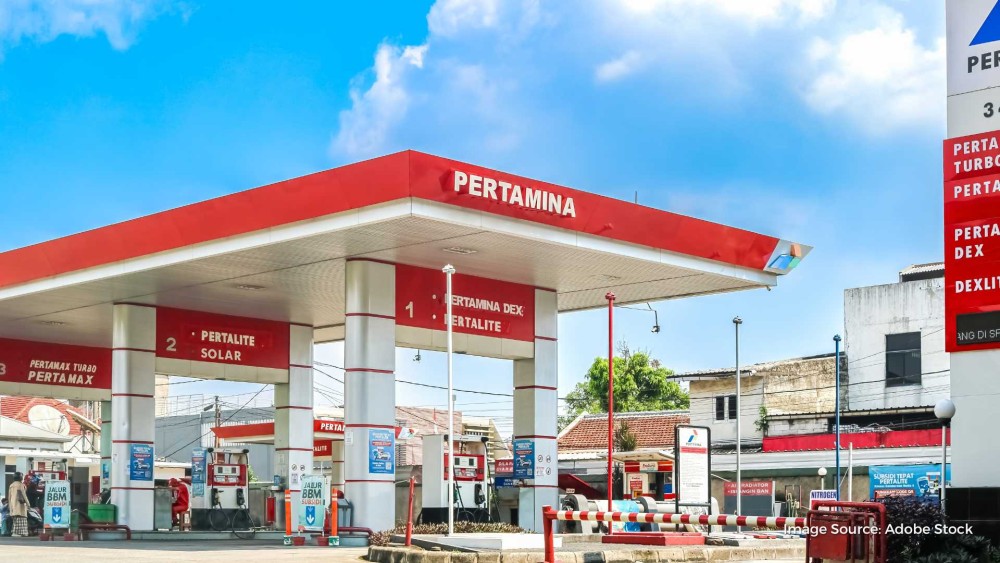
Indonesia’s state-owned energy company Pertamina has raised the price of its non-subsidised Pertamax RON92 fuel by around 32 percent, adding pressure to middle-class households already facing higher borrowing costs.
The price of Pertamax rose to Rp16,250 per litre from Rp12,300, effective Wednesday, June 10. Pertamax Green 95 also increased to Rp17,000 per litre from Rp12,900. The increases represented a 32.1 percent rise for Pertamax and a 31.78 percent rise for Pertamax Green 95.
Pertamina Patra Niaga Corporate Secretary Roberth MV Dumatubun said the adjustment followed the company’s regular pricing review and was based on the pricing formula set by the government.
“The adjustment of Pertamax and Pertamax Green prices was carried out following an evaluation process based on the pricing formula established by the government,” Roberth said in a statement, as quoted by The Star.
“The selling prices were determined in coordination with the government as regulator, and are part of efforts to ensure the continued supply and distribution of quality fuels to the public,” he said.
Prices of subsidised fuels remain unchanged. Pertalite, Indonesia’s most widely used gasoline grade, stays at Rp10,000 per litre, while subsidised Biosolar remains at Rp6,800 per litre. Other non-subsidised fuels also remain unchanged, with Pertamax Turbo at Rp20,750 per litre, Dexlite at Rp23,000 per litre, and Pertamina Dex at Rp24,800 per litre.
The increase comes as Indonesia faces higher energy import costs amid elevated global crude oil prices and a weaker rupiah, which had recently traded above Rp18,000 per US dollar. The price adjustment also came less than 24 hours after Bank Indonesia raised its benchmark interest rate by 25 basis points to 5.50 percent.
In a separate report by Katadata, Achmad Nur Hidayat, a senior economist at UPN Veteran Jakarta, said the impact would be felt in daily household expenses, including higher mortgage payments, heavier vehicle instalments, rising school transport costs, higher commuting expenses, and faster depletion of savings.
He also said the middle class had often borne the impact of economic policy adjustments.
“When the state needs to maintain the rupiah, interest rates are raised. When energy prices are adjusted, users of non-subsidised fuel, most of whom come from the middle class, immediately bear the burden,” Achmad said.
According to Statistics Indonesia, the number of middle-class Indonesians fell from 57.33 million in 2019 to 47.85 million in 2024, a decline of almost 9.5 million people.
Katadata also cited CELIOS Director of Public Policy Media Wahyudi Askar, who said Pertamax users were not limited to wealthy consumers, and that pressure on the middle class could slow household consumption, with consumers expected to reduce non-primary spending, delay home purchases, cut recreation expenses, and reduce spending on additional education.

RELATED ARTICLES