S&P Affirms Indonesia's Sovereign Credit Rating at BBB, Maintains Stable Outlook
14 Jul 2026

International credit rating agency S&P Global Ratings has affirmed Indonesia's long-term sovereign credit rating at BBB and its short-term rating at A-2, while maintaining a stable outlook.
"The stable outlook reflects our expectation that government revenue will continue to recover this year, supported by a rebound in export earnings driven by higher commodity prices," S&P said in a report published on July 13.
The rating agency also stated that the government's policies to increase state revenue and boost export earnings from the natural resources sector are expected to support Indonesia's long-term fiscal position, particularly if policy changes are implemented consistently and with greater regulatory certainty.
In addition, S&P noted that the government's commitment to maintaining the fiscal deficit ceiling at 3% of gross domestic product (GDP) remains an important anchor for preserving the credibility of its fiscal policy.
"Indonesia's ratings reflect its strong economic growth prospects, generally prudent macroeconomic policies, and relatively low net external debt and government debt burden compared with similarly rated peers," S&P said.
Despite these strengths, the agency noted that Indonesia continues to face several structural challenges, including relatively low per capita income, a narrow export and fiscal revenue base, and a domestic financial sector that is less deep and diversified than those of countries with comparable ratings. These conditions also contribute to a higher government debt servicing burden.
S&P projects Indonesia's economy to grow by around 5% annually over the next two to three years, despite inflationary pressures from higher fuel prices.
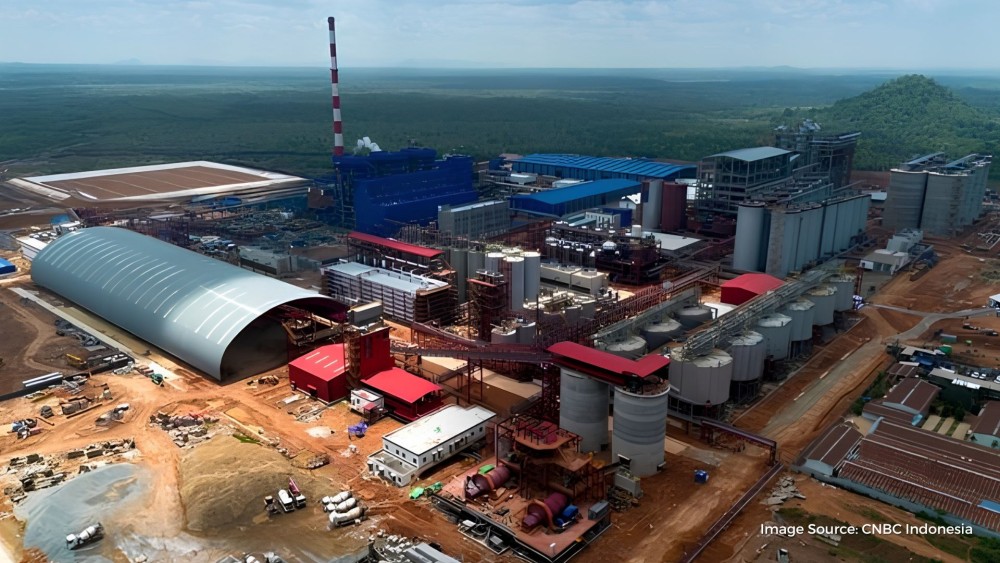
The agency added that the government's downstream industrialization policy and efforts to strengthen state control over the mineral and natural resources sectors could increase both government revenue and export earnings.
However, S&P cautioned that rapid policy changes and uncertainty surrounding their implementation could affect investor confidence and put pressure on the rupiah and domestic financial markets.
Factors That Could Lead to a Downgrade
S&P said Indonesia's sovereign rating could come under pressure if the government's net debt consistently increases by more than 3% of GDP per year, if interest payments remain above 15% of government revenue, or if export earnings weaken structurally, resulting in higher external financing needs.
Potential for an Upgrade
Conversely, S&P said Indonesia's rating could be upgraded if the country's fiscal and external indicators improve on a sustained basis. This would include a fiscal deficit that narrows toward 1% of GDP, supported by significantly higher government revenue, lower financing costs, and exchange rate stability.
The agency also said stronger external indicators would be required, including lower net external debt and external financing needs falling below 50% of current account receipts and usable foreign exchange reserves.
This article is published in partnership with Katadata
Original article here

RELATED ARTICLES