This Week's Headlines (Feb. 28 - Mar. 6, 2026)
06 Mar 2026
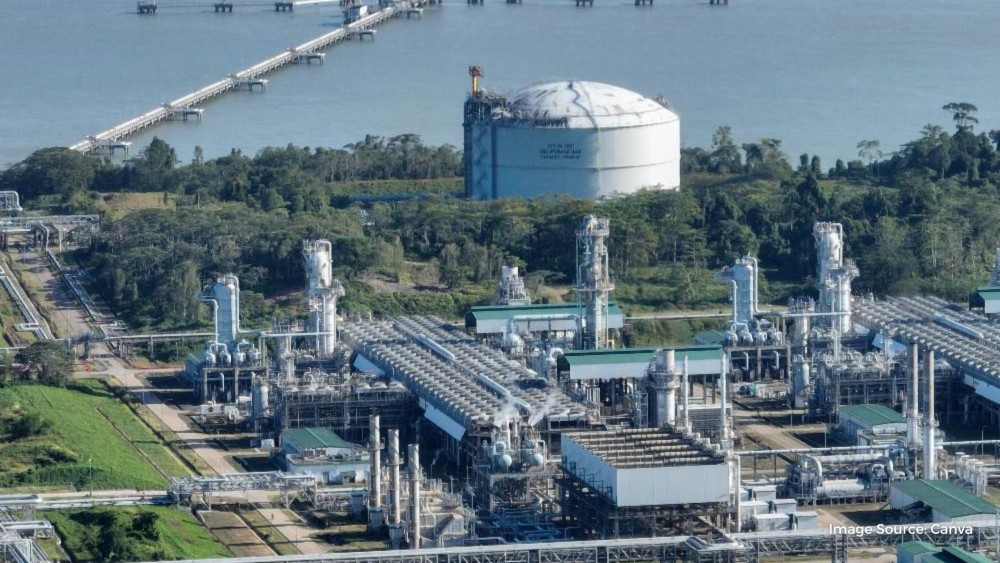
Indonesia to Boost Oil Storage Amid Middle East Conflict
The Minister of Energy and Mineral Resources (ESDM), Bahlil Lahadalia, confirmed that foreign investors have agreed to develop crude oil storage facilities in Indonesia.
"The investment and the investors are already here," he said when met in Jakarta on Wednesday, March 4.
He noted that the parties involved in developing these facilities consist of both foreign and domestic entities, clarifying that the foreign investors are not from the United States.
"The investment is a mix of domestic and foreign, but not the US. The private sector is building the storage," Lahadalia continued.
This indicates that private companies will play a significant role in developing Indonesia's crude oil infrastructure.
The minister outlined that these facilities aim to bolster Indonesia’s energy security. Through this development, the government intends to increase the country's maximum oil storage capacity from 25–26 days to 90 days, or three months.
"President Prabowo Subianto instructed us to build storage immediately. We need survival. Otherwise, we will continue to be dependent," he pointed out.
Currently, Indonesia's energy security has become a major public concern amid the escalating war between the United States, Israel, and Iran.
On Saturday, February 28, the US and Israel launched a series of attacks on several targets in Iran, including Tehran. The strikes reportedly caused significant damage and civilian casualties.
Iran retaliated by launching missile attacks on Israeli territory and US military facilities in the Middle East.
On Sunday, March 1, US President Donald Trump claimed that Iran's supreme leader, Ayatollah Ali Khamenei, was killed in a joint US-Israeli attack. Iranian state television later confirmed Khamenei's death.
Furthermore, Iranian media reported that the Strait of Hormuz has been "effectively" closed following the attacks, although no formal blockade has been officially announced.
The Strait of Hormuz handles approximately one-fifth of the global oil trade, as well as large volumes of liquefied natural gas exports from Qatar and the United Arab Emirates. About 20% of global daily oil consumption, roughly 20 million barrels, passes through this critical corridor.
Source: Antara News
Govt Rolls Out Allowances, Doubles Ride-Hailing Bonuses Ahead of Idul Fitri
The government has prepared IDR 55 trillion (USD 3.2 billion) in holiday allowances (THR) for state employees ahead of the Idul Fitri festivities this month, Coordinating Economy Minister Airlangga Hartarto said on Tuesday.
The payout, part of a broader economic stimulus package aimed at boosting consumption, has increased by 10% from last year. It will go to 10.5 million recipients, including civil servants, government contract workers, retirees, as well as members of the Indonesian Military and National Police, with disbursement beginning on February 28.
For private-sector workers, total holiday allowance payments are estimated at IDR 124 trillion for 26.5 million employees, to be paid by their respective employers, based on data from the Workers Social Security Agency (BPJS Ketenagakerjaan).
“We expect this to significantly boost national consumption,” Airlangga told a media briefing.
The government urged private companies, as well as state- and regional-owned enterprises, to channel the mandatory holiday allowance no later than seven days before Idul Fitri, which is expected to fall on the third week of March.
The holiday payouts come as around 143.9 million people, roughly half of the country’s population, are expected to travel to their hometowns for the annual exodus (mudik), according to the Transportation Ministry.
The government also set holiday bonuses for ride-hailing drivers with app-based companies agreed to provide a total of IDR 220 billion this year, double the IDR 110 billion distributed last year.
President Prabowo Subianto introduced the so-called holiday bonuses last year, although they are not mandated under existing regulations for app-based firms.
Ride-hailing companies recognize drivers and couriers as “partners” rather than employees, exempting them from obligations under the Manpower Law, including providing holiday allowances worth a month’s salary.
About half of this year’s total will be contributed by two major players, Grab and Gojek.
The bonuses will be distributed to 850,000 drivers, including about 400,000 drivers each from Grab and Gojek, 50,000 from Maxim Indonesia and 500 from InDrive, both Russia-based ride-hailing platforms.
Airlangga estimated that ojol (online motorcycle transportation) drivers would receive an average bonus of about IDR 150,000, while four-wheel vehicle drivers would get around IDR 200,000.
Manpower Minister Yassierli said the holiday bonus for ride-hailing drivers was set at 25% of their average monthly net income over the past 12 months, up from 20% last year.
The holiday allowances add to a string of economic stimulus measures rolled out in February, including IDR 911 billion in transportation discounts and IDR 14 trillion in food assistance of rice and cooking oil.
“We’ve seen consumer confidence rise [following the stimulus], and the government is continuing to push domestic spending programs along with substantial discounts. We expect purchasing power to improve,” Airlangga said.
Asked whether the government would introduce additional incentives to cushion fiscal pressures from geopolitical tension as the United States-Israel vs. Iran war escalates, Airlangga said authorities were still monitoring developments.
“The conflict has only lasted a few days, so we are watching how long it will continue. Our response will depend on whether it becomes a prolonged one,” he said.
Source: The Jakarta Post
OJK Reassures Markets as Fitch Revises Indonesia Outlook to Negative
Indonesia’s financial regulator sought to reassure markets after Fitch Ratings revised the country’s sovereign outlook to negative while maintaining the investment-grade rating at BBB, saying the domestic financial services sector remains fundamentally resilient.
The Financial Services Authority (OJK) said capital levels across financial institutions remain well above regulatory requirements and liquidity conditions are still ample, indicating that the rating outlook shift reflects external risks rather than weaknesses in Indonesia’s financial system.
Acting Chairman of the OJK Board of Commissioners, Friderica Widyasari Dewi, said the change in outlook largely mirrors global uncertainties, although the regulator will continue monitoring factors cited in Fitch’s assessment.
“Indonesia’s financial system remains supported by a strong supervisory framework, and we will continue pursuing structural reforms to enhance transparency, deepen the capital market, and strengthen investor confidence over the long term,” Friderica said in a statement on Thursday.
She added that financial intermediation continues to expand in line with economic fundamentals, supporting financing for productive sectors.
“OJK also views Fitch’s assessment that places Indonesia relatively better than several peer countries as a reflection of confidence in the country’s policy capacity and institutional resilience,” Friderica said.
The regulator is currently implementing the Capital Market Roadmap 2023–2027, which includes measures to improve ownership transparency, strengthen free-float requirements, and tighten law enforcement to bolster market integrity.
As a member of the Financial System Stability Committee (KSSK), OJK said it will continue strengthening coordination with the government and other authorities to ensure credible policy implementation amid global uncertainty.
“OJK believes credible reforms, strong supervision, and close policy coordination will further reinforce the resilience of the financial services sector and enhance investor confidence,” Friderica said.
Fitch’s outlook revision reflects evolving external risks and policy dynamics rather than a reassessment of Indonesia’s credit fundamentals or the strength of its financial system.
The reaffirmation of the BBB rating also signals recognition of Indonesia’s track record in maintaining macroeconomic stability, supported by relatively resilient growth prospects, moderate government debt levels, and broadly solid economic fundamentals.
Source: Jakarta Globe