This Week’s Headlines (Jan. 3 – Jan. 9, 2026)
09 Jan 2026
Indonesia to Cut Coal Production to Around 600 Million Tons in 2026
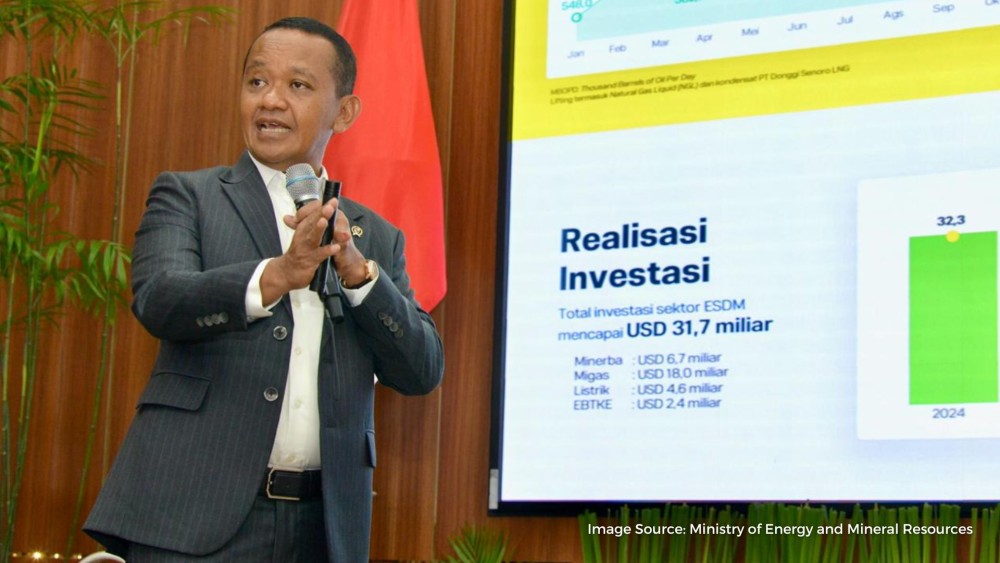
The Indonesian Ministry of Energy and Mineral Resources plans to reduce coal production to around 600 million tons in 2026, nearly 200 million tons lower than the 790 million tons produced in 2025.
The plan was confirmed by Energy and Mineral Resources Minister Bahlil Lahadalia during a press conference in Jakarta on Thursday.
In addition to cutting coal production, the ministry also intends to reduce nickel output in 2026. However, the total scale of the planned nickel production cuts has yet to be determined.
“We will adjust it according to industrial demand,” Lahadalia said.
The production cuts are aimed at stabilizing global commodity prices. Currently, global coal trade reaches approximately 1.3 billion tons per year, with Indonesia contributing around 514 million tons.
This substantial share has contributed to a decline in global coal prices, as reflected in the benchmark coal price.
Indonesia’s benchmark coal price for the first period of January 2026 stood at USD 103.30 per ton, significantly lower than the USD 124.24 per ton recorded in February 2025.
Given Indonesia’s large share of the global coal trade, the Ministry of Energy and Mineral Resources expressed confidence that cutting production would help drive prices higher.
“This is to ensure favorable prices and to make sure we can pass these mines down to future generations,” Lahadalia said.
Meanwhile, nickel prices also declined, falling from USD 15,660 per dry metric ton (dmt) in January 2025 to USD 14,630 per dmt in the first period of January 2026.
The minister also urged major industrial players to purchase nickel ore from local mining companies.
“There should be no monopoly. We want strong investors, but we also want local companies to be strong as well, to encourage collaboration,” he said.
Source: Antara News
Indonesia Extends Income Tax Relief for Labor-Intensive Industries
The government has officially extended income tax relief for workers in selected labor-intensive sectors by continuing the government-borne income tax (PPh 21 DTP) scheme throughout 2026, as part of a broader economic stimulus package aimed at supporting household purchasing power.
The policy is stipulated in Finance Ministry Regulation (PMK) No. 105/2025, which provides tax relief for employees working in five business sectors: footwear, textiles and apparel, furniture, leather and leather goods, and tourism.
The incentive applies to both permanent and nonpermanent employees, provided they meet specific eligibility criteria and are not receiving similar tax incentives under other schemes. Eligible workers must earn a fixed and regular gross monthly income of no more than IDR 10 million, equivalent to USD 600.
According to the regulation, the measure is intended to help maintain purchasing power while supporting the government’s economic, social, and stabilization functions in 2026.
“To safeguard the sustainability of public purchasing power and carry out economic and social stabilization in 2026, the government has established an economic stimulus package, including the provision of fiscal facilities,” the regulation states.
A Bank Indonesia (BI) survey showed that retail sales and consumer confidence weakened in mid-2025 before rebounding toward the end of the year.
According to preliminary data published on December 10, the retail sales index (RSI) was projected to rise to 222.1 in November, marking a 5.9% year-on-year increase from 209.7 in November 2024.
In a statement accompanying the data, BI spokesperson Ramdan Denny Prakoso said the growth was mainly driven by “increasing demand ahead of preparations” for Christmas and the New Year.
A similar positive trend was reflected in BI’s Consumer Survey for November, in which the consumer confidence index (CCI) rose to 124 points from 121.2 in October, following a decline to a multiyear low in August.
Separately, the Finance Ministry has expanded tax reporting in the digital economy by requiring payment service providers and electronic money operators to report financial information to the tax authority starting this year.
The policy is stipulated in Finance Ministry Regulation (PMK) No. 108/2025, which came into force on January 1.
The regulation brings payment service providers (PJP) and electronic wallet (e-wallet) operators into the financial information reporting framework overseen by the Taxation Directorate General (DJP).
Under the new rule, PJPs, both banks and nonbank institutions, are classified as deposit-taking institutions if they manage certain electronic money products or central bank digital currency instruments.
As a result, account and transaction data managed by e-wallet providers may be accessed as financial information for tax purposes.
The regulation also updates Indonesia’s automatic exchange of information (AEOI) regime by extending reporting obligations to crypto assets, aligning domestic rules with the Crypto-Asset Reporting Framework (CARF) and amendments to the Common Reporting Standard (CRS) developed by the Organisation for Economic Co-operation and Development (OECD).
“The Taxation Directorate General is authorized to obtain access to financial information for tax purposes from financial institutions and CARF-reporting crypto-asset service providers,” the regulation states.
Such access includes the automatic receipt of financial information, as well as information, evidence or explanations obtained upon request.
Source: The Jakarta Post
Unilever Indonesia Sells SariWangi in IDR 1.5 Trillion Deal
Unilever Indonesia has agreed to divest its tea business in Indonesia under the SariWangi brand to local fast-moving consumer goods company Savoria Kreasi Rasa, in a transaction valued at IDR 1.5 trillion, equivalent to USD 89.45 million.
The move is part of Unilever Indonesia’s ongoing portfolio optimization, as the company sharpens its focus on fewer, larger-scale categories with stronger long-term growth prospects to support sustainable value creation.
President Director Benjie Yap said the divestment would allow SariWangi to accelerate its next phase of growth, while enabling Unilever Indonesia to concentrate on core segments with higher growth potential.
“This transaction reinforces our commitment to creating sustainable value for shareholders while strengthening our focus on priority categories,” Yap said in a statement on Wednesday.
Unilever Indonesia acquired SariWangi in 1989, transforming the brand into Indonesia’s pioneer of tea bags and one of the country’s most recognized household names, supported by continuous innovation and strong consumer loyalty.
The transaction is expected to be completed in the first half of 2026, subject to customary closing conditions.
The divestment comes amid strong earnings performance in the third quarter of 2025. Unilever Indonesia recorded net sales of IDR 9.4 trillion, up 12.4% year-on-year and 7.7% quarter-on-quarter, driven by domestic sales growth of 12.7%.
Net profit climbed 117% year-on-year to IDR 1.2 trillion, while gross margin widened to 49.2%, reflecting improved pricing discipline and operational efficiency as the company continues to streamline its portfolio.
Source: Jakarta Globe