This Week's Headlines (Mar. 7 - 13, 2026)
13 Mar 2026
Indonesia's HPAL Plants Scramble As Iran War Threatens Sulfur Supply
The disruption of maritime traffic in the Middle East poses a threat to mineral processing in Indonesia, which relies heavily on sulfur shipments from the region for its high-pressure acid leaching (HPAL) refineries to produce mixed hydroxide precipitate (MHP).
Last year, more than 75 percent of Indonesia’s sulfur imports were shipped in from the Middle East, according to the Indonesian Nickel Industry Forum (FINI), with the vast majority of that supply transiting through the Strait of Hormuz, where navigation has almost come to a standstill.
FINI chairman Arif Perdana Kusumah warned that a prolonged disruption of the strategic waterway could paralyze operations at domestic HPAL processing facilities, which produce MHP, the key intermediate product to manufacture battery-grade nickel for electric vehicles.
"This highly concentrated supply, following the closure of the Strait of Hormuz, will disrupt and even cut off the main source of raw materials for HPAL refineries in Indonesia," Arif told The Jakarta Post on Tuesday.
Indonesia hosts around 10 operating MHP projects with a combined designed output capacity of about 440,000 tonnes of contained nickel per year, according to a report published by commodity price intelligence provider Argus last December.
Most projects are owned by Chinese giants Ningbo Lygend, Green Eco-Manufacture (GEM) and Huayou, in collaboration with local producers Merdeka, Harita Nickel and PT Vale Indonesia.
"Sulfur plays a key role in the nickel downstream industry as the primary raw material for producing sulfuric acid," Arif said.
"Based on average industry data, producing 1 tonne of MHP nickel requires approximately 12 to 13 tonnes of sulfur."
While existing stockpiles have mitigated the immediate impact, the industry is bracing for potential turbulence. FINI said member companies currently had sufficient sulfur reserves to keep production going for the next few weeks to a month.
However, Arif cautioned that this was just a “temporary buffer.”
"The situation would change rapidly if the closure of the Strait of Hormuz continues and lasts for an extended period," he added, however, noting that that would trigger a global shortage and a sharp increase in sulfur prices that would ripple through the international EV battery supply chain.
Growing uncertainty over sulfur feedstock has led some trading firms to stop offering MHP cargoes, given expectations of further price increases, Argus wrote in a report on March 4.
Shanghai Metals Market (SMM) estimated in a report published on March 2 that, as of January, sulfur accounted for 41 percent of MHP production costs.
"Should sulfur prices continue to climb amid supply disruptions, the resulting cost pressures would further squeeze project profit margins," commodity intelligence firm warned.
"Indonesian buyers must now compete globally for a limited non-Middle Eastern supply, while rising insurance premiums and detour costs further inflate landed prices."
The Center of Economic and Law Studies (CELIOS) expects disruptions to sulfur imports from the Middle East to force Indonesian HPAL plants to issue force majeure notices.
"The smelter industry, in the worst-case scenario of a sulfur supply shortage, will issue a force majeure notification to buyers," CELIOS executive director Bhima Yudhistira told the Post on Wednesday.
"This will not only reduce nickel processing production capacity but could also halt production," he added, saying that such a shutdown would trigger mass layoffs in the industry.
With Middle Eastern supply lines choked, refiners are desperately seeking alternative sulfur supplies.
However, Bhima cautioned that options were severely limited.
China, despite being a major sulfur producer, is not a viable alternative due to intense competition from its own domestic refineries.
African sulfur shipments often transit through the same troubled Middle Eastern waterways, driving up insurance and material costs by an estimated 15 percent since the escalation of regional conflict.
Domestic supply from Pertamina's refineries exists but is constrained and must compete with existing contracts for fertilizer production.
Given these bottlenecks, Bhima said the most rational course for the industry may be a drastic pullback.
"The most rational option is to reduce production capacity by 50 to 70 percent while waiting for the de-escalation of the war," he said.
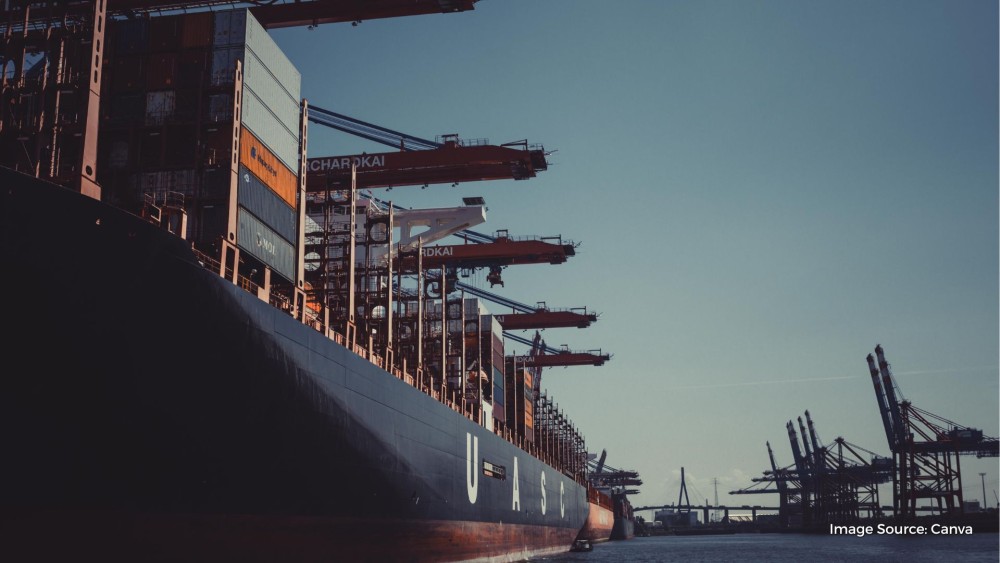
About 200 crude and oil product tankers from around the world are stranded in the Persian Gulf following a near-total halt of vessel movement through the Strait of Hormuz as the escalating United States-Israeli war on Iran raises fears of prolonged disruption to vital oil and gas flows from the Middle East.
According to London-based maritime intelligence firm Lloyd's List Intelligence, most vessels were at anchor while shipowners and charterers awaited clarity on whether it is safe to transit the strait, which carries about a fifth of global oil and gas supplies.
Source: The Jakarta Post
Indonesia to Pursue ‘Intensive' Talks with US After Unfair Trade Probe
Indonesia plans to pursue “intensive” talks with the US after the Donald Trump 2.0 administration launched sweeping unfair trade investigations into dozens of nations, including Jakarta.
Washington’s probe aims to determine whether Indonesia’s production surpluses have displaced existing American production, which they claimed to have caused Jakarta’s mammoth-sized positive trade balance. These investigations followed legal setbacks to Trump’s tariff policies. The inquiries could also open the door for new tariffs against Indonesia if found to have engaged in unfair trade practices.
Coordinating Ministry for Economic Affairs’ spokesman Haryo Limanseto said Thursday that the recent announcement was only an “initial notification” that the legal administration processes had begun.
“The Indonesian government will confirm [with the US government] as soon as possible. We will engage in intensive communication with US Trade Representative [Jamieson Greer] regarding the follow-up measures,” Haryo told the Jakarta Globe via text.
Amid the current developments, Indonesian goods entering the American market are currently subject to the 10% global tariffs, which had kicked in on February 24. These levies would only be valid for 150 days, according to Haryo, unless extended by the Congress.
Even so, the tariff deal that Jakarta and Washington had struck on February 19 will remain as the “main reference in bilateral trade ties”. While the legal processes to turn the deal into law are still underway, Haryo said the deal’s core intent was to implement a “more mutually beneficial reciprocal tariff implementation”.
The February 19 deal had committed the US to limiting its levies from the originally threatened 32% to 19%, while exempting certain commodities, including palm oil. It would lock Jakarta into heaps of major concessions, including granting duty-free entry for US goods. But within less than 24 hours after the signing, the US Supreme Court ruled that Trump did not have the right to impose the reciprocal tariffs that had jolted global markets and prompted economies — including Indonesia — to rush into negotiating a deal with the Trump administration. The ruling was also what had led to the 10% global tariffs.
Greer framed the latest investigation as Trump’s commitment to reshore critical supply chains and create good-paying jobs for American workers. He alleged that overproduction by foreign trading partners had displaced existing US domestic production.
“[It] prevents investment and expansion in US manufacturing production that otherwise would have been brought online,” Greer said.
The US will open a docket for comments on the probe on March 17. Interested persons should submit written comments, requests for a hearing appearance, and a summary of the testimony by April 15. A hearing is slated for May 5.
According to a federal register notice, the US government named Indonesia’s persistent goods trade surpluses as proof of the “structural excess capacity and production”. Indonesia’s global goods trade surplus totaled USD 31 billion in 2024, with exports of metals, textiles, and agricultural products being some of the top impetuses. Its positive trade balance with the US hit USD 56.15 billion by Nov. 2025. The US also pointed out the “permanent oversupply” within Indonesia’s cement industry, which Washington attributed to a seismic imbalance between production and capacity.
Source: Jakarta Globe
Indonesia Eyes USD 50 Billion a Year From Danantara's Asset Returns
President Prabowo Subianto has set a target for Danantara Indonesia to contribute at least USD 50 billion, or about IDR 800 trillion, to the state each year.
Speaking at an event marking Danantara's first anniversary in Jakarta on Wednesday, the president said that the contribution target is based on an expected 5 percent return on assets (ROA) from all assets held by Danantara.
He added that a well-managed company can generate a minimum annual ROA of 10 percent. Still, he is currently expecting only 5 percent from Danantara, as the company has been operating for just one year.
"We understand that in its early years, it may be difficult to achieve. However, if we set the ROA target at 5 percent, it means that Danantara must contribute USD 50 billion, or IDR 800 trillion, each year," Prabowo stated.
He said that Danantara must establish a long-term target to improve the management of state assets, as the sovereign wealth fund is expected to deliver a 10–15 percent ROA annually in the future.
Commending Danantara's performance in its first year, the president nonetheless reminded the management that many challenges still lie ahead.
"I remind you that there is still a long way to go. You must deliver, at a minimum, 5 percent ROA to the nation. A minimum of US$50 billion," he stated, directing his remarks at Danantara executives.
The president had earlier said Danantara had shown a strong performance, with ROA rising by more than 300 percent in its first year, noting that the achievement reflected the full potential of state-owned enterprises when professionally managed.
The Indonesian government established Danantara as a strategic step to consolidate state assets and state-owned companies to optimize its potential in providing greater added value for the national economy.
Source: ANTARA