This Week's Headlines (June 6-12, 2026)
12 Jun 2026

Investors Respond Positively to Bank Indonesia's Surprise Rate Hike, with Inflows Up, Official Says
Indonesia's central bank spokesperson said on Friday that foreign investors have responded positively to its rare off-cycle interest rate hike and an increase in bond yields, as reflected by a rise in foreign capital inflows this week.
Bank Indonesia (BI) raised interest rate by 25 basis points to 5.50% on Tuesday, aiming to stabilise the rupiah after it hit a series of record lows.
BI recorded a higher foreign capital inflow in an auction of up to one-year tenor Bank Indonesia bonds, known as SRBI, on June 10, spokesperson Ramdan Denny Prakoso said.
It raised IDR 15 trillion (USD 834.49 million) from the auction, according to BI's website.
"Foreign capital inflows have also begun to return to the government bond market, particularly in the short and medium-term tenors," Denny said.
The central bank will continue to monitor developments in global and domestic financial markets while maintaining the attractiveness of domestic financial instruments to support foreign capital inflows, he added.
BI will also continue to take action to stabilise the rupiah through "consistent and measured NDF intervention in the offshore, onshore and spot markets," the spokesperson said.
Source: Reuters
Indonesia Targets Up to 6.5% Growth and 2.4% Budget Deficit in 2027
Indonesian lawmakers and the government have agreed to target a 2027 state budget deficit of 1.8%-2.4% of gross domestic product (GDP) and economic growth of 5.8%-6.5%, officials said on Thursday.
The agreement was reached during a working meeting of the House of Representatives' Commission XI, which oversees financial affairs and banking, with the Finance Ministry, the National Development Planning Ministry, Bank Indonesia, and the Financial Services Authority at the parliamentary complex in Jakarta.
Finance Minister Purbaya Yudhi Sadewa said the government would continue to maintain fiscal discipline by keeping both the budget deficit and public debt at prudent levels to support sustainable economic growth.
“The government remains committed to fiscal discipline by keeping the deficit and debt within safe limits, namely a deficit below 3% of GDP and debt below 60% of GDP,” Purbaya said.
According to the minister, financing for the budget deficit will be managed in an innovative, prudent, and sustainable manner to support economic expansion and improve public welfare.
Purbaya also thanked lawmakers for their input during deliberations on the 2027 fiscal framework.
“All of these views will receive serious attention and be followed up through policy improvements,” he said.
The growth target is part of the government's roadmap toward achieving annual economic growth of 8% by 2029.
To reach that goal, the government plans to improve the effectiveness of priority programs, strengthen coordination among fiscal, monetary, and financial-sector policies, and leverage support from Danantara Indonesia, Purbaya said. The government will also seek to improve the investment climate through deregulation and the removal of business obstacles.
Under the agreed macroeconomic assumptions, inflation is projected at 1.5%-3.5%, the yield on 10-year government bonds at 6.5%-7.3%, and the rupiah exchange rate at Rp 16,800-Rp 17,500 per US dollar.
On the revenue side, lawmakers and the government agreed on a 2027 state revenue target equivalent to 12.01%-12.40% of GDP, higher than the government's initial proposal of 11.82%.
The target will be pursued through stronger tax compliance, expansion of the tax base via the Coretax system, adjustments to taxation policies for the digital economy and global standards, optimization of natural-resource revenues, and improvements in tax administration and enforcement.
Source: Jakarta Globe
Indonesia Plans National Car Hub with 300,000-Vehicle Capacity
Indonesia's Defense Minister Sjafrie Sjamsoeddin on Wednesday reviewed progress on the National Car Project, which aims to develop an automotive manufacturing hub with a targeted production capacity of 300,000 vehicles a year.
The project in Subang, West Java, has been designated a national strategic installation and is expected to strengthen Indonesia's industrial base, support technology development, and contribute to long-term economic growth.
During the visit, Sjafrie reviewed plans for manufacturing facilities, vehicle engineering and development centers, testing facilities, and other supporting infrastructure included in the project's master plan.
Sjafrie, accompanied by Deputy Commander of the Indonesian National Armed Forces General Tandyo B Revita and Head of the Defense Logistics Agency Air Marshal Yusuf Jauhari, said strategic manufacturing industries play an important role in strengthening Indonesia's industrial self-reliance and economic resilience.
"The National Car Area is a strategic installation with an important role in strengthening national industry, technology mastery, and the development of an integrated manufacturing ecosystem," Sjafrie said.
The government expects the project to generate significant economic benefits for Subang and nearby areas through increased industrial activity, expansion of local supply chains, and additional investment in the manufacturing sector.
The facility is projected to create about 2,000 jobs for university graduates and technical workers once operational, according to officials.
Sjafrie said the project would also help strengthen Indonesia's capabilities in electric vehicle technology and support the development of domestic expertise in advanced automotive manufacturing.
He called on stakeholders to strengthen cooperation and accelerate implementation of the project so its economic, technological, and industrial benefits can be realized as soon as possible.
President Director of PT Pindad Sigit Santosa said the project would be developed in three phases between 2026 and 2028, with the first phase targeting an annual production capacity of 50,000 vehicles by 2028.
The long-term plan is to expand production capacity to 300,000 vehicles a year as part of Indonesia's efforts to build a comprehensive domestic automotive industry.
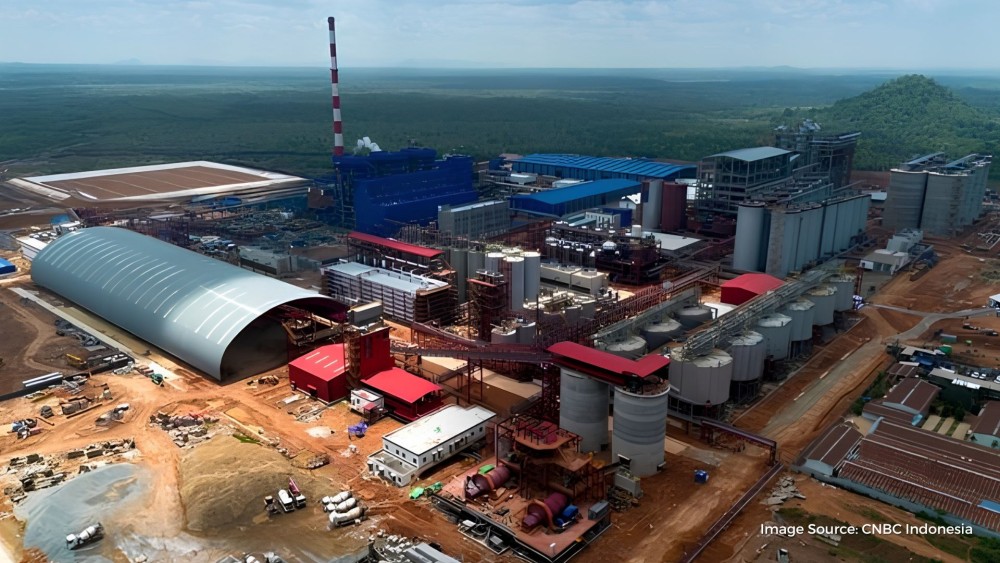
The development area will cover approximately 539 hectares and serve as an integrated automotive manufacturing ecosystem comprising production facilities, offices, testing centers, research and development facilities, and supporting infrastructure.
Initial construction will focus on a 60-hectare section of the site designed to support annual production of 50,000 vehicles before expansion to full operational capacity.
Santosa said PT Pindad had invested in human resources for several years to support the project, including planners, engineers, and implementation personnel needed for large-scale industrial development.
"We have invested in human resources for this national project for several years, from planners and implementers to higher-level personnel," Santosa said.
Source: ANTARA News

RELATED ARTICLES