This Week’s Headlines (Mar. 21 – 27, 2026)
27 Mar 2026
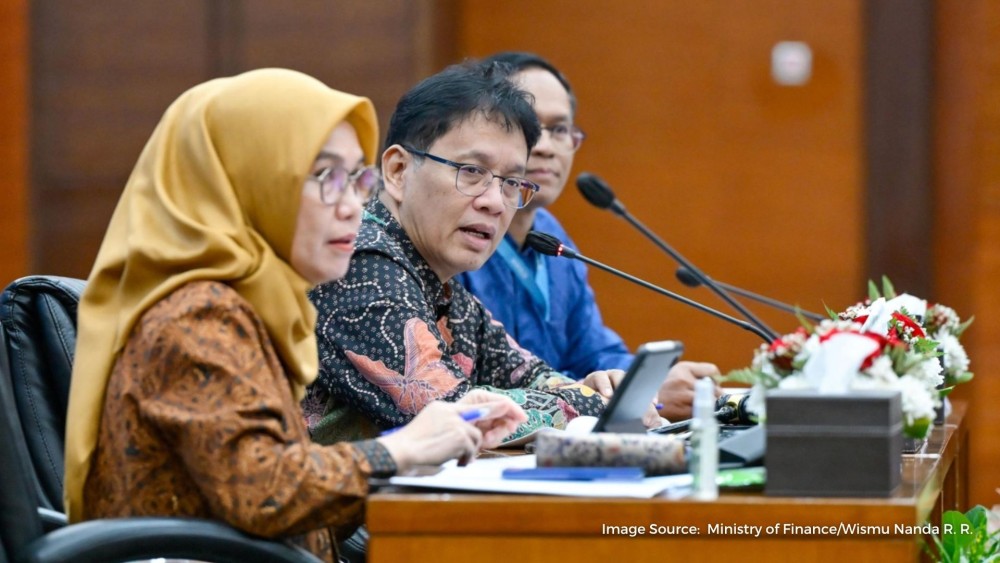
Govt Eyes 5.5% Q1 Growth Amid Ramadan, Eid Spending Surge
Coordinating Minister for Economic Affairs Airlangga Hartarto expressed optimism that Indonesia’s economy could reach its 5.5% growth target in the first quarter of 2026, supported by stronger public consumption during Ramadan and Eid al-Fitr.
“It seems the 5.5% target can be achieved based on the growth during Ramadan,” he said after Eid al-Fitr prayers in Jakarta on Saturday.
Hartarto noted the possibility of higher inflation compared to the first quarter of 2025, following the discontinuation of a 50% electricity tariff discount program that had helped suppress inflation in January and February last year.
Without the discount, household electricity expenses will return to normal levels, contributing to increased inflationary pressures.
Despite this, the government remains confident that public purchasing power and festive-season consumption will sustain growth momentum.
The official growth target for the first quarter of 2026 is set at 5.5–5.6% year-on-year, driven by accelerated state spending, fiscal stimulus, and stronger household demand.
To support this, the government has introduced an economic stimulus package.
Measures include transportation discounts for the Eid homecoming period—30% off train and sea fares and 17–18% off airline tickets—funded with IDR 911.16 billion (USD 52 million).
Food aid worth IDR 12 trillion (USD 686 million) is being distributed to 35.04 million families in February and March, consisting of 10 kilograms of rice and 2 liters of cooking oil per month.
Additionally, IDR 55 trillion (USD 3.1 billion) has been allocated for Eid allowances (THR) for approximately 10.5 million state employees, including civil servants, contract-based staff, members of the Indonesian Defense Forces (TNI), the National Police (Polri), and retirees.
“These measures are designed to maintain public purchasing power and spur economic growth,” Hartarto emphasized.
Source: ANTARA
Purbaya Injects IDR 100 Trillion Into State Banks Ahead of Idul Fitri
Finance Minister Purbaya Yudhi Sadewa revealed that the ministry has injected another IDR 100 trillion (USD 5.93 billion) into local banks to safeguard their financial liquidity ahead of Idul Fitri. The placement brings the total government liquidity injections to around IDR 300 trillion.
Purbaya said the move was triggered by indications of rising yields, which signal a possible liquidity shortage that could lead to broader interest rate hikes.
“A week before Idul Fitri, I added another IDR 100 trillion to the economic system. We are maintaining significant liquidity in our financial system,” he said on Wednesday, as quoted by Kumparan.
He went on to say that government cash deposited at Bank Indonesia (BI) currently exceeds IDR 400 trillion, providing ample fiscal firepower.
In the initial phase, the funds are being channeled to state-owned and regional development banks to ensure controlled distribution.
Private banks have yet to be prioritized as the government “exercises caution in fund placements”. Unlike previous schemes with tenors of up to six months, this placement is designed to be flexible and available for withdrawal at any time as part of a broader treasury strategy to maintain year-round liquidity stability.
Purbaya added that the funds could potentially be used by banks to purchase government securities (SBN), which is expected to help push yields down.
While acknowledging that the IDR 100 trillion injection is modest relative to market size, he expressed confidence it would prevent sharp spikes in interest rates.
One of the first moves Purbaya made since taking up the minister’s mandate last September was moving IDR 200 trillion of government cash deposited at BI to government accounts in commercial banks, with the deposit rate set at 80% of the BI Rate, in hopes of spurring credit growth.
Banks could only receive the funds under the condition that the injection be used exclusively for disbursing loans. Purbaya explained that banks would be forced to find ways to make up for the interest they have to pay to the state by increasing lending.
The idea behind the maneuver had been to spur the growth of base money (M0), which is the total amount of money a central bank has created, and make it accessible to the economy.
Purbaya said M0 had experienced tepid growth throughout last year, and the maneuver pushed it to 11.7% year-on-year (yoy) in the first week of February, while loan growth reached 10% yoy last month.
The government has injected more funds but also withdrew IDR 75 trillion, leaving IDR 201 trillion in the banking system ahead of the Idul Fitri injection.
Purbaya previously admitted that bank lending had yet to grow in line with the scale of liquidity injected through government deposits, citing weak policy coordination with the central bank earlier in the period.
“The money injection that we placed in the banking system has not been as optimal as I initially expected. The economy should have run faster, but there was some lack of policy synchronization between us and the central bank, which has now been resolved,” he said on Jan. 1.
Source: The Jakarta Post
No More Dollar: China-ASEAN Cross-Border Yuan Use Nears USD 1.3 Trillion
The Chinese government said Thursday that yuan cross-border settlements with ASEAN had almost doubled, reaching nearly USD 1.3 trillion in value, as Southeast Asia distances itself from the US dollar.
In recent years, China has been settling trade and investment transactions with several Southeast Asian countries, including Indonesia, in their respective local currencies. The use of the Chinese yuan and Indonesian rupiah makes transactions easier for businesses, as they no longer need to convert to US dollars. According to Liu Jun, a counsellor at the Chinese Mission to ASEAN, the shift away from the dollar has accelerated significantly in the region.
“Our cross-border renminbi settlement in ASEAN reached 8.9 trillion yuan (USD 1.3 trillion) in 2024, up by over 50% year-on-year,” Liu told a press briefing in Jakarta on Thursday.
“The renminbi is strengthening its role as a key regional currency. It contributes significantly to the financial stability of this region.”
A People’s Bank of China (PBOC) report noted that around 2.4 trillion yuan (USD 340 billion) in settlements with ASEAN in 2024 came from goods trade, while approximately 900 billion yuan (USD 125 billion) were direct investments. Jakarta is leading in local currency settlement, which took effect in September 2021. The cumulative renminbi settlement with Indonesia reached 46.2 billion yuan (USD 6.4 billion).
As de-dollarization gains momentum, the PBOC described the CNY/IDR as the “most actively traded currency pair” in China’s regional foreign exchange market, with a cumulative trading volume of 14.4 billion yuan (USD 2 billion). As of the end of 2024, the Chinese central bank had signed bilateral local currency settlement agreements with its counterparts in Indonesia, Vietnam, Cambodia, and Laos.
Chinese Ambassador to ASEAN Wang Qing dismissed Western criticisms over Beijing’s “unfair competition and subsidy” that contributed to its large trade surpluses. He stated that China does not intentionally seek to expand its surplus, but that innovation has driven its competitive edge.
“The subsidies and unfair competition [allegations] are not true. Our industrial competitiveness comes from our market. We apply innovations. … A new generation of products appears in the market within a matter of days,” Wang said at the same briefing.
Wang added that China is the “only country actively reducing its tariffs” on foreign goods as the global economy faces uncertainties from rising US import duties. He also noted that the recently upgraded ASEAN-China trade agreement, which includes green and digital economy components, could help reduce trade imbalances.
In 2025, ASEAN-China trade in goods surpassed USD 1 trillion. Trade between mainland China and Indonesia approached USD 155 billion last year, with Indonesia recording a USD 20.5 billion deficit. Trade with Hong Kong reached USD 5.5 billion, resulting in a USD 891.8 million deficit for Indonesia.
Source: Jakarta Globe

RELATED ARTICLES