This Week's Headlines (May 30 - June 5, 2026)
05 Jun 2026
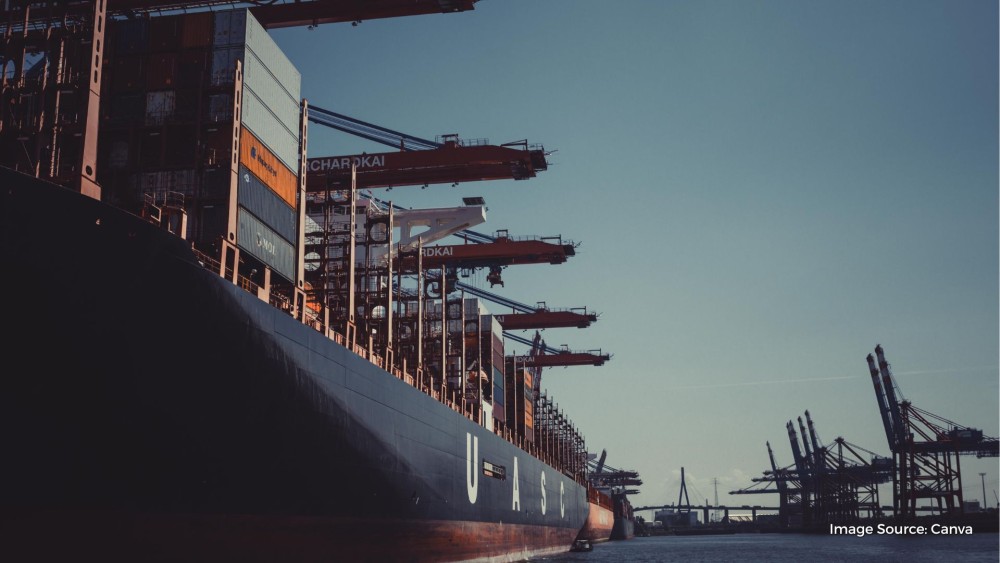
US 10% Forced Labor Tariff on Indonesia to Apply After July 24
An upcoming 10% forced labor tariff by the United States on Indonesian goods would likely take effect after July 24, according to the government, as Washington seeks to avoid overlapping with the current import tax.
The US government recently unveiled a new 10% tariff on Indonesia following an investigation into how they curb imports allegedly produced by forced labor. The Donald Trump 2.0 administration is proposing a 12.5% levy for countries that have “failed to impose and effectively enforce” forced labor import prohibitions. Jakarta -- and several other countries -- receive a lower rate of 10% for having the rules in place but not adequately implementing them.
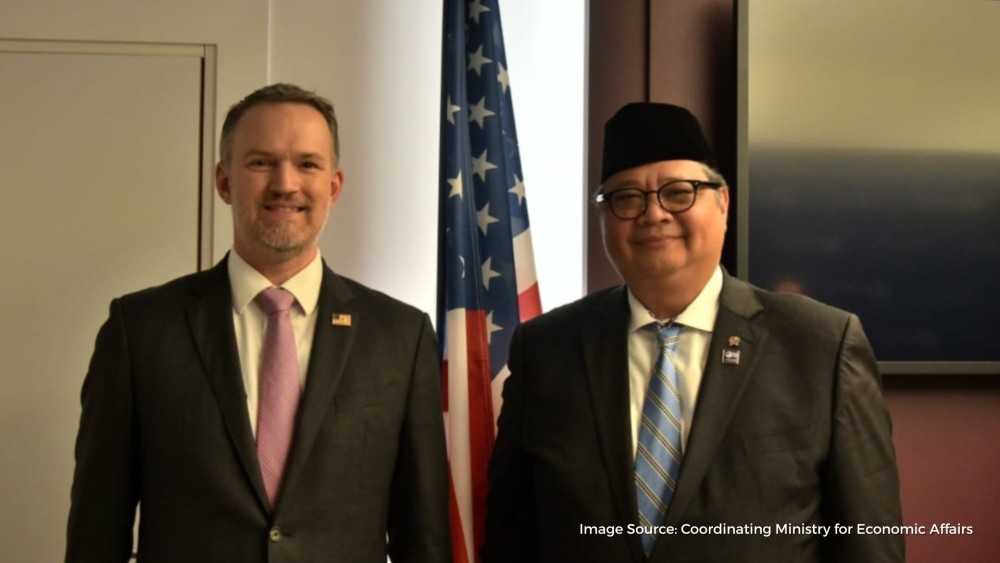
This Section 301 probe -- coupled with the new tariff salvo -- had dominated the recent meeting between Indonesia’s senior economic minister Airlangga Hartarto and Trump’s trade chief Jamieson Greer. They were in Paris for a gathering related to the OECD -- the rich country club that Jakarta has been trying to join over the past few years.
A press statement published by the Coordinating Ministry for Economic Affairs signaled the 10% levy would enter into force after July 24 or after the so-called “global tariffs” expire. After losing in court, the Trump administration introduced these 10% stopgap levies in February, but they would only be in effect for 150 days, or until July 24.
“This scheduling [for the forced labor levy] aims to avoid overlapping with the temporary 10% [global] tariffs. It is also to anticipate internal legal processes in the US to avoid legal uncertainty for businesses,” the statement reads.
Jakarta also claimed that the US would “greenlight its 18 product exclusions proposal”, while saying that this would slash export costs if granted. The Jakarta Globe has reached out to the ministry on these exclusions.
In mid-April, Trade Minister Budi Santoso signed a regulation aimed at curbing imports linked to forced labor, about a month after Washington launched its probe. The US also took note of this regulation in its findings, but said Jakarta had not done any investigations or seizures.
Airlangga’s aide Haryo Limanseto had previously told the Globe that Jakarta would “engage in talks with the US government in a constructive manner” after the latest tariff announcement.
Indonesia is among the countries that have already shaken hands on a tariff deal with the US, which helped Jakarta get the reduced rate of 10%. Washington cited this deal in its Section 301 report, saying that Jakarta had made commitments to stop inflows of forced labor imports as part of the agreement.
Source: Jakarta Globe
Indonesia Passes Bill Expanding Central Bank Role to Spur Growth
Indonesia's parliament on Thursday passed sweeping legislation that doubles down on Bank Indonesia's role to support growth, while empowering lawmakers to make binding recommendations for independent financial regulators and the central bank.
The bill has added to investor concerns about the possibility of political interference in the central bank to ensure compliance with President Prabowo Subianto's big-growth agenda, as his administration battles challenges on multiple fronts and sticks unswervingly to his target of 8% GDP growth by 2029.
The bill, backed a parliament overwhelmingly controlled by Prabowo's coalition, has not been made public, but some elements were discussed at a hearing on Wednesday, including legislators evaluating independent bodies and making binding recommendations for them.
Those include the central bank, Financial Services Authority and Indonesia Deposit Insurance Corporation.
Also in the bill was a new mechanism for removing members of the central bank's board of governors, Finance Minister Purbaya Yudhi Sadewa told Wednesday's hearing, without giving details.
Purbaya has pledged to uphold central bank independence. A spokesperson for Bank Indonesia did not immediately respond to a request for comment on the bill.
CLOSE SCRUTINY ON POLICYMAKING
Its passage comes as investors cool on Indonesia, a G20 economy of $1.4 trillion, with Moody's and Fitch this year cutting their credit rating outlooks to negative from stable, citing reduced policymaking credibility and predictability.
Indonesia's stock market (.JKSE), opens new tab has plunged over 30% year to date and the rupiah has lost more than 7% against the U.S. dollar this year, making it among the worst-performing emerging Asian currencies. It hit a historic low of 18,045 per dollar on Thursday.
Bhima Yudhistira Adhinegara, executive director of the Center of Economic and Law Studies think tank, said the bill could challenge central bank independence and effectively allow politicians to influence independent bodies.
"The most concerning part is on the mechanism to remove members of the central bank's board of governors ... which could be thick with political intent," Bhima said.
"A governor or an executive that doesn't align with political pressures could be removed," he said, adding he had yet to see the new bill.
Purbaya on Thursday said financial system reforms were necessary and the government was committed to achieving higher and sustainable economic growth.
"Indonesia's economy requires a breakthrough in several sectors, including in a healthy and sturdy financial sector," he added.
EXPANDED CENTRAL BANK MANDATE
Purbaya had on Wednesday said the bill adds creating "an economic environment conducive to real sector growth and job creation" to the central bank's policy goals.
BI officials have repeatedly said economic growth is already considered in its policymaking.
Proponents of the bill have defended the changes, pointing to a similar employment mandate held by the U.S. Federal Reserve.
CELIOS' Bhima said the growth emphasis risked tilting BI's policy towards a looser monetary setting over being more "pro-stability", but noted its recent 50-basis-point rate hike suggested resistance from possible interference.
Also included are rules on sovereign wealth fund Danantara's bond issuance, including sale of special bonds like its controversial Patriot bonds and "red-and-white" bonds, Purbaya said on Wednesday, without elaborating.
The legislation also covers a plan to demutualise the Indonesia Stock Exchange, rules regarding a bourse for minerals and strategic commodities, and rules on a proposed creation of an international financial centre.
Source: Reuters
Indonesia's Tourism Charts Robust Growth Amid Pressures: Minister
Tourism Minister Widiyanti Putri Wardhana stated that Indonesia's tourism sector continues to grow strongly despite global geopolitical pressures.
"We are not only pushing tourism to increase arrivals, foreign exchange earnings, investment, and GDP contribution, but also ensuring that this growth is felt directly by the community," she said during a meeting with the House of Representatives in Jakarta on Wednesday.
According to Statistics Indonesia (BPS) data, from January to April 2026, foreign tourist arrivals reached 4.68 million, representing an 8.24 percent growth compared to the same period in 2025.
Meanwhile, in the first quarter of 2026, Indonesia obtained US$4.05 billion from tourism revenue, an increase of 6.30 percent compared to the same period last year.
Wardhana underscored that these achievements must continue to be directed toward creating added value for communities, including by strengthening tourism villages as an instrument for equitable development.
As part of the efforts, the Ministry of Tourism continues to promote community empowerment and assistance, sustainable tourism village certification, and collaboration with the Halal Product Assurance Agency (BPJPH) to expand halal certification for micro, small, and medium enterprises (MSMEs) in tourism villages.
As of May 30, 2026, the ministry and BPJPH have facilitated 31,548 halal certifications for MSMEs across 1,116 tourism villages in 34 provinces. The move is expected to boost the competitiveness of local products while building tourist confidence.
In addition to tourism villages, the equitable distribution of tourism benefits is also being reinforced through regional events.
The Karisma Event Nusantara program, which has been held in 15 provinces, has involved 20,669 workers and 3,936 MSMEs, generating an economic turnover of more than Rp45.57 billion (approximately US$2.5 million).
Furthermore, the Ministry of Tourism also bolsters support for regions through its co-administration task across 38 provinces.
The initiatives include travel safety training, local promotional content creation, and support for tourism events aimed at upgrading destination quality and driving tourist movement.
Minister Wardhana also emphasized that the tourism economy must deliver tangible impacts that trickle down to villages, boosting MSMEs, creating jobs, and strengthening the village economy.
Going forward, she stressed that tourism development must become increasingly high-quality, inclusive, and sustainable.
Therefore, the Ministry of Tourism will continue to strengthen collaboration with the House of Representatives, regional governments, ministries, agencies, industry players, communities, and the public.
Source: Antara News