This Week's Headlines (May 9-15, 2026)
15 May 2026
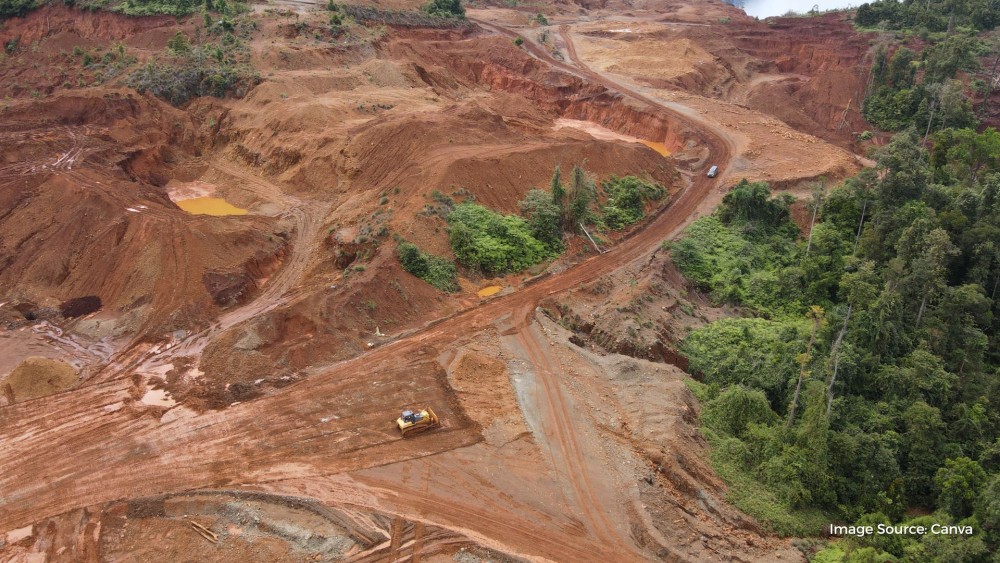
Chinese Firms Warn Indonesia's Nickel Quotas, Tax Hikes Threaten Investment
Chinese companies operating in Indonesia are urging more business-friendly policies, warning tighter nickel ore quotas, higher taxes and a new pricing formula are driving up costs and threatening investment in the world's biggest nickel producer.
In a letter to President Prabowo Subianto, copied to China’s embassy and seen by Reuters, the China Chamber of Commerce in Indonesia said Chinese firms faced "excessively stringent regulation, over-enforcement", and alleged corruption and extortion by authorities.
Five sources with knowledge of the matter confirmed the letter, requesting anonymity because they were not authorised to speak publicly.
The complaint highlights tensions between Jakarta's push to extract more value from its natural resources and the Chinese capital that has powered Indonesia's rapid expansion in global nickel supply.
The letter cited higher taxes and royalties, planned foreign-exchange retention rules, stricter forestry enforcement, work-visa restrictions and suspensions of major projects.
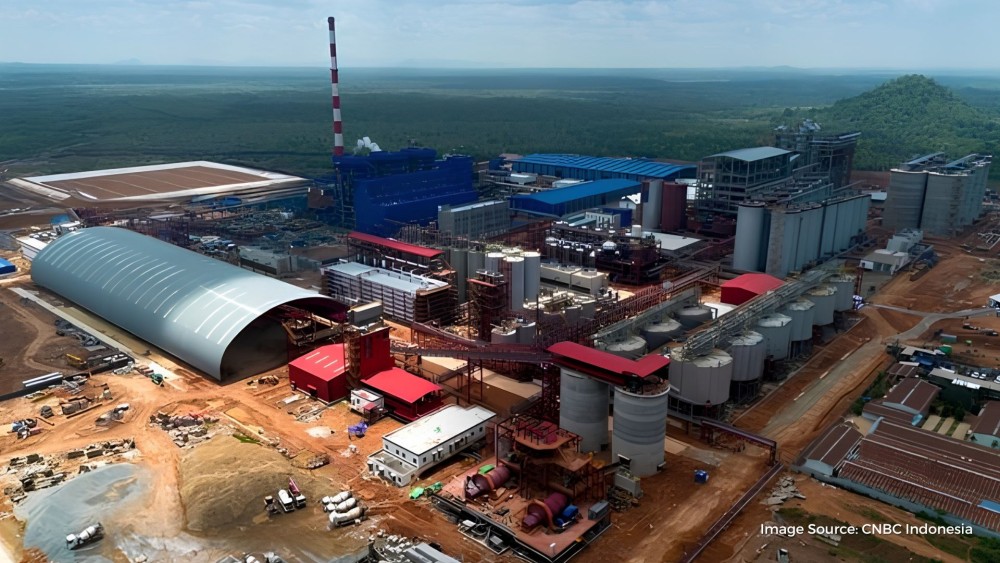
Its strongest warning focused on nickel, where Chinese firms dominate downstream processing after years of investment in smelters, stainless steel plants and battery-material projects.
Nickel ore mining quotas have been sharply reduced this year, with cuts for large mines exceeding 70% and total reductions reaching 30 million metric tons, the chamber said.
It also criticised Indonesia's revised nickel ore benchmark pricing formula, known as HPM, saying the changes had raised costs and could undermine existing projects and future investment.
The government has delayed planned increases in mineral royalties and export duties while it works on what officials have described as a fairer formula for the state and miners.
Speaking earlier on Wednesday, Prabowo said many foreign investors had complained Indonesia required too many permits and approvals took too long, and called for deregulation to support investment, without naming any country.
The chamber did not respond to an emailed request for comment. A spokesperson for Prabowo did not respond to a text message seeking comment.
Tsingshan Group, Zhejiang Huayou Cobalt and Brunp are chamber board members that operate nickel facilities in Indonesia.
Source: Reuters
Govt Postpones Mining Royalty Hike
The government has decided to postpone planned royalty rate hikes for key mineral commodities following feedback from industry players, stating that the proposed increases remain 'not a decision' but part of a public hearing process.
The Energy and Mineral Resources Ministry had been reviewing revisions to Government Regulation No. 19/2025, which would raise non-tax state revenue rates for copper, gold, silver, nickel and tin.
Under the proposals, copper concentrate royalties would climb from a top rate of 10 percent to 13 percent, while gold royalties would reach up to 20 percent from the current top rate of 16 percent, and tin royalties would potentially double to 20 percent.
However, speaking to reporters, Energy Minister Bahlil Lahadalia emphasized that no final decision has been made.
“What’s been [disclosed during] the public consultation isn’t a [definite] decision,” he told reporters in Jakarta on Monday. “If the feedback isn’t good, we’ll immediately revise it. The government regulation doesn’t exist yet.”
Local brokerage BRI Danareksa Sekuritas warned that the proposed increases could pressure mining companies’ profit margins and hamper expansion and investment due to regulatory uncertainty. The firm noted, however, that the policy could boost state revenue amid high global commodity prices.
Bahlil said he has received input from both the public and entrepreneurs.
“I’ll postpone this to develop a good formulation that’s mutually beneficial,” he stated. “The state benefits, and entrepreneurs must also benefit.”
The revised royalty scheme remains under evaluation, with further public consultation expected before any formal regulation is issued, he stated.
Officials have underscored that the review was necessitated by a sharp rise in the government's mineral benchmark price (HMA) since early this year.
The government believes that climbing commodity prices have created windfall profits for mining companies, requiring an adjustment to the state's revenue share. The revision review for Government Regulation No. 19/2025 aims to ensure that when prices rise, the state's portion rises accordingly, and when prices fall, tariffs follow suit.
Energy Ministry's minerals and coal director general Tri Winarno said the government continues to hold open discussions with businesses on tariff levels, price range, transition periods, impacts on profit margins and regulatory certainty.
"This public consultation is highly strategic," Tri said on Friday. "The government ensures that policy adjustments can be carried out objectively and accountably, and take into account input from stakeholders."
Tri stressed that non-tax state revenue regulation in the mineral and coal sector is not merely a fiscal tool but a crucial part of natural resource governance.
The goal, he said, is "to ensure that mineral and coal commodities provide optimal added value for the country without compromising industry sustainability."
"When commodity prices rise and there is potential for windfall profits, the portion of state revenues will adjust accordingly," Tri said. "Conversely, when prices are at a lower level, tariffs will also follow the lower price level."
Source: The Jakarta Post
Indonesia Paves Way for Global Financial Hub in Bali
Amid a global economic slowdown, trade wars, and intensifying competition for investment, Indonesia recognizes that future economic strength depends not only on natural resources but also on its ability to become a hub for global capital flows, investment, and financial services.
This understanding has driven the idea to transform the KEK Kura Kura Bali Special Economic Zone into an Indonesia Financial Center, envisioned as a new international financial hub in Asia.
For years, Indonesia has more often served as a market for global investment flows rather than a center for their management. Many investment transactions of national companies, international fund management, and Indonesian corporate treasury activities are still conducted through Singapore or Hong Kong.
Yet Indonesia is the largest economy in Southeast Asia, with a population of more than 280 million people. Its gross domestic product has exceeded US$1.4 trillion in recent years, according to data from the World Bank and the IMF.
This position places Indonesia in a situation full of both opportunities and challenges. On one hand, it is a major market magnet and investment destination due to its large domestic economy. On the other hand, most of the added value in global financial services is still capture abroad.
Therefore, the government has begun promoting the development of economic zones that are not only able to attract international investment, but also serve as financial service centers.
This momentum strengthened after the issuance of Government Regulation No. 23 of 2023, which designates a 498-hectare area in Serangan Island as a Special Economic Zone based on tourism and creative industries.
The area development has since been expanded into an international financial center with an investment target of Rp104.4 trillion pr around US$6 billion.
The choice of Bali as the location for the Indonesia Financial Center also carries a strong message. Bali's reputation as a world-famous tourism destination is now intended to be transformed into a new economic strength based on investment, technology, and modern financial services.
Strengthening competitiveness
A financial center development in Bali shows that Indonesia is moving toward a high value-added economy. The government now sees that global competition is not only about commodity exports, but extends to becoming a regional hub for finance, innovation, and investment.
Globally, financial centers have long been dominated by cities such as New York, London, Singapore, and Dubai.
The success of these cities is not only based on banking sectors, but on complete global economic ecosystems including legal certainty, modern infrastructure, international connectivity, high quality of life, strong digital technology, and a competitive investment climate. Indonesia is now seeking to enter this arena.
Bali is seen as having unique advantages. It is not only a tourist destination, but also has cultural appeal, quality of life, and international reputation that are difficult to match by other regions in Indonesia.
Quality of life is an important factor in attracting global talent, investors, multinational companies, and international business communities.
A similar approach is successfully implemented in Dubai. The United Arab Emirates built its economic strength by combining tourism, property, global investment, and an international financial hub.
Today, Dubai has become one of the world’s largest investment magnets and a major business center in the Middle East. Indonesia is seeking to adopt a similar model through Bali.
Global investment ecosystem
The government has established a regulatory foundation through the designation of KEK Kura Kura Bali in April 2023, projected as an international tourism and creative industry hub.
As global economic dynamics evolved, the government began refining the concept of an Indonesia Financial Center in Bali. In May 2026, Coordinating Minister for Economic Affairs Airlangga Hartarto, Investment Minister Rosan Roeslani, and Danantara COO Dony Oskaria visited the site to accelerate its development, alongside preparations for supporting financial sector regulations.
The focus is no longer limited to premium tourism areas, but is shifting toward building a global investment ecosystem. Official statements show that the Bali Financial Center is expected to attract international fund management, family offices, and modern financial services activities.
However, the financial services sector's contribution to the national economy is still considered suboptimal compared to those of global financial hubs.
In contrast, this sector offers a strong multiplier effect through investment expansion, financing growth, and high-skilled job creation.
International studies by firms such as Google, Temasek, and Bain & Company estimate that Indonesia’s digital economy is the largest in Southeast Asia and continues to grow rapidly, increasing demand for digital finance, investment platforms, and capital management services.
Indonesia also holds strong potential in green finance and Islamic finance, particularly as the energy transition requires massive investment over the coming decades.
New economic era
Global finance is built on trust. Investors do not only look at incentives but also legal stability, regulatory quality, investment security, and long-term policy consistency.
Therefore, Indonesia’s biggest challenge is not merely building modern infrastructure, but establishing credible global reputation. Without bureaucratic reform, legal certainty, and strong governance, it will be difficult to compete with established centers like Singapore and Dubai.
Indonesia needs to prepare globally competitive human resources in areas such as international investment, global taxation, fintech, cybersecurity, and international business law.
At the same time, development must avoid widening social inequality. Given Bali’s strong cultural identity, economic growth must remain balanced with social and cultural sustainability.
Ultimately, modern financial centers also depend on environmental quality and sustainability. Bali has the opportunity to demonstrate how economic modernization can coexist with cultural preservation and environmental protection.
The Island of the Gods is now preparing to enter a new era—from a global tourism destination to a meeting point for international investment, modern technology, creative industries, and global capital flows.
Source: ANTARA

RELATED ARTICLES


COMPANIES IN THIS SECTOR