Government Prepares IDR 13 Tn Stimulus to Boost Consumption During Ramadan and Idul Fitri
04 Feb 2026
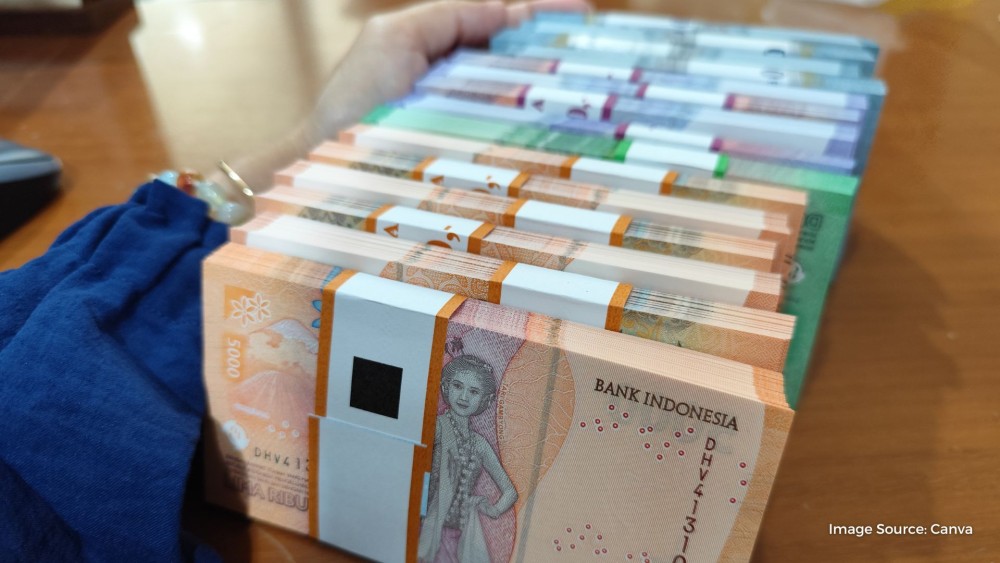
The Indonesian government is preparing an economic stimulus package worth around IDR 13 Tn (approximately USD 760 Mn) to support consumption and mobility during the Ramadan and Idul Fitri period in the first quarter of 2026, combining transport fare discounts with expanded social assistance.
Coordinating Minister for Economic Affairs Airlangga Hartarto announced the plan in late January, saying the stimulus would be rolled out in February and March to encourage travel and household spending during the festive season. According to The Jakarta Post, Airlangga said the total allocation would reach IDR 13 trillion, although detailed implementation would be announced at a later stage.
While specifics were initially limited, officials confirmed that the package would include transportation discounts across multiple modes as well as additional social assistance, including rice and cooking oil, for eligible beneficiaries.
Secretary to the Coordinating Economic Affairs Minister Susiwijono Moegiarso said the stimulus was designed to stimulate both supply and demand, following a similar approach to measures implemented during last year’s Islamic holidays. “The incentive will push economic activity on both the supply and demand sides,” Susiwijono said.
Susiwijono said the government had begun mapping transport-related incentives, covering railways, sea transportation, ferry crossings operated by state-owned PT ASDP Indonesia Ferry, and air travel. Referring to last year’s policy, he noted that a temporary value added tax (VAT) cut had reduced airfares by 13% to 14%, adding that the government was seeking deeper price reductions this year.
In a separate briefing at the Indonesia Economic Summit 2026 in Jakarta, Airlangga emphasized the importance of a strong economic start to the year. “The target is to push economic activity higher because the first quarter is crucial. In the first quarter of last year, economic growth was relatively lower,” Airlangga said, as quoted by Jakarta Globe on Tuesday, Feb. 3.
Indonesia’s economy grew 4.87% year on year in the first quarter of 2025, a slowdown that was attributed to weak consumer purchasing power and reduced government spending. The government is targeting economic growth of 5.4% for 2026 and has moved to deploy stimulus earlier in the year to support that goal.
According to Jakarta Globe, the first-quarter stimulus is valued at IDR 12.8 trillion, with around IDR 200 billion allocated for transportation discounts and the remainder earmarked for social assistance. “The budget allocation for transport discounts is around IDR 200 billion. The rest is for social assistance in the form of 10 kilograms of rice for two months, plus cooking oil for two months. That totals around IDR 12 trillion,” Airlangga said.
Susiwijono said the policy mix was intended to balance cost reductions on the supply side with measures to strengthen household purchasing power. “Demand is strengthened and prices on the supply side are reduced so there is a meeting point,” he said, as quoted by Jakarta Globe.
Transport incentives are expected to play a central role, given the sector’s contribution to growth. Data from the Central Statistics Agency (BPS) show that transportation and warehousing grew 8.62% year on year in the third quarter of 2025 and contributed 6.10% to overall economic growth.
Details reported by Antara News on Feb. 3 outlined a broad range of discounts. The government will offer airline ticket discounts of up to 16% for economy-class domestic flights through government-borne VAT incentives. State airport operator Angkasa Pura will provide a 50% discount on airport service charges, while aviation fuel prices will also be reduced.
In addition, ticket fares for sea transportation and railway services will be discounted by up to 30%. Toll road tariffs will be reduced by up to 20% during the holiday period, according to Antara.
Social assistance will be distributed over two months in the form of 10 kilograms of rice and cooking oil for each beneficiary household. Airlangga said the stimulus would be distributed during Ramadan and Idul Fitri in 2026, Antara reported.
The government has relied heavily on stimulus measures over the past year to support growth. In 2025, it spent more than IDR 100 trillion on various stimulus programs, including electricity discounts, wage subsidies, social aid, transport incentives, and direct cash transfers. Fourth-quarter measures alone were valued at IDR 46.2 trillion and included cash transfers for more than 35 million households, as well as a national internship program for university graduates.
Officials have partly attributed the economy’s stronger 5.12% growth in the second quarter of 2025 to the impact of those measures. With the new stimulus, the government aims to avoid a repeat of last year’s weak first-quarter performance and support consumption during one of Indonesia’s busiest travel and spending periods.
RELATED ARTICLES