This Week's Headlines (April 11-17, 2026)
17 Apr 2026
RI Draws Investors Fleeing Middle East, Minister Claims
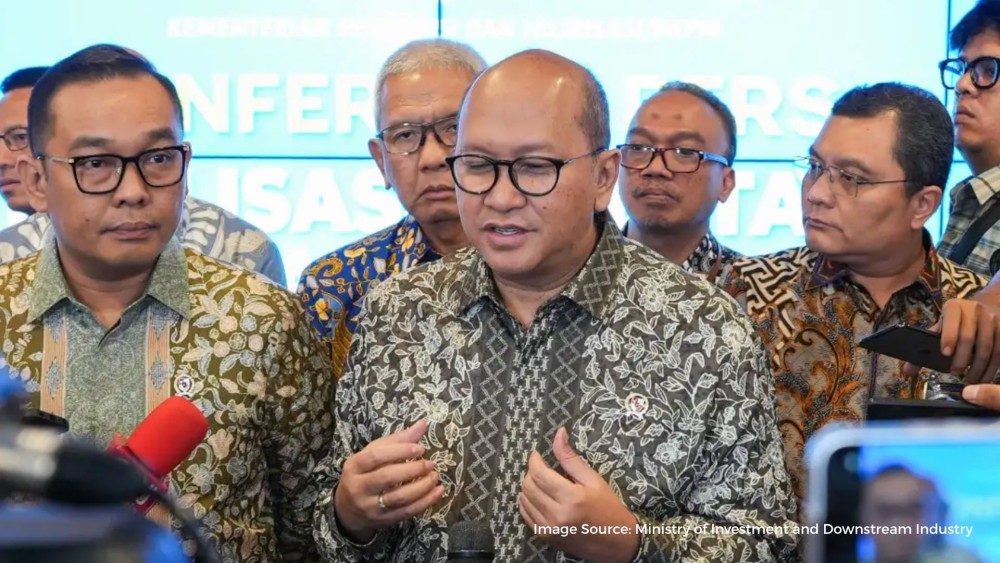
Investment and Downstream Minister Rosan Roeslani has claimed that escalating tensions in the Middle East are pushing foreign investors seeking safer destinations, with some considering shifting their focus to Indonesia due to its political stability.
Speaking at a hearing with the House of Representatives Commission XII overseeing energy and mineral resources, on Monday, Rosan said investors, particularly from the Middle East, are stepping up engagement with the administration.
“We are seeing that with heightened tensions, especially in Middle Eastern countries, investors from the region are intensifying discussions with us. We are also actively meeting prospective investors,” he told a House hearing, without specifying sectors or types of investment that could be redirected.
Rosan, who also serves as chief executive officer of state asset fund Danantara, said the fund is exploring potential aviation partnerships between PT Garuda Indonesia and several Gulf carriers, including efforts to improve the efficiency of Haj flights, potentially through the formation of a joint venture as directed by President Prabowo Subianto in the last cabinet plenary hearing.
He added the fund remains “open” to various opportunities and had also held preliminary talks with United Arab Emirates carriers, Emirates and Etihad, but added that the transformation process will take time, particularly as rising global jet fuel prices continue to weigh on the aviation industry.
Overseas visits by President Prabowo also have helped boost investor confidence, as the president meets global business leaders to present the country’s economic outlook and policy direction, Rosan told lawmakers.
Investment at the start of the year came under pressure, he said, but Indonesia’s open, nonaligned foreign policy, as reflected in Prabowo’s visits to the United States and other Western countries, as well as China and Russia, has been well received, helping sustain its appeal to a broad range of investors.
“This helps give confidence that the government understands global geopolitical and economic dynamics, allowing investment to enter and grow,” he continued.
Prabowo earlier this month made his first state visits to Japan and South Korea since taking office in October 2024, securing investment commitments across a range of sectors.
Japan pledged investments worth USD 23.6 billion in areas including energy and security, while South Korea resulted in 27 memorandums of understanding spanning manufacturing to infrastructure, with a combined value of USD 10.26 billion.
Investment realization is estimated at around IDR 497 trillion (USD 29 billion) for the first quarter of 2026, up about 7% year-on-year (yoy).
Meanwhile, for the full year, the government has set an investment target of IDR 2.04 quadrillion under its 2026 work plan.
Foreign direct investment had long accounted for around half or slightly more than half of total investment, but the balance reversed last year as domestic capital overtook foreign inflows. Domestic investment exceeded FDI by about IDR 130 trillion (USD 7.7 billion) in 2025, reaching IDR 1.03 quadrillion versus IDR 900 trillion.
Total realized investment rose 12.7% yoy to IDR 1.93 quadrillion last year, slightly above the government target but slowing from 20.8% recorded in 2024.
Further growth this year is expected to be driven by domestic investment, particularly through funding from Danantara, Rosan said earlier this year, as the state asset fund plans to ramp up its investment.
Source: The Jakarta Post
Indonesia Eyes Russian Oil While Balancing US Partnership: Minister
Minister of Energy and Mineral Resources Bahlil Lahadalia indicated that Indonesia's ongoing negotiations to purchase oil and liquefied petroleum gas (LPG) from Russia will not jeopardize its existing energy cooperation with the United States.
Hinting at a pragmatic approach, he noted that the government is determined to make all-out efforts to ensure sufficient energy supplies for the nation, including through multiple bilateral deals.
"It should be noted that we require around 300 million barrels of crude oil annually. Therefore, we will seize every opportunity because it is important to pursue all options that serve national interests," Lahadalia remarked at the Merdeka Palace, Jakarta, on Thursday.
He also highlighted Indonesia’s reliance on imports to cover a daily shortfall of around one million barrels, with domestic production at about 600,000 barrels per day against consumption of 1.6 million barrels.
"Global circumstances have prompted the government to identify alternative sources of oil, reaching out to more than one country," he stated.
The minister made the remarks after briefing President Prabowo Subianto on progress in ongoing talks to import energy products from Russia amid mounting global supply risks.
Following bilateral engagements with Russian President Vladimir Putin in Moscow on April 13, Prabowo delegated Lahadalia to pursue follow-up talks with Russian Energy Minister Sergey Tsivilyov the following day.
Lahadalia noted that the ministerial meeting was productive.
"We will secure a crude oil supply from Russia. In fact, the Russian side has voiced readiness to help Indonesia build several key pieces of infrastructure to strengthen our energy reserves and security," he told the press at the palace.
The minister also spoke of having initiated negotiations to import LPG from Russia, noting that it might take Indonesia two to three more rounds to seal a deal.
"As for talks on crude, I believe we are already at the final stage," he added.
Source: ANTARA
Indonesia Eyes Fertilizer Exports to India on 1.5 Million-Ton Surplus
Indonesia is exploring urea exports to India after recording a domestic surplus of 1.5 million tons, even as the government stresses that local supply will remain the top priority.
Deputy Agriculture Minister Sudaryono said the plan was discussed during a meeting with Indian Ambassador Manoj Kumar Bharti on Thursday, as both countries seek to deepen agricultural cooperation.
“Indonesia will prioritize domestic fertilizer needs. After our calculations, there is a surplus of around 1.5 million tons that can be exported,” Sudaryono told reporters at the Agriculture Ministry in Jakarta.
The export plan comes amid global supply chain disruptions triggered by the closure of the Strait of Hormuz, a key shipping lane for energy and commodities. The disruption has pushed international urea prices sharply higher, with benchmark prices rising from around USD 600–700 per ton to nearly USD 900 per ton, creating a favorable window for exporters.
Sudaryono added that Indonesia’s total urea production capacity stands at 14.5 million tons annually, while domestic demand remains below that level, allowing room for exports without jeopardizing local supply.
India has emerged as a potential buyer, particularly to meet demand during its planting season from July to September. The period coincides with a relatively lower planting cycle in Indonesia, creating an opportunity to export without disrupting domestic supply.
“The government is ready to export urea to India. The volume and technical arrangements will be discussed further between state-owned fertilizer companies from both countries,” he said.
The two countries have long exchanged commodities, including key raw materials for fertilizer production such as phosphate.
Bharti welcomed the prospect of cooperation, saying India is prepared to import urea from Indonesia under a government-to-government framework, while respecting Indonesia’s domestic priorities.
“We understand that exports will only take place after Indonesia’s domestic needs are fulfilled. If there is a surplus, we would be very happy to buy from Indonesia,” he said.
He added that differences in planting cycles between the two countries offer a mutually beneficial opportunity to strengthen fertilizer trade.
Amid global supply chain disruptions linked to geopolitical tensions, Sudaryono sought to reassure farmers that Indonesia’s fertilizer supply remains secure.
“I want to assure all Indonesian farmers that our fertilizer condition is safe and unaffected by the war. In fact, we have a surplus that can be utilized for exports,” he said.
Source: Jakarta Globe

RELATED ARTICLES

COMPANIES IN THIS SECTOR