This Week's Headlines (April 4 – April 10, 2026)
10 Apr 2026
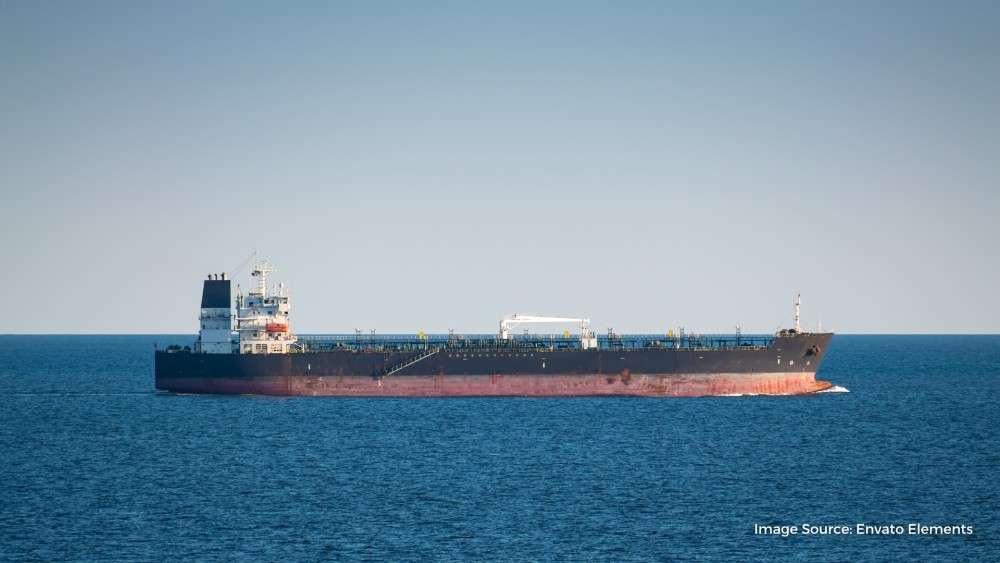
Govt doubles down on diplomacy as Hormuz risks persist despite ceasefire
Pertamina is racing to secure the release of two of its tankers stuck in the Persian Gulf through diplomatic channels, as analysts warn that the recent US-Iran ceasefire does little to guarantee safe passage through the politically charged Strait of Hormuz.
Pertamina is racing to secure the release of two of its tankers stuck in the Persian Gulf through diplomatic channels, as analysts warn that the recent United States-Iran ceasefire does little to guarantee safe passage through the politically charged Strait of Hormuz.
The two vessels in question are the Pertamina Pride and the Gamsunoro, both owned by Pertamina International Shipping (PIS), the state-owned energy company’s shipping and logistics arm.
“Together with the Foreign Ministry, PIS continues to monitor developments 24/7 and discuss technical preparations to ensure the safe passage of both vessels,” acting PIS corporate secretary Vega Pita said on Wednesday, without disclosing details on what is holding up the process.
The company says its top priority remains the safety of all crew members, as well as the security of the vessels and their cargo.
“We ask for the prayers and support of all Indonesians, so that this process can be completed,” she added.
The Pertamina Pride is a very large crude carrier (VLCC), or supertanker, with a capacity of more than 300,000 deadweight tonnage (DWT), capable of carrying approximately 2 million barrels of crude oil.
The Gamsunoro, on the other hand, is an Aframax-class medium-sized tanker with a capacity of 100,000 DWT.
State Secretary Prasetyo Hadi said on Wednesday that negotiations were ongoing to free the ships.
He stressed that having to wait for the affected cargo volume of around 1.8 million barrels, equivalent to just one to two days of national consumption, posed no threat to domestic fuel supply, as alternative sources were being secured.
“We continue to communicate, but please do not associate the negotiation process with supply disruptions,” he said.
The statement comes amid heightened scrutiny over the fate of the two tankers, which analysts say remain vulnerable to operational risks in the Strait of Hormuz despite the ceasefire announced by Washington on Tuesday.
The agreement between the US and Iran has brought a measure of short-term stabilization to the volatile Gulf region but falls far short of full normalization, according to Rizal Taufikurahman, head of the macroeconomics and finance center at the Institute for Development of Economics and Finance (Indef).
He cautioned that the détente remained conditional and temporary.
While the eased tensions reduced pressure on Indonesia’s energy import costs and shipping risk premiums, Rizal stressed that this did not translate into automatic clearance for the two Pertamina vessels.
“The ceasefire is a window for negotiation, not a guarantee of smooth sailing,” Rizal told The Jakarta Post on Wednesday. “Operational risks in the Strait of Hormuz remain high and are dependent on clearance from Iranian authorities.”
He urged Pertamina and the Foreign Ministry to adopt a proactive and technocratic strategy rather than a reactive one.
The key, he noted, was to secure a written, time-bound and operational safe-passage arrangement covering specific routes, escort coordination and communication protocols.
Rizal went on to emphasize the need for diversified routes and alternative supply sources to ensure Indonesia’s energy security is not overly dependent on a single geopolitical choke point.
“Hormuz is now more than just a logistics route,” he said. “It has become a highly politicized geopolitical instrument.”
Some news reports indicate that other vessels were cleared to pass through the narrow strait after owners met an alleged Iranian demand for passage levies in Chinese yuan or cryptocurrency.
However, the Indef expert urged caution: “I see no strong confirmation to conclude that this was the primary factor in the detention of the Indonesian vessel.”
While acknowledging that unilateral levies on an international route would set a dangerous precedent for global logistics costs, Rizal surmised that Indonesia’s primary problems had more to do with permits, vessel classification and security clearance than with payment or currency issues.
Foreign Ministry spokesman Vahd Nabyl A. Mulachela said on Wednesday that the Foreign Ministry and the Indonesian Embassy in Tehran had been coordinating with Iranian authorities from the outset to secure passage for the Pertamina vessels.
When asked whether toll fees were discussed, he only said that each vessel was assessed separately but declined to disclose negotiation specifics.
As diplomatic efforts continue, the government has sought to reassure the public that domestic energy supplies remain unaffected.
The Energy and Mineral Resources Ministry said fuel oil and liquefied petroleum gas (LPG) supplies "remain secure" despite disruption of global distribution channels.
"We can confirm that the national supply of fuel oil and LPG is currently secure," Muhammad Rizwi Jilanisaf Hisjam, secretary of the oil and gas directorate general, told House of Representatives Commission XII, which oversees energy and mineral resources, on Wednesday.
The ministry says it has taken a series of mitigation measures to secure supply.
It is regulating fuel and LPG consumption via a directive from the oil and gas directorate general and the Downstream Oil and Gas Regulatory Agency (BPH Migas), while shifting imports away from Middle Eastern countries to alternative suppliers in the Americas, Africa and Asia.
The ministry has also instructed domestic contractors to prioritize domestic crude supply over exports to offset potential losses, alongside optimizing domestic refinery operations.
"We are also exploring other LPG sources in Asian and ASEAN countries," Rizwi added.
"We have instructed private LPG refineries to prioritize their production for Pertamina Patra Niaga, the state-owned entity responsible for public LPG distribution. This production was previously sold to industries, but we have proposed that it now be offered first to Pertamina Patra Niaga to meet public needs."
Source: The Jakarta Post
Indonesian Finance Minister Calls World Bank Projection a ‘Major Mistake’
Finance Minister Purbaya Yudhi Sadewa on Thursday criticized the World Bank for lowering its 2026 economic growth forecast for the country to 4.7%, calling the projection inaccurate and potentially harmful to market sentiment.
Purbaya said the revised forecast does not reflect the government’s data and could create negative perceptions about Indonesia’s economic outlook.
According to the minister, current indicators point to strengthening economic conditions rather than a slowdown.
He noted that Indonesia’s economy is expected to grow between 5.5% and 5.6% in the first quarter of 2026 alone, suggesting that the World Bank’s full-year projection implies a sharp downturn in subsequent quarters.
“If the first quarter is already around 5.5% or 5.6% or higher, then the World Bank is effectively assuming we will experience a deep slowdown. I think they have miscalculated,” Purbaya told reporters in Jakarta.
He attributed the lower forecast partly to assumptions of persistently high global oil prices. If oil prices were to normalize in the near term, Purbaya said, the World Bank would likely revise its projections upward.
“If oil prices return to normal levels within a month, the World Bank will certainly change its forecast. But they have already created negative sentiment toward us,” he said.
Purbaya added that the issue is not only about growth figures but also the psychological impact on markets and investor confidence. He went as far as to say the institution should apologize if it revises its outlook after oil prices stabilize.
“I will wait for their apology when oil prices return to normal and they revise their forecast,” he said.
The minister stressed that the government will continue to safeguard economic momentum by ensuring policy execution, maintaining financial system support, and preserving a favorable investment climate.
“I will optimize all engines of growth. The data already show improvement, and we will continue to maintain it,” Purbaya said.
He also suggested that the World Bank may not have fully accounted for policy measures currently being prepared by the government, adding that Indonesia still has room to sustain positive growth.
In its April 2026 East Asia and Pacific Economic Update, the World Bank lowered Indonesia’s growth forecast for 2026 to 4.7%, down from 4.8% projected in October 2025.
The revision was linked to external pressures, including higher global oil prices and increased investor caution in international financial markets.
Source: Jakarta Globe
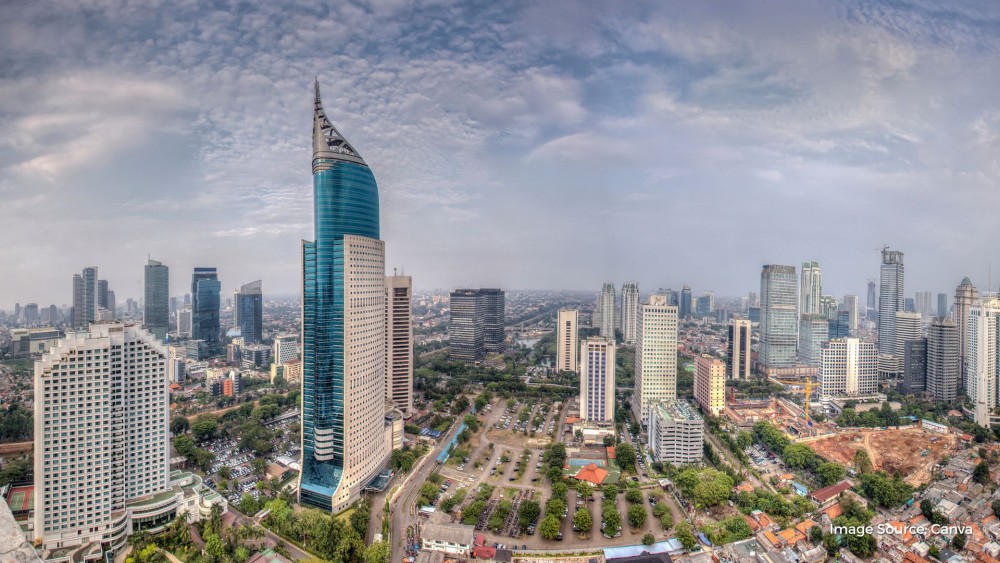
Indonesia plans special financial hub to attract investors: Prabowo
President Prabowo Subianto said Indonesia plans to establish a special financial center to strengthen its position as a safe investment destination amid rising global geopolitical tensions.
“We are planning to establish a Special Financial Center and are currently identifying a suitable location,” he said during a cabinet meeting at the State Palace in Jakarta on Wednesday.
He noted the idea was first proposed several years ago by National Economic Council (DEN) Chairman Luhut Binsar Pandjaitan, with Bali initially considered as the site.
Prabowo said the proposal has become increasingly relevant as Indonesia seeks to reassure investors that its business climate remains stable despite global uncertainty.
He pointed to the influx of Russian and Ukrainian nationals relocating to Bali following the outbreak of war in 2022 as an example of shifting global dynamics.
According to the president, the planned financial hub could attract investors who had previously targeted the Middle East but are now reconsidering due to escalating tensions in the region.
He said global crises should be seen not only as risks but also as opportunities for Indonesia to expand its economic role.
Prabowo added that volatility presents a chance to introduce strategic initiatives and accelerate priority development programs.
“The key point is that we have significant potential, but we must work harder and with greater precision,” he said.
The government is stepping up efforts to capture investment across sectors, including renewable energy and the digital economy, to meet its 2026 target.
Indonesia aims to secure Rp2,175 trillion (about US$128 billion) in investment this year.
Data from the Ministry of Investment and Downstreaming showed that realized investment in 2025 reached Rp1,931.2 trillion, exceeding the official target of Rp1,905.6 trillion.
Source: Antara News

RELATED ARTICLES