This Week's Headlines (12-18 September)
18 Sep 2026
Indonesia expands overseas job markets to Europe amid global shift
The Ministry for the Protection of Indonesian Migrant Workers is expanding migrant worker placements to selected Asian and European nations to navigate global geopolitical conflicts and economic slowdowns in traditional destination countries.
Minister for the Protection of Indonesian Migrant Workers Mukhtarudin announced the strategy following a working meeting with Commission IX of the House of Representatives (DPR) at the Parliament Building in Jakarta on Thursday.
"For 2026, we are selecting countries with favorable geopolitical conditions. Our targets include Taiwan, Hong Kong, South Korea, Japan, and Malaysia, as well as Turkey and Europe," Mukhtarudin said.
In addition to established markets, the ministry is exploring placement opportunities across Eastern and Southern Europe, including Bulgaria, Hungary, Slovakia, Italy, and Albania.
Mukhtarudin explained that macroeconomic stability is a primary consideration for worker placement. An economic downturn in a host nation directly contracts the real sector, subsequently reducing labor demand.
He cited Germany’s temporary suspension of Indonesian nurse recruitment due to domestic economic cooling as an example of global market sensitivity.
"We are looking at countries with good economic growth and stable geopolitical conditions that remain unaffected by global geopolitical conflicts," the minister added.
The government has established a target to place 350,000 Indonesian migrant workers throughout 2026.
As of September 2026, the ministry has recorded 260,000 placements, leaving roughly 90,000 additional deployments targeted before year-end.
The government's placement system registered around 290,000 verified and active job vacancies as of September 15, 2026.
However, only approximately 25 percent of those positions have been filled, largely due to a competency gap between available domestic skills and host-country requirements.
Looking ahead to 2027, the ministry projects a placement target of 140,000 workers.
Taiwan remains the primary destination, expected to absorb 80 percent or roughly 112,000 workers, followed by Malaysia with 16,000 and Türkiye with 4,000.
Source: ANTARA News
Indonesia's Budget Deficit at 0.93% GDP
The government announced Friday that the budget deficit reached 0.93% of the gross domestic product (GDP) as of the end of August, far from breaching the 3% legal cap.
At his debut budgetary conference, newly appointed Finance Minister Suahasil Nazara said Indonesia’s budget shortfall reached Rp 240.1 trillion ($13.5 billion).
“Our state budget’s performance remained robust by the end of August. We recorded a positive primary balance and kept the deficit within limits. So our state budget is relatively on track,” Suahasil told the press in Jakarta.
The country’s state revenue hit Rp 2,055.69 trillion (at least $115 billion), up by 25.4% year-on-year (yoy). Receipts equal about 65.2% of the target. The government spent around Rp 2,295.7 trillion (at least $129 billion) in the first eight months of 2026, up about 17.1% yoy.
The primary balance is at Rp 154 trillion (almost $8.7 billion) in surplus.
Suahasil had only assumed the ministerial job on Monday after being the deputy minister since 2019. His predecessor, Purbaya Yudhi Sadewa, got fired after leading the ministry for only a year.
The fiscal deficit forecast for 2026 is at 2.68% of GDP. Indonesia aims to keep the deficit between 1.8% and 2.4% next year. Lawmaker Mukhamad Misbakhun, who leads the parliamentary budget committee, recently floated plans on whether Indonesia could loosen the rigid 3% deficit ceiling, citing that changes might be necessary to add fiscal space.
Source: Jakarta Globe
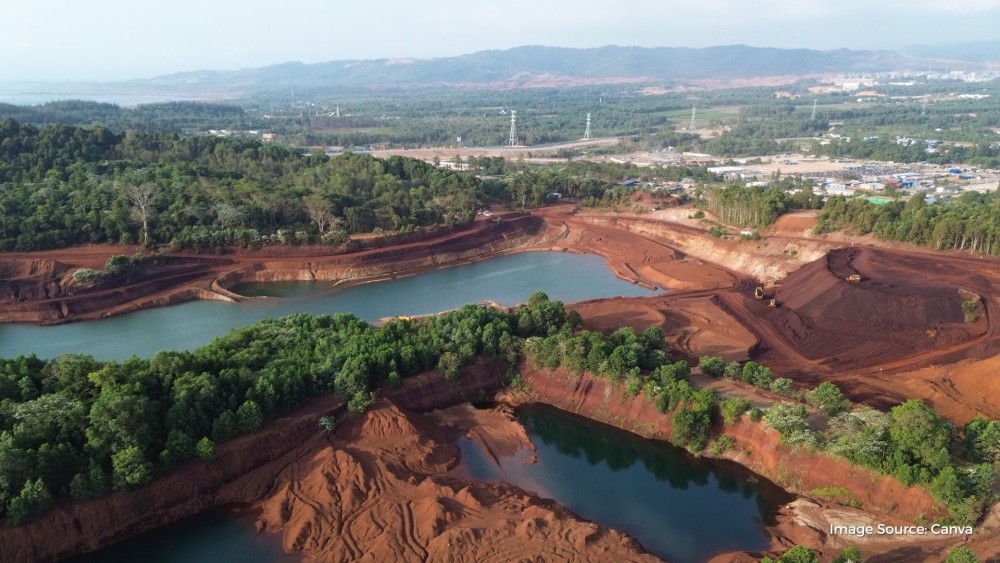
Indonesian nickel smelters group says new price formula provides operational certainty
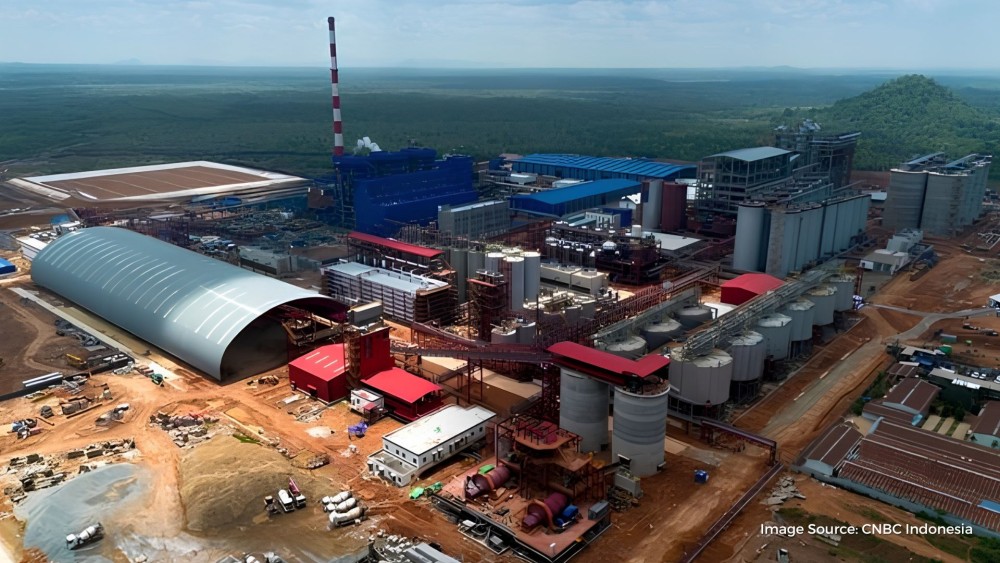
A group representing Indonesian nickel smelters welcomed a new benchmark price formula that will reduce the price of low-grade nickel ore, which is used in the manufacturing of EV batteries, saying it would provide operational certainty.
The Energy Ministry lowered its "corrective factor" used in its ore-pricing calculation to 14% from 26% for low-grade ore with 1.2% nickel content, and also lowered it for other mineral content in the low-grade nickel ore, such as cobalt, to 17% from 30%, effective from September 15.
The new formula will lead to lower ore prices as well as lower taxes and royalties for low-grade nickel ore, known as limonite, which is often used in the high-pressure acid leach (HPAL) process in the production of materials for EV batteries.
"With a more rational and affordable limonite pricing structure, the HPAL industry is now better protected against the risk of operational losses and cash flow deficits," Arief Perdanakusumah, chairman of the FINI industry group, said in a statement issued late on Wednesday.
Arief said the previous price formula had raised feedstock prices at a time when operators were facing higher sulphur prices due to the war in the Middle East.
Separately, nickel miners association APNI said there should be monitoring of the impact of the change on realised prices, traded volumes and state revenue.
“A formula better aligned with the economics of limonite could expand the utilisation of low-grade ore reserves, increase limonite uptake by HPAL facilities, and drive the utilisation of resources that were previously economically marginal,” APNI said.
Source: Reuters

RELATED ARTICLES