This Week's Headlines (August 3-7, 2026)
07 Aug 2026

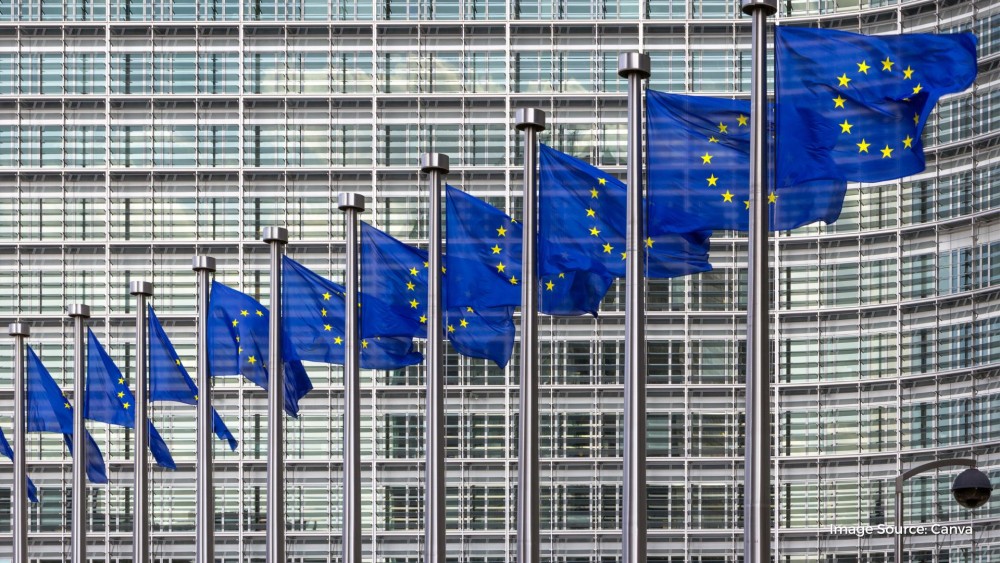
Indonesia, EU target Q4 2026 signing for IEU-CEPA trade deal
Indonesia and the European Union are on track to officially sign the long-awaited Indonesia-EU Comprehensive Economic Partnership Agreement (IEU-CEPA) in the fourth quarter of 2026, marking a major milestone following nearly a decade of trade negotiations.
The announcement was made by Indonesian Ministry of Trade’s Director of Bilateral Negotiations Basaria Tiara Desika L. Gaol in Jakarta on Wednesday (August 5), as the bilateral pact is entering its final administrative stages.
"We are targeting the signing of the agreement in the fourth quarter of 2026," Tiara noted.
The agreement reached a substantial conclusion in September 2025 during its 19th negotiation round in Bali, where Coordinating Minister for Economic Affairs Airlangga Hartarto substantially agreed to the framework.
With the subsequent legal scrubbing process officially complete, both parties are preparing for final signature and legislative approval.
"The signing will be carried out by ministers from both parties, witnessed by the highest leaders from both the EU and Indonesia. After that, we will enter the ratification process," Tiara added.
The Indonesian government hopes the ratification process moves swiftly, allowing full implementation of IEU-CEPA by the first quarter of 2027 to deliver immediate economic benefits to the business sector. Secretary of the Coordinating Ministry for Economic Affairs Susiwijono Moegiarso confirmed that the deal is projected to officially enter into force on January 1, 2027.
The implementation of the IEU-CEPA, he stressed, will open broader market access for Indonesian products and boost overall competitiveness against regional peers. Susiwijono urged domestic industries—particularly manufacturing—to capitalize on the momentum to spur national economic growth.
First launched in Brussels in September 2016, negotiations for the IEU-CEPA have spanned nearly ten years.
Under the agreement, the EU will eliminate import duties on 98.5 percent of tariff lines, simplify procedures for Indonesian exports, and create greater investment opportunities in strategic sectors such as electric vehicles, electronics and pharmaceuticals.
Source: ANTARA News
Govt plans new EV incentives even as sales soar
Indonesia's automotive market is showing signs of recovery with vehicle sales rebounding and electric vehicle (EV) adoption accelerating, and the government hopes to sustain that momentum with a new round of EV incentives.
Data from the Indonesian Automotive Manufacturers Association (Gaikindo) show wholesale vehicle sales rose 15.9 percent year-on-year to 436,564 units in the first half of 2026, with electrified vehicles accounting for 26.8 percent of national passenger vehicle sales, up from 18.3 percent a year earlier. Sales of electrified vehicles, which includes battery electric vehicles (BEV) as well as hybrid and plug-in hybrid vehicles, jumped 69.4 percent year-on-year to around 117,000 units in the first half, with BEVs accounting for roughly 69,000 units.
Despite the encouraging performance, Purbaya said the industry had yet to realize its full potential after years of subdued economic growth weakened household spending power. Although Indonesia’s population is more than seven times as large as Malaysia's, annual vehicle sales are similar in both countries. Purbaya argued that slower economic growth over the past decade had constrained household incomes, limiting consumers' ability to purchase new vehicles.
He said stronger economic growth and an improved business climate would eventually translate into higher spending power and stronger domestic demand. "The challenge ahead is no longer just accelerating electric vehicle adoption, but also maximizing domestic value addition, attracting investment, creating jobs and strengthening the competitiveness of the national automotive industry," Purbaya said on Tuesday, as quoted by Antara.
Industry Minister Agus Gumiwang Kartasasmita said the performance in the first half reinforced the government's confidence that the automotive market recovery would continue through the second half, allowing domestic vehicle sales to surpass this year's target of 850,000 units.
According to the minister, the rapid growth in EV sales reflected not only growing consumer acceptance but also the continued expansion of Indonesia's manufacturing ecosystem, as automakers launch new models and increase local production.
"One in every four passenger cars purchased in Indonesia today is an electrified vehicle. Five years ago, that number was virtually nonexistent," he said on July 30, as quoted by Tempo.
Gaikindo chairman Putu Juli Ardika said the industry was on a positive trajectory despite continued uncertainty in the global and domestic economy, adding that collaboration among automakers, financing institutions and the government was key to sustaining the industry's momentum in the second half, as manufacturers await clarity on the government's delayed EV incentive package.
"Amid global and national economic dynamics, Indonesia's automotive industry is projected to remain on a positive path and is optimistic about recording sustainable growth throughout 2026," Putu said on July 29 during the Exclusive Media Day of the Gaikindo Indonesia International Auto Show (GIIAS) 2026.
Automakers have been expanding their product lines to capture growing demand across vehicle technologies. Toyota continues to pursue its multi-pathway strategy by offering a range of low-emission vehicles rather than relying on a single technology, while Honda used this year's GIIAS to strengthen its electrification push with the introduction of the Honda Super-ONE.
Awaiting EV incentive The government had initially planned to launch a new round of electric vehicle incentives in June but delayed the rollout while finalizing the policy framework. The postponement prompted manufacturers to adjust their product strategies, Bank Danamon noted in a report published. Rather than focusing primarily on BEVs, automakers have increasingly introduced plug-in hybrid EVs (PHEVs) as fuel-saving alternatives following the delay in BEV incentives.
Danamon said manufacturers had also shifted their attention to consumers outside Greater Jakarta, who tend to be more conservative and remain reluctant to adopt fully electric vehicles because of longer charging times, limited charging infrastructure and longer-distance travel needs.
The bank expects the government's planned EV incentive package to provide additional support for the automotive market in the second half of the year as manufacturers continue launching new models. Meanwhile, Finance Minister Purbaya Yudhi Sadewa said on Tuesday that President Prabowo Subianto was expected to announce the government's final EV incentive package within the next two to three weeks.
The package is expected to include reductions of up to 100 percent on luxury goods tax (PPnBM) 40 percent on value-added tax (PPN DTP) for eligible vehicles, with the details to be announced by the President. Purbaya indicated that the incentives would likely be for BEVs rather than for PHEVs.
The finance minister also signaled the government's willingness to offer additional incentives to automakers expanding their manufacturing footprint in Indonesia. He suggested to Japanese automaker Toyota to relocate part of its production capacity from Thailand to Indonesia, pledging that the government would provide incentives to support such investment.
Purbaya said the automotive manufacturing sector contributed around one-fifth of Indonesia's industrial economy and employed some 1.5 million workers, while the country's annual production capacity had reached 2.5 million vehicles.
He added that attracting more investment from automakers and their suppliers would deepen Indonesia's domestic supply chains, particularly in steel, electronics and chemicals, where imports remained significant.
Source: The Jakarta Post
Indonesia Postpones 0.5% Marketplace Tax Amid Weak Consumer Spending
Indonesia has postponed the implementation of a 0.5% income tax collection scheme for domestic sellers on e-commerce platforms, citing concerns over economic growth and consumer purchasing power.
Finance Minister Purbaya Yudhi Sadewa said Wednesday that the policy, initially scheduled to take effect on Aug. 1, would be delayed until economic conditions improve.
"The marketplace tax will be postponed. It will not start this August," Purbaya told reporters at the Finance Ministry in Jakarta.
Under the scheme, designated e-commerce platforms would collect Article 22 income tax of 0.5% of sellers' gross turnover, excluding value-added tax. Microbusinesses with annual turnover below Rp500 million (around $28,000) would be exempt from withholding and instead submit a declaration. Tokopedia, Shopee, Lazada, and Blibli had previously been designated as tax collectors.
Purbaya said the government considered current economic conditions insufficient to introduce the
measure.
"We will postpone it until economic conditions and purchasing power improve. Growth of 5.29% is not strong enough. We want to grow faster," he said.
Indonesia's economy expanded 5.29% year-on-year in the second quarter of 2026, slowing from 5.61% in the first quarter.
The government will assess more than just gross domestic product growth before deciding when to implement the tax collection scheme. Consumer confidence and retail sales will also be monitored
to determine whether an economic recovery is translating into stronger household purchasing
power.
The Finance Ministry will issue a regulation formally delaying the policy, although it has not set a new implementation date.
"We want to grow faster. Once there are real indications of improvement, we will implement it.
Perhaps we will postpone it for several months," Purbaya said.
Digital Tax Collection
The policy is part of the government's broader effort to improve tax collection from Indonesia's rapidly expanding digital economy. Data from the Directorate General of Taxes showed that of around 1.6 million MSME taxpayers in 2024, only about 653,000 paid final income tax. More than 900,000 businesses did not contribute optimally to tax revenues, with many operating online.
The government introduced the scheme through Finance Ministry Regulation No. 37/2025, which appoints e-commerce platforms to collect income tax from domestic merchants selling through electronic systems.
The "collect at the source" mechanism allows marketplaces to automatically withhold 0.5% of a seller's gross turnover. The government has stressed that the policy is not a new tax but a change in the collection mechanism intended to make tax administration more efficient and transparent.
Both domestic and foreign platforms would also be required to remit collected taxes and regularly report transaction data to the tax authority. However, the government faces implementation challenges, including potential duplicate tax collection and difficulties in monitoring foreign-based e-commerce platforms.
Source: Jakarta Globe
RELATED ARTICLES
COMPANIES IN THIS SECTOR