This Week's Headlines (Feb. 21 - 27, 2026)
27 Feb 2026
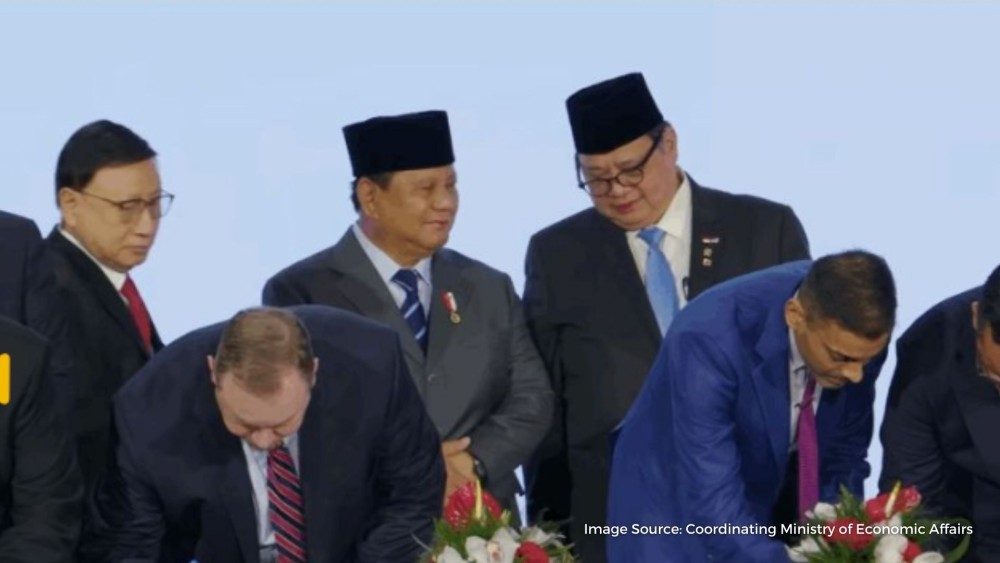
Indonesia Ready for Any Outcome After US Tariff Ruling, Prabowo Says
President Prabowo Subianto affirmed Indonesia’s readiness for shifting U.S. trade policies following a Supreme Court ruling against President Trump’s tariff authority, asserting that Jakarta respects American domestic politics and remains prepared for any eventuality.
Speaking to reporters in Washington, D.C., on Saturday, President Prabowo addressed the recent 6-3 Supreme Court decision which determined that the U.S. executive lacked the power to impose broad global tariffs under the International Emergency Economic Powers Act.
In response to the ruling and the subsequent announcement of a new 10% global import tariff, the President remained optimistic.
"We are ready for any eventuality, and we respect the domestic politics of the United States," Prabowo stated.
Regarding the revised tariff structure, he added, "I think it is beneficial. We are prepared for any eventuality."
The Indonesian government’s confidence stems from a successful diplomatic track record.
Prior to the court’s intervention, direct negotiations had already managed to lower Indonesia's potential tariff exposure from 32% to 19%.
With the new baseline now set at 10%, officials view the shift as a net positive for national exports.
Coordinating Minister for Economic Affairs Airlangga Hartarto clarified that existing bilateral trade agreements remain resilient because they operate through distinct legal mechanisms.
Jakarta is currently focused on ensuring that its zero percent tariff requests for critical commodities—including coffee, cocoa, electronics, textiles, and crude palm oil—remain protected under separate executive orders.
The government is now monitoring a 60-day window to see how U.S. authorities finalize these policies for established trade partners.
Source: ANTARA
Indonesia to Train 15,000 Chip Engineers in Deal with UK’s Arm
The national chip design development tracks will focus on automotive technology, Internet of Things, data centers and home appliances, among others.
State asset fund Danantara signed a framework agreement with Arm Limited in London on Monday in a bid to build domestic semiconductor capabilities. The signing was witnessed by President Prabowo Subianto during his official visit to the United Kingdom.
“This cooperation aims for Indonesia to master semiconductor technology, and Arm is one of the companies that controls the semiconductor market, especially in design. So, this is the most upstream part of the semiconductor industry,” Coordinating Economy Minister Airlangga Hartarto said after the signing ceremony.
Airlangga said Arm controls around 96% of global automotive chip technology and nearly 94% of chip design for data centers and artificial intelligence.
Through the partnership, Indonesia aims to fast-track its mastery of strategic technologies that underpin modern digital innovation.
“With this cooperation, it is hoped that Indonesia can train 15,000 engineers within the Arm ecosystem so they can master chip design technology. The cooperation plan will also extend to the next generation of semiconductors, so that Indonesia develops capabilities in semiconductor design,” he added.
The minister said the partnership would strengthen Indonesia’s technological independence, alongside broader government priorities in food and energy security, describing it as “a leapfrog for the digital ecosystem.”
In January, Airlangga revealed that the government had earmarked an initial USD 125 million to develop the local chip design industry, including the partnership with Arm.
This is not the first time the Indonesian government has pursued its semiconductor ambitions. The country hosted semiconductor plants in the 1970s through partnerships with US firms such as Fairchild Semiconductor and National Semiconductor.
However, a shift in industrial policy toward labor-intensive sectors led those investments to relocate to Malaysia by the mid-1980s.
Danantara CEO Rosan Perkasa Roeslani said the partnership was expected to deliver wide-ranging benefits for industrial development while reinforcing national technological sovereignty.
“There will be six industries selected for the development of these chips, and our engineers will be trained by Arm, either by sending them here [to London] or by bringing their instructors to Indonesia,” Rosan said.
The six national chip design development tracks will focus on strategic intellectual property (IP), covering automotive technology, the Internet of Things, data centers, home appliances and two additional areas yet to be determined, potentially including futuristic technologies such as autonomous vehicles and quantum computing.
Danantara is set to further discuss these priorities to ensure that the resulting intellectual property is held by Indonesia.
The deal adds to Jakarta’s broader push to secure strategic partnerships with global technology firms. It follows another major semiconductor initiative earlier in the week, when Indonesian and US companies signed trade and investment agreements in Washington, including two semiconductor joint ventures, one valued at USD 4.89 billion between Essence Global Group and another deal of undisclosed value with Tynergy Technology Group.
Source: The Jakarta Post
Prabowo Ends Global Diplomacy Tour with Fresh UAE Investment Pledge
President Prabowo Subianto concluded his weeks-long overseas tour in Abu Dhabi, where United Arab Emirates leader Mohamed bin Zayed Al Nahyan, widely known as MBZ, pledged to step up investment in Indonesia.
Prabowo returned to Jakarta on Friday morning after departing on Feb. 16 for Washington. On Thursday local time, MBZ hosted the Indonesian leader for talks focused largely on investment cooperation, although no concrete agreements were signed.
“The UAE wants to invest more in Indonesia,” Cabinet Secretary Teddy Indra Wijaya said following the meeting.
According to Teddy, the UAE views Indonesia as a strategic partner within ASEAN, particularly in energy, infrastructure, and future-oriented economic sectors. Prabowo welcomed the commitment, reiterating Indonesia’s readiness to strengthen what he described as a conducive and sustainable investment climate.
Indonesia also pledged to expand opportunities for Emirati investors in priority sectors as Southeast Asia’s largest economy seeks to attract more foreign capital.
Official data show that UAE investment in Indonesia reached approximately USD 169.7 million in 2025, more than five times the USD 32.7 million recorded a year earlier. Bilateral trade has also accelerated, rising from nearly USD 5.1 billion in 2024 to USD 6.4 billion in 2025 following the implementation of a free trade agreement.
Prabowo’s itinerary abroad was packed with diplomatic and business engagements. In Washington, he attended the inaugural Board of Peace for Gaza meeting and held a 30-minute bilateral session with US President Donald Trump, who publicly described him as a “tough cookie.” The two leaders agreed to work toward what they called a “new golden age” in Indonesia–US relations.
On the commercial front, Indonesian officials said the trip secured US business commitments worth up to USD 38.4 billion. However, attention at home has shifted to a controversial US tariff agreement, which was thrown into uncertainty after the US Supreme Court invalidated Trump-era tariffs less than 24 hours after the deal was signed.
From Washington, Prabowo traveled to London, where sovereign wealth fund Danantara signed a partnership with UK-based chip designer Arm to train 15,000 Indonesian engineers in semiconductor design.
Prabowo’s final stops were Jordan and the UAE — both participants in the proposed Gaza peace initiative — underscoring Indonesia’s dual-track diplomacy focused on economic expansion and geopolitical engagement.
Source: The Jakarta Globe
RELATED ARTICLES


COMPANIES IN THIS SECTOR