This Week's Headlines (Jan. 31 - Feb. 6, 2026)
06 Feb 2026
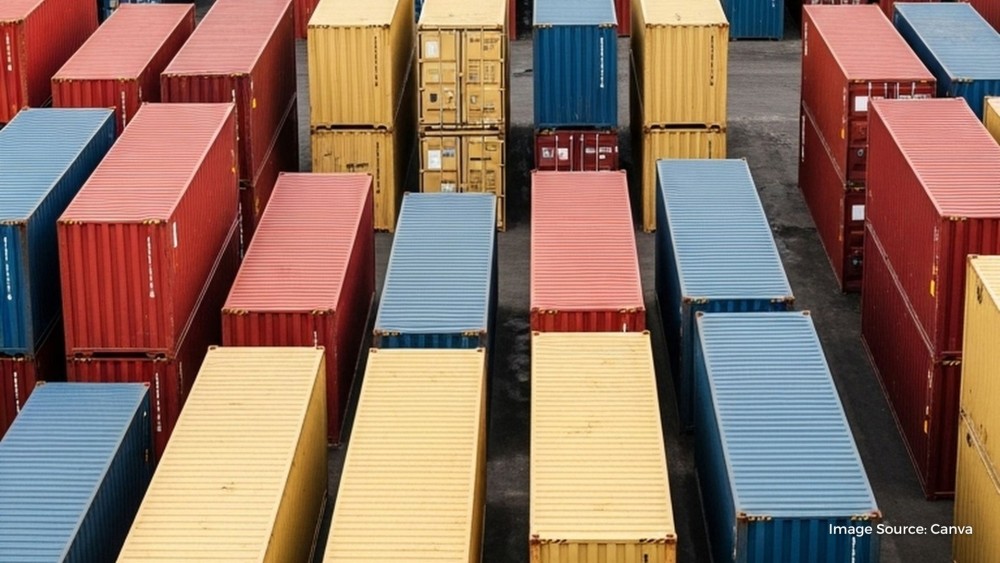
Indonesia Posts USD 41 Billion Trade Surplus in 2025
Indonesia posted a 68th consecutive monthly trade surplus in December, thanks to rising exports and despite a global shift toward economic and strategic protectionism.
The country’s exports rose faster than imports in 2025, bringing the total surplus for 2025 to USD 41.05 billion, up from USD 31.33 billion in 2024, according to Statistics Indonesia (BPS) data published on Monday.
The surplus was driven entirely by the non-oil and gas sector, where outgoing shipments exceeded incoming ones by USD 60.75 billion, offsetting a USD 19.7 billion deficit in oil and gas trade.
In the month of December, Indonesia recorded a USD 2.51 billion trade surplus as exports rose 11.64% year-on-year (yoy) to USD 26.35 billion.
When excluding oil and gas products, exports increased at an even faster 13.72% yoy to USD 25.09 billion.
Over the full year, exports rose by 6.15% to USD 282.91 billion, while non-oil and gas exports climbed 7.66% to USD 269.84 billion.
Indonesia achieved rising shipments in nine of its 10 largest non-oil and gas export commodities, with mineral fuels being the only exception, as shipments in that segment fell 19.18% during the year.
The strongest growth came from animal and vegetable fats and oils, which surged 27.94%, underscoring the continued importance of palm oil and derivative products in supporting Indonesia’s external balance.
China remained by far Indonesia’s largest non-oil and gas export destination in 2025, with shipments totaling USD 64.82 billion, followed by the United States at USD 30.96 billion and India at USD 18.32 billion.
Combined, the three markets accounted for 42.28% of total non-oil and gas exports.
Despite robust exports, BPS recorded a USD 20.5 billion deficit in bilateral trade with Asia’s predominant industrial powerhouse last year, the deepest among Indonesia’s trading partners, followed by Australia at USD 5.65 billion and Singapore at USD 5.47 billion.
BPS official Ateng Hartono noted that the deficit with China was primarily driven by imports of machinery and mechanical equipment, electrical machinery and equipment, as well as vehicles and parts.
In Indonesia’s overall trade with the world, machinery and mechanical equipment weighed most heavily on the trade balance with a deficit of $28.48 billion, followed by electrical machinery and equipment at USD 12.68 billion, and plastics and plastic products at USD 7.70 billion.
Indonesia’s total imports last year rose by just 2.83 percent to $241.86 billion, though non-oil and gas imports increased at a slightly faster pace of 5.11% to USD 209.09 billion.
Permata Bank chief economist Josua Pardede said the trade surplus in 2025 mainly reflected the resilience of the external sector but did not automatically indicate that investment and domestic demand had fully recovered.
“On the investment recovery side, the signal is actually more clearly seen from the composition of imports: capital goods imports rose sharply by 20.06% to around USD 50.13 billion, which usually occurs when projects, machinery purchases, capacity expansion and the construction of production facilities begin to run more strongly,” Josua told The Jakarta Post on Monday.
He noted that this trend was in line with the 2025 investment realization of IDR 1,931.2 trillion, which grew 12.7% yoy, exceeded the government’s target, supported by a significantly higher contribution from downstream industries.
This provided a sufficiently strong basis to conclude that investment conditions had improved, he added.
However, Josua said the picture for domestic demand remained mixed, as imports of raw materials and auxiliary goods as well as consumer goods declined slightly on an annual basis, indicating that the recovery in consumption and production cycles had not been evenly distributed across sectors.
“Industrial activity indicators also suggest that demand is supported more from the domestic market, as new orders have improved mainly from within the country, while export orders remain weak, meaning domestic demand strengthening is already visible but has not yet become the sole engine,” he said.
He added that the surplus was underpinned by commodity exports and a recovering investment cycle, while stronger domestic demand could push imports higher and narrow the balance.
Against this backdrop, the economist said, import trends and business activity were better recovery indicators than the trade surplus.
Source: The Jakarta Post
Indonesia President has Ordered Firm Action Against Stock Market Violations, Minister Says
Indonesia's chief economic minister said on Thursday that President Prabowo Subianto has ordered a firm response to any violations of stock market rules.
Airlangga Hartarto told a forum Prabowo had instructed officials to respond to the recent market rout as soon as possible. He also said authorities would communicate with ratings agencies with transparency and expressed optimism Indonesia could maintain market trust.
Source: Reuters
Indonesia, Australia Strengthen Economic, Education Cooperation
President Prabowo Subianto met with Australian Prime Minister Anthony Albanese at the Merdeka Palace on Friday.
According to a release from Indonesia’s Government Communication Agency (Bakom), the meeting served as momentum to strengthen bilateral relations that have long been supported by cooperation in various sectors, especially in education and the economy.
Citing data from the Australian Government’s Department of Foreign Affairs and Trade on Friday, Indonesia-Australia relations continue to grow. This is reflected in increased student mobility, university cooperation, and a surge in the value of trade between the two countries in recent years.
Education cooperation
Educational ties are one of the main pillars of the Indonesia-Australia partnership. In 2025, around 24 thousand Indonesian students were recorded as studying at various Australian universities. In total, more than 200 thousand Indonesians have pursued education in the country.
Indonesia is also one of Australia’s largest sources of international students. The Australian government provides around 220 scholarships and short-term programs each year through the Australia Awards Indonesia scheme.
Several Australian universities have also begun opening campuses and cooperative programs in Indonesia, including Monash University in Jakarta, Western Sydney University in Surabaya, and Deakin University in Bandung.
The presence of these campuses is part of Australia’s commitment to developing Indonesia’s human resources.
Educational cooperation between the two countries also includes a number of strategic programs. The Australia-Indonesia BRIDGE School Partnerships Program brings together schools from both countries for learning cooperation, teacher training, and the exchange of experiences.
In addition, the Innovation for Indonesian School Children (INOVASI) program serves as basic education cooperation to strengthen literacy and numeracy. The program entered its third phase for the 2024-2027 period with funding of 55 million Australian dollars.
At the higher education level, the two countries are implementing joint campus and joint program schemes to strengthen academic and research collaboration.
Meanwhile, various scholarship schemes continue to run, such as the Australia Awards Scholarship, LPDP-Australia Awards, and the Australia-Indonesia Youth Exchange Program, which promotes youth exchange and leadership development.
Economic cooperation
In the economic sector, Indonesia-Australia relations are supported by the Indonesia-Australia Comprehensive Economic Partnership Agreement (IA-CEPA), which came into effect in July 2020. The agreement encourages increased trade and investment between the two countries.
The value of two-way trade increased significantly from AUD 12.91 billion in 2020 to AUD 35.38 billion by the end of 2024. Throughout 2024, Australia was recorded as Indonesia’s ninth-largest trading partner in terms of two-way trade value, amounting to 16.13 billion Australian dollars.
In the same year, Indonesia recorded a trade surplus of AUD 3.13 billion against Australia. In the 2024–2025 period, Indonesia also became Australia’s ninth-largest trading partner, with trade valued at around AUD 34.83 billion.
Trade growth is also reflected in rising exports. Over the past five years, Indonesia’s exports to Australia increased by around 14.46%, while Australia’s exports to Indonesia rose by 17.42% over the same period.
In terms of investment, Australian investment in Indonesia reached USD 1.36 billion in 2024. Conversely, Indonesian investment in Australia was recorded at US$1.42 billion in the same year.
Economic relations between the two countries are also strengthened by people mobility. In the 2024-2025 period, around AUD 1.75 million were recorded as visiting Indonesia, making tourism one of the drivers of bilateral economic relations.
Albanese traveled to Jakarta, Indonesia, from February 5 to 7, 2026. Indonesia and Australia are set to sign a cooperation treaty on joint security.
He emphasized that Indonesia and Australia have an increasingly close relationship as neighboring countries as well as friends.
The visit, Albanese said, was not his first. According to him, the frequency of such visits reflects the close ties between the two countries.
He added that the current visit was indeed brief as it took place amid the Australian parliamentary session. However, he assured that the next visit would be longer.
Responding to the remarks, Prabowo expressed his hope that relations between the two countries would continue to grow and bring benefits to both nations.
Last year in August, Indonesia’s Minister of Foreign Affairs, Sugiono, during a working visit to Canberra conducted a 2+2 meeting with Minister of Defense, Sjafrie Sjamsoeddin, and Australia’s Deputy Prime Minister/Minister of Defence, Richard Marles, as well as Australian Foreign Minister Penny Wong.
According to the Foreign Ministry's press release, the 2+2 meeting was held at the Australian Parliament House and marked the ninth meeting between the foreign and defense ministers of the two countries since the forum was initiated in 2011.
The meeting discussed various strategic issues related to political, defense, and security cooperation, as well as developments in the geostrategic situation in the Pacific region and the Middle East.
“The 2+2 meeting holds strategic significance for Indonesia-Australia relations, particularly in the foreign policy and defense sectors, as well as in joint efforts to maintain peace and regional stability,” Sugiono said in his opening remarks.
He continued, "Indonesia-Australia relations are currently at a very good point. This is inseparable from the shared interests of both countries, the proactive efforts of the two governments, and support from the public across various sectors of cooperation."
Source: ANTARA
RELATED ARTICLES

COMPANIES IN THIS SECTOR